Retail parking lot striping plays a bigger role in customer experience than most business owners realize. When lines fade or disappear entirely, shoppers struggle to find open spaces, delivery trucks block fire lanes, and accessible parking becomes difficult to identify. As a result, a poorly marked lot can quietly cost a retail business both sales and safety compliance. This guide explains what retail parking lot striping involves, why it matters for Texas retailers, and how property owners in Denton and Plano can keep their lots organized, compliant, and welcoming.
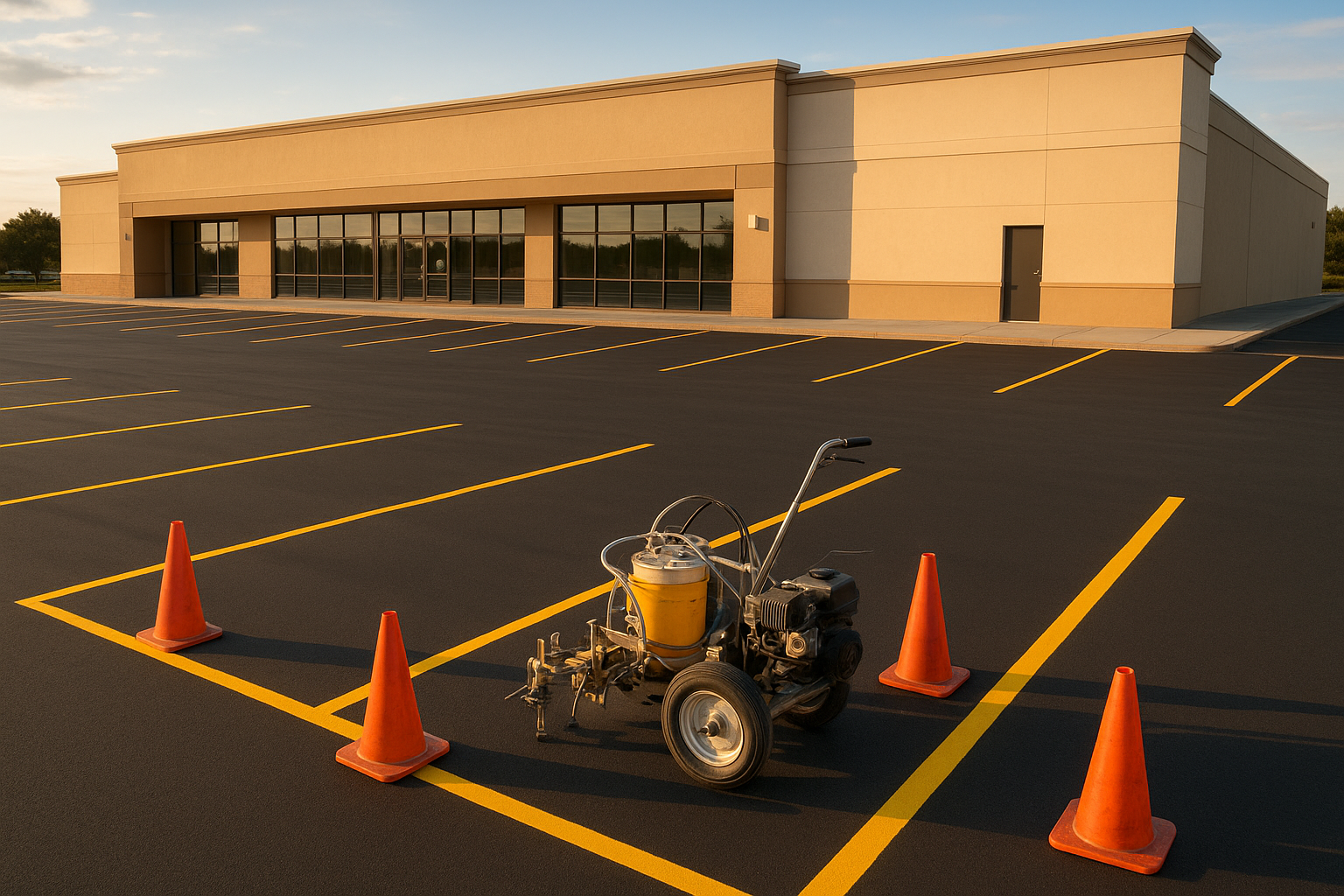
Fresh retail parking lot striping keeps traffic organized and improves first impressions for shoppers.
What Is Retail Parking Lot Striping?
Retail parking lot striping is the professional painting of lines, arrows, symbols, and accessible parking markings across a commercial parking area. It defines individual parking stalls, directs traffic flow, and marks fire lanes and ADA-compliant spaces so a property meets safety and accessibility codes. For retail centers specifically, striping also maximizes the number of usable parking spots without sacrificing safe circulation.
Unlike an office park or warehouse, a retail lot sees constant turnover of shoppers, delivery vehicles, and pedestrians throughout the day. Therefore, the layout has to account for higher foot traffic, shopping carts, and frequent stops near entrances. In particular, contractors typically use either water-based traffic paint or thermoplastic material, a durable pavement marking compound that’s heated and applied for a longer-lasting finish. You can learn more about the broader scope of these services on the parking lot striping services page.
Why Parking Lot Line Striping Matters for Retail Properties
First impressions matter, and a shopper’s very first interaction with a business often happens in the parking lot. Clean, visible lines signal that a property is well-maintained, which in turn builds trust before a customer ever walks through the door. In contrast, a lot with faded or missing markings can create confusion, near-miss collisions, and frustration during busy shopping periods.
Above all, compliance carries real financial stakes. According to guidance published on ADA.gov, civil penalties for ADA violations can reach tens of thousands of dollars for a first offense and increase substantially for repeat violations. Consequently, retail parking lot striping isn’t just cosmetic maintenance; it’s a legal safeguard for property owners, tenants, and municipal organizations alike.
Quick Answer: Retail parking lot striping is the process of painting stalls, ADA symbols, fire lanes, and directional markings on a commercial parking area to organize traffic, maximize capacity, and meet safety codes.
Key Elements of a Professional Retail Striping Project
Every retail striping project follows a similar sequence, regardless of lot size. Specifically, a professional crew moves through these five steps to ensure a compliant, long-lasting result:
- Inspect and Clean the Lot: A qualified crew first inspects the existing surface for cracks, oil stains, and drainage issues, then sweeps or power-washes the asphalt so new paint adheres properly and lasts longer.
- Plan the Layout and Measurements: Using the property’s dimensions and local code requirements, the team maps out stall widths, drive aisles, and traffic patterns to maximize usable parking without violating fire or accessibility codes.
- Apply Primary Stall Lines: Technicians use commercial-grade striping machines to lay down straight, evenly spaced lines that define individual parking stalls and separate driving lanes from pedestrian walkways.
- Mark ADA and Fire Lane Areas: Crews then paint blue accessible stalls with the wheelchair symbol, add van-accessible access aisles, and paint red fire lanes with required lettering to meet safety codes.
- Add Arrows, Signage, and Final Inspection: Finally, directional arrows, stop bars, and curb numbers are added before a final walkthrough confirms every line meets ADA, fire code, and municipal striping standards.
ADA Compliance and Accessibility Markings
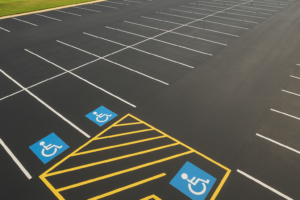
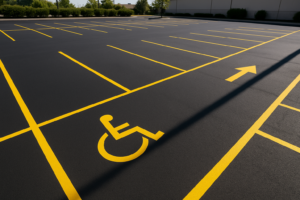
ADA-compliant markings include van-accessible stalls, standard accessible stalls, access aisles, and the international wheelchair symbol painted in blue and white. In particular, the required number of accessible spaces scales with the total parking count on the property. Similarly, access aisles must meet minimum width requirements so wheelchairs and mobility devices can load and unload safely; more detail is available through the 2010 ADA Standards for Accessible Design.
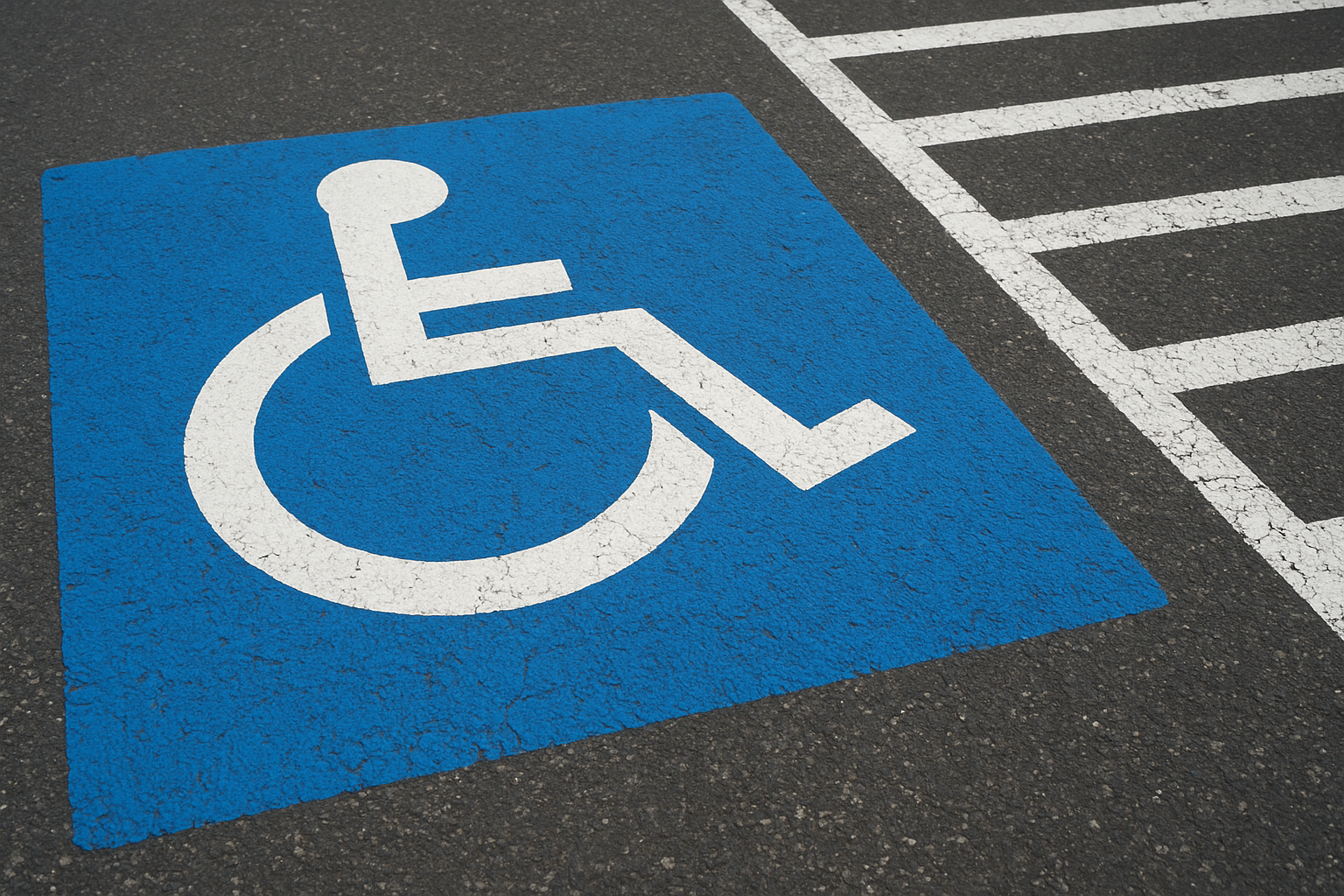
ADA-compliant markings are a required element of professional retail parking lot striping.
Fire Lane Marking and Safety Signage
Fire lanes are typically marked with red curb paint and lettering that reads “FIRE LANE — NO PARKING,” keeping emergency vehicle access clear at all times. Local fire marshals and codes referenced by organizations like the National Fire Protection Association often dictate exact lane widths and signage placement. For retail centers with heavy delivery traffic, keeping these lanes visible and unobstructed is especially important for both safety and code enforcement.
How Often Should Retail Parking Lots Be Restriped?
Most retail properties need restriping every 12 to 24 months, though the exact timeline depends on traffic volume, climate, and pavement condition. In North Texas, intense summer sun and seasonal storms accelerate fading, so lots in Denton and Plano often need attention on the shorter end of that range. For a closer look at how timing affects long-term costs, see this breakdown of whether professional parking lot striping is worth the investment.
As a general rule, if lines are difficult to see from a moving vehicle at dusk, it’s time to schedule a restripe. Likewise, any recent seal coating or asphalt overlay should always be followed by fresh striping since the old lines will no longer be visible.
Choosing the Right Retail Parking Lot Striping Company
Not every contractor understands the specific demands of retail parking lot striping, so a bit of vetting goes a long way. In particular, look for a company with documented experience on retail centers, proper liability insurance, and up-to-date knowledge of Texas ADA and fire code requirements. Furthermore, ask to see examples of past work on similar properties, such as shopping centers or healthcare facilities.
Property owners throughout the region can review the full range of services offered locally, including options tailored specifically for the Plano market on the Plano, TX striping services page. Requesting a free, itemized quote before work begins helps avoid surprises and ensures the scope matches the property’s actual needs.
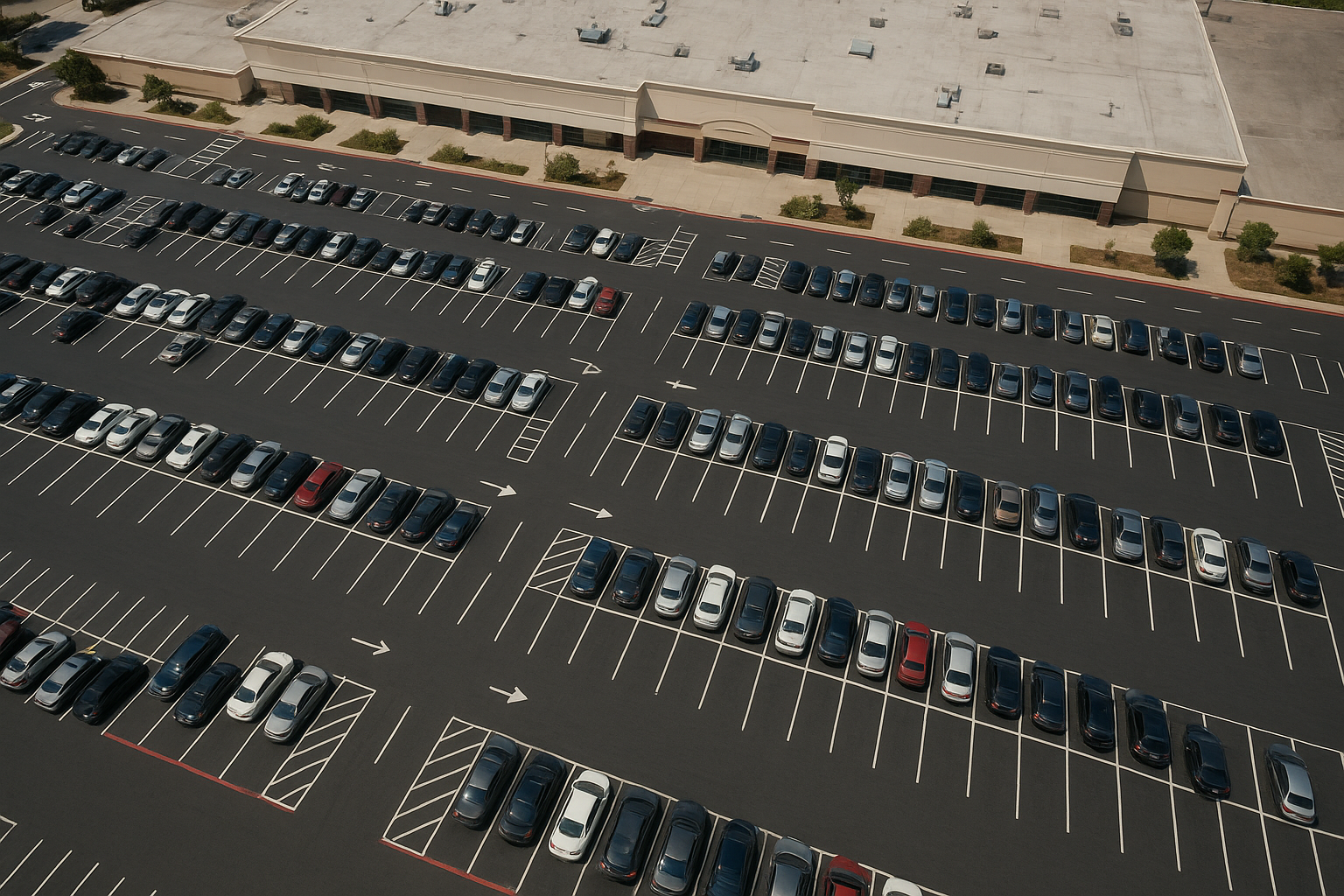
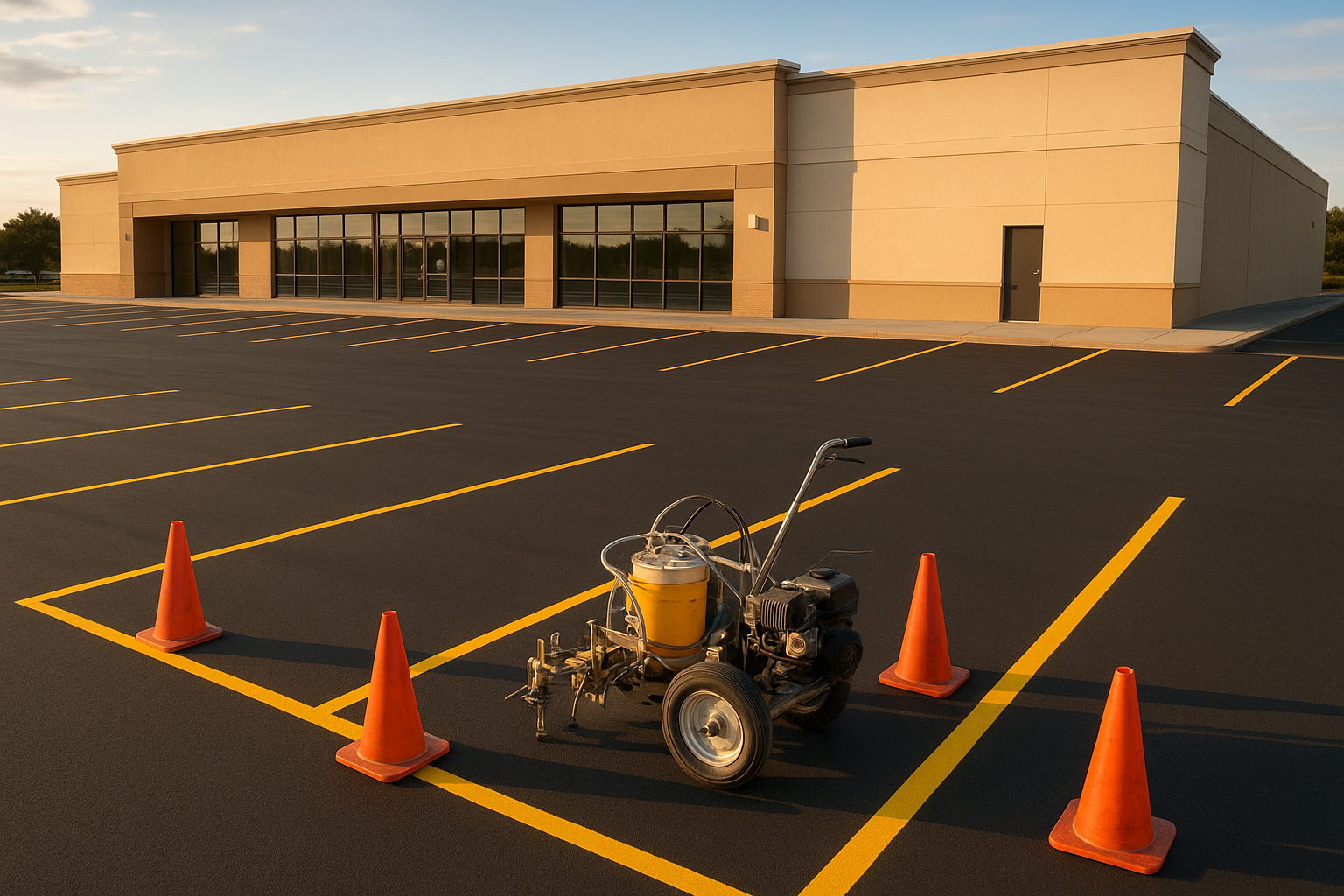
Well-planned retail parking lot striping keeps large shopping centers organized and safe from above and at ground level.
Cost Factors for Retail Parking Lot Striping
Pricing for retail parking lot striping depends on several variables, including total lot size, the number of stalls, and how many ADA or fire lane markings are required. In addition, choosing thermoplastic material over standard traffic paint raises upfront costs but extends the time between restripes. Larger retail centers with multiple entrances, loading zones, and directional arrows will naturally cost more than a small standalone storefront.
Because every property is different, the most reliable way to budget for a project is to request a site visit and detailed quote. Property managers throughout Denton and Plano can start that process directly through stripespls.com.
Frequently Asked Questions About Retail Parking Lot Striping
What is retail parking lot striping?
Retail parking lot striping is the professional painting of parking stalls, traffic lines, ADA symbols, and fire lanes across a commercial retail parking area. It keeps traffic organized and helps properties meet safety and accessibility codes.
How often should a retail parking lot be restriped?
Most retail lots need restriping every 12 to 24 months, though high-traffic centers in hot Texas climates may need touch-ups sooner. Faded lines, cracked pavement, or a recent seal coat are all signs it’s time.
How much does retail parking lot striping cost?
Costs vary based on lot size, number of stalls, and how many ADA or fire lane markings are needed. Most retail projects range from a few hundred to several thousand dollars, so a free site quote is the best way to get an accurate number.
What paint is used for retail parking lot striping?
Contractors typically use water-based traffic paint or durable thermoplastic material designed to withstand vehicle traffic, UV exposure, and weather. Thermoplastic lasts longer but costs more upfront than standard traffic paint.
Is ADA-compliant striping required for retail properties?
Yes, retail properties open to the public must provide a minimum number of accessible parking spaces per the Americans with Disabilities Act. The required ratio depends on the total number of parking spaces on the property.
What happens if a retail parking lot isn’t ADA compliant?
Noncompliant properties risk civil penalties, lawsuits, and complaints filed with the Department of Justice. Fines for ADA violations can reach tens of thousands of dollars for repeat offenses.
Can I stripe a retail parking lot myself?
While DIY striping kits exist, most retail properties need professional equipment and code knowledge to get straight lines, correct spacing, and compliant ADA or fire lane markings. Hiring a professional crew reduces the risk of costly redo work.
How long does retail parking lot striping take to dry?
Standard traffic paint typically dries within 30 minutes to a few hours, while thermoplastic sets almost immediately after application. Weather conditions like humidity and temperature can affect drying time.
What is the best time of year for parking lot striping in Texas?
Warm, dry conditions in spring and fall tend to work best for striping projects in North Texas. Extreme summer heat or winter rain can affect paint adhesion and drying time.
What’s the difference between fire lane marking and regular striping?
Fire lane marking uses red paint with lettering that reads “FIRE LANE — NO PARKING” to keep emergency access clear, while regular striping simply defines parking stalls and traffic flow. Both are required for most commercial retail properties.
How do I choose a retail parking lot striping company?
Look for a contractor with local experience, proper insurance, knowledge of Texas ADA and fire code requirements, and references from similar retail properties. Requesting a detailed, free quote helps compare pricing and scope before committing.
What common mistakes should retailers avoid with parking lot striping?
Common mistakes include skipping surface cleaning before painting, ignoring ADA space ratios, using low-quality paint, and waiting too long to restripe faded lines. These issues often lead to more costly repairs or compliance violations later.
Final Thoughts on Retail Parking Lot Striping
Ultimately, retail parking lot striping is one of the simplest, most cost-effective ways to protect customer safety, maintain ADA compliance, and present a polished storefront. From clearly marked fire lanes to properly sized accessible stalls, every line serves a practical purpose beyond appearance. For background on parking facility design in general, the Wikipedia overview of parking lots offers useful additional context.
Whether a property needs a full layout redesign or a simple restripe of faded lines, working with an experienced local crew helps retail owners in Denton, Plano, and the greater North Texas region stay compliant and organized year-round. Property managers ready to move forward can request a free, no-obligation quote through stripespls.com today.