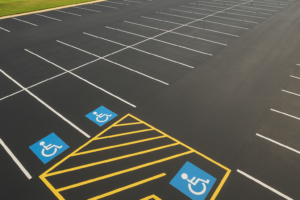
Parking lot marking is the process of painting stall lines, directional arrows, ADA symbols, and fire lane designations onto a paved surface so drivers and pedestrians can move through a property safely and legally. Some property owners also search this term as “otto parking marking” or “auto parking marking” while looking for striping equipment or a local contractor — however, in nearly every case, what they actually need is a qualified parking lot marking service that understands paint types, layout design, and compliance codes. This guide covers that entire process in depth, from the exact ADA measurements you must meet to the true cost of a professional project, so you can make a confident, informed decision for your property.
What Is Parking Lot Marking?
Parking lot marking refers to the painted lines, symbols, and text applied to asphalt or concrete to organize vehicle and pedestrian movement. This includes parking stall lines, arrows that control traffic direction, accessible parking symbols, fire lane text, curb paint, and specialty stencils such as “compact car only” or “EV charging” spaces. In short, it is the visual language that tells every driver exactly where to go and where not to go.
Contrary to what a quick search for “otto parking marking” might suggest, there is no single dominant brand that owns this term. Instead, it functions as a general search phrase people use when looking for striping contractors, marking equipment, or guidance on the process itself. Therefore, understanding what quality parking lot marking actually involves — measurement, layout planning, surface prep, and code compliance — matters far more than chasing a specific product name.
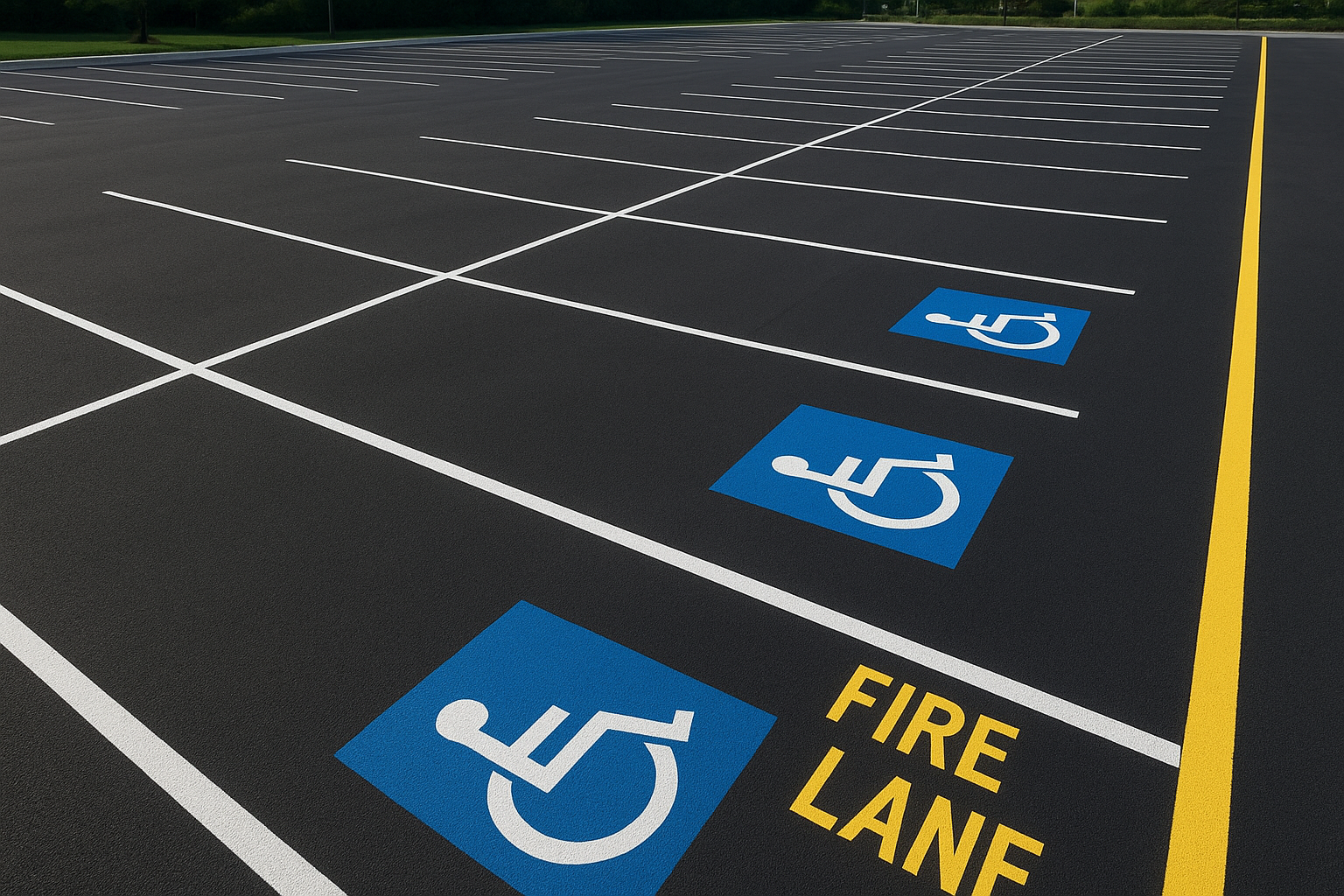
Professional parking lot marking with crisp stall lines, ADA symbols, and fire lane designations improves safety and organization.
Why Parking Lot Marking Matters for Your Property
Clear, well-maintained parking lot marking does more than look tidy. It directly shapes traffic flow, pedestrian safety, and your property’s legal standing. According to the National Safety Council, parking lots are the site of roughly 50,000 crashes and 60,000 injuries every year in the United States. As a result, visible and accurate markings play a measurable role in reducing those numbers.
Furthermore, faded or missing markings can create real liability. If a visitor is injured because of confusing traffic patterns or a missing accessible stall, the property owner may face legal consequences. Consequently, routine inspection and timely restriping are not optional extras — they are core responsibilities of good property management, right alongside sealcoating, pothole repair, and lighting maintenance.
Maximizing Parking Capacity Through Smart Layout
A well-designed layout does more than organize vehicles — it maximizes usable stalls within the space you already have. For example, angled stall configurations often fit more vehicles than perpendicular layouts in narrow lots. Similarly, one-way traffic lanes reduce conflict points and improve circulation dramatically. A skilled striping contractor evaluates these factors before a single line of paint touches the pavement.
Specifically, a parking lot striping professional measures your lot, calculates optimal stall dimensions, and designs a layout that balances capacity with safe traffic flow. This planning phase is precisely where professional service adds more value than any do-it-yourself attempt ever could.
Every Type of Parking Lot Marking You Might Need
Not every property needs the same markings. In particular, the right combination depends on your lot’s size, traffic volume, and local code requirements. Below is a breakdown of the marking categories most commercial properties require.
Standard Stall and Traffic Flow Markings
These include stall lines, directional arrows, stop bars, and crosswalks. In addition, many lots use double yellow lines to separate two-way traffic and single white lines for standard stall boundaries. Above all, consistent width and spacing across the entire lot is what makes a layout look professional rather than patchwork.
ADA and Accessibility Markings
Accessible stalls require blue paint, the International Symbol of Accessibility, a marked access aisle, and correct signage. Van-accessible spaces need wider aisles than standard accessible stalls. This is covered in full detail in the ADA compliance section below.
Fire Lane and Emergency Access Markings
Fire lanes typically use red curb paint paired with stenciled “NO PARKING FIRE LANE” text. These markings keep emergency access routes clear at all times, which can be the difference between a fast response and a delayed one during a real emergency.
Specialty Markings: EV Charging, Loading Zones, and More
As electric vehicles become more common, properties increasingly add green-striped EV charging stalls. Likewise, loading zones, compact car stalls, visitor-only spaces, and speed bump markings all serve specific traffic-management purposes. A knowledgeable contractor will recommend which of these your property actually needs rather than applying a generic template.
How to Plan a Professional Parking Lot Marking Project
Whether you are starting fresh or refreshing an existing lot, the process follows a clear, repeatable sequence. Below is a step-by-step overview of how a professional parking lot marking project is actually executed from start to finish.
- Assess the current lot condition. Walk the entire parking lot to identify faded lines, damaged pavement, ADA compliance gaps, and fire lane markings that need attention before any new paint goes down.
- Check local permit and code requirements. Contact your city or county to confirm whether your project requires a permit, since routine restriping and new layout construction are often treated differently under local code.
- Measure and design the layout. Measure total lot dimensions, count existing stalls, and design a layout that maximizes capacity while meeting ADA standards and local accessible-space requirements accurately.
- Choose the right paint or material. Select water-based latex traffic paint for standard applications or thermoplastic material for high-traffic areas that require significantly greater long-term durability.
- Prepare the surface. Clean the asphalt or concrete thoroughly to remove dirt, oil stains, and debris, and allow newly laid pavement to cure for at least 30 days before marking it.
- Apply the markings and stencils. Use a professional line striping machine to paint stall lines, arrows, ADA symbols, fire lane text, and any other required markings with consistent width and spacing throughout.
- Inspect, cure, and reopen the lot. Allow paint to dry fully, typically 30 to 60 minutes, then inspect every marking for accuracy and visibility before reopening the lot to vehicle traffic.

A professional line striping machine ensures consistent line width and spacing throughout the parking lot marking process.
ADA Compliance: A Non-Negotiable Part of Parking Lot Marking
ADA-compliant markings are legally required for nearly every commercial property open to the public. The 2010 ADA Standards for Accessible Design specify exact requirements for the number of accessible spaces, their dimensions, access aisle widths, signage, and surface slope. Non-compliance can result in significant fines and legal exposure for the property owner.
For instance, a lot with 26 to 50 total spaces must include at least two accessible stalls, one of which must be van-accessible. As lot size increases, the required number of accessible spaces increases too. In addition, accessible spaces must sit on the shortest accessible route to the building entrance, not tucked away in a far corner.
Professional ADA compliance markings from a qualified contractor ensure your lot meets every current federal requirement. This includes correct stall dimensions, access aisles, the International Symbol of Accessibility, and proper signage placement — details that are surprisingly easy to get wrong without specialized knowledge.
Fire Lane Markings and Safety Regulations
Fire lane markings are another critical piece of a compliant parking lot. Local fire codes require designated fire lanes near building entrances and along access routes so emergency vehicles can reach the structure quickly. These markings typically combine red curb paint with stenciled “NO PARKING FIRE LANE” text on the pavement itself.
Failure to maintain visible fire lane markings can result in citations from local fire marshals and, more importantly, can delay emergency response during an actual crisis. Therefore, fire lane markings should be inspected regularly and refreshed the moment fading becomes noticeable.
When to Restripe: Signs Your Parking Lot Marking Needs Attention
Most parking lot marking lasts one to three years under normal conditions. However, high-traffic lots, lots exposed to harsh weather, and lots with existing surface cracks may need attention sooner. Specifically, consider restriping when:
- Stall lines are difficult to see from a normal driving distance
- ADA symbols or fire lane text have faded significantly
- Drivers frequently park incorrectly or invent their own traffic patterns
- You have recently had the lot sealed or repaved
- A municipal or fire marshal inspection flagged your markings as non-compliant
Proactive restriping is far more cost-effective than waiting until markings disappear completely. In addition, fresh parking lot marking projects a professional image that reflects well on your business or property.
Paint Types and Durability Compared
Not all parking lot paint performs equally. The three most common options each offer different tradeoffs between cost, dry time, and lifespan:
- Water-based latex traffic paint: Fast drying, low odor, environmentally friendlier, and suitable for most standard applications. Typically lasts one to two years.
- Oil-based alkyd paint: More durable than latex in high-wear areas, but slower to dry and higher in VOC emissions. Lasts two to three years.
- Thermoplastic: The most durable option, applied as a heated compound that fuses to the surface. Lasts three to seven years and suits high-traffic commercial lots best.
Color also carries meaning. Under the Manual on Uniform Traffic Control Devices published by the Federal Highway Administration, white generally marks standard stalls and lane lines, blue designates accessible parking, red indicates fire lanes and no-parking zones, and yellow separates opposing traffic flows. A professional contractor applies this color logic consistently so your lot reads clearly to every driver, not just regular visitors.
What Does Parking Lot Marking Cost?
Cost varies widely because every lot is different. That said, several factors consistently drive the final price of a parking lot marking project:
- Lot size and stall count: More stalls mean more paint, more labor, and more time on-site.
- Paint or material type: Thermoplastic costs more upfront than latex paint but lasts considerably longer.
- Surface condition: Cracked or oil-stained pavement often needs cleaning or minor repair before marking, which adds cost.
- Layout complexity: A brand-new layout requires more design and measurement work than simply repainting existing lines.
- Specialty markings: ADA symbols, fire lane text, and stencils each add incremental cost per unit.
In general, small lots may cost a few hundred dollars, while large commercial properties with dozens of stalls can run into the thousands. Consequently, the most reliable way to budget accurately is to request a free, itemized quote from a local contractor rather than relying on a generic national average.
How to Choose the Right Parking Lot Marking Contractor
Not every striping company delivers the same quality. Before hiring anyone, it helps to confirm a few essentials so your parking lot marking project holds up for years rather than months.
- Licensing and insurance: A legitimate contractor should carry liability coverage and any local licensing required in your area.
- Code and ADA knowledge: Ask directly how they verify accessible stall counts and dimensions before starting work.
- Material options: A contractor who only offers one paint type may not be matching the material to your lot’s actual traffic needs.
- Portfolio and references: Look at recent, similar projects rather than stock photography on a website.
- Response time: Local contractors typically respond faster than large national chains managing dozens of markets at once.
Above all, a written, itemized quote before work begins protects both parties and sets clear expectations for timeline and scope.
Professional Parking Lot Marking Services in North Texas
For property owners and managers in the Denton and Plano, Texas areas, finding a reliable local contractor makes all the difference. stripespls.com offers full-service parking lot marking, including new layout striping, restriping faded lines, ADA-compliant stall designations, fire lane marking, and directional arrows. The team serves retail centers, schools, healthcare facilities, and municipal organizations throughout the greater North Texas region.
What sets a professional contractor apart is the combination of precision equipment, code knowledge, and attention to detail. Every project is customized to the property’s specific needs rather than forced into a one-size-fits-all template. For a broader overview, the complete parking lot marking guide at stripespls.com is a helpful next stop.
Moreover, working with a local North Texas contractor means faster response times, closer familiarity with regional code requirements, and a level of accountability that large national chains often cannot match. Prospective clients can request a free quote directly through stripespls.com.
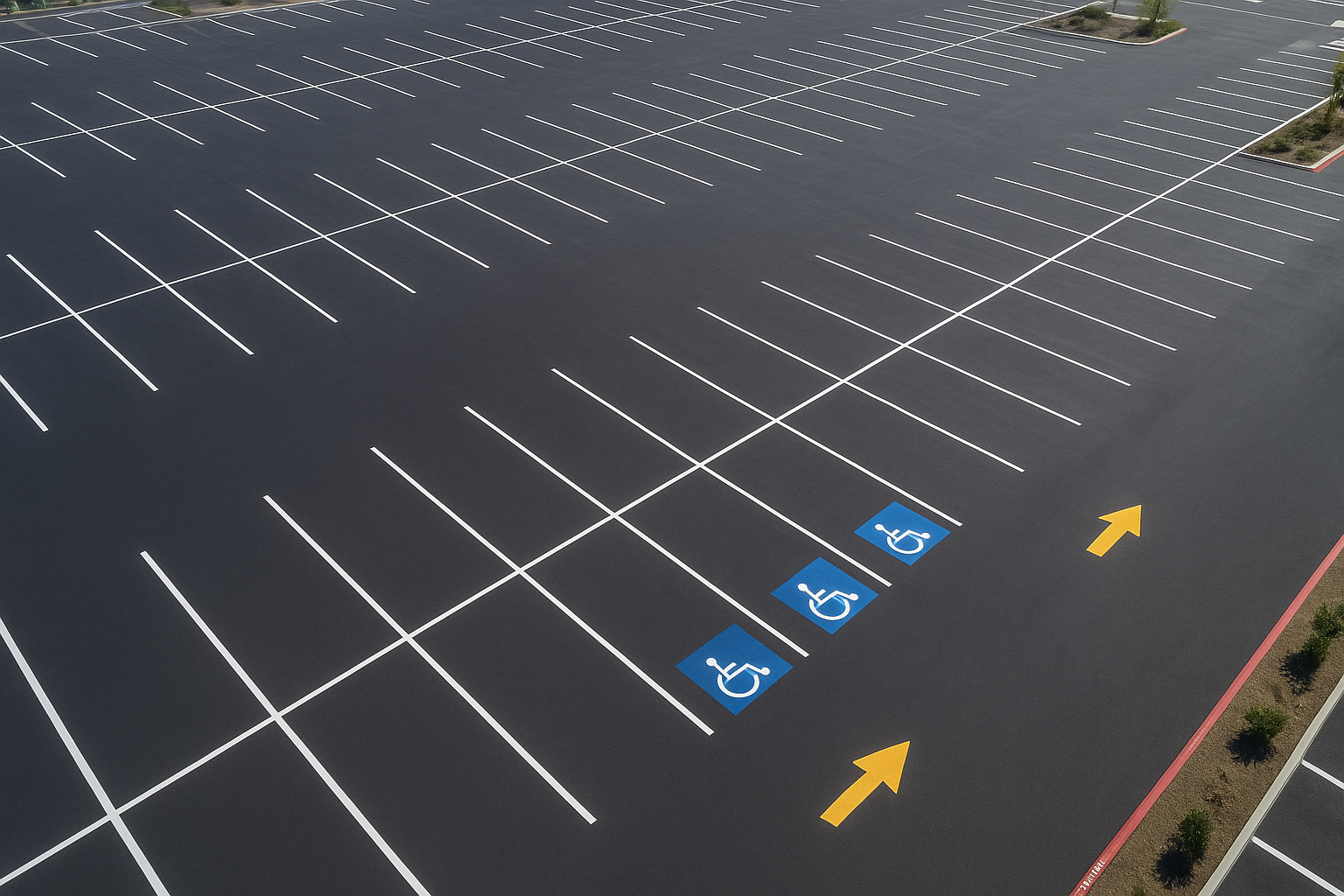
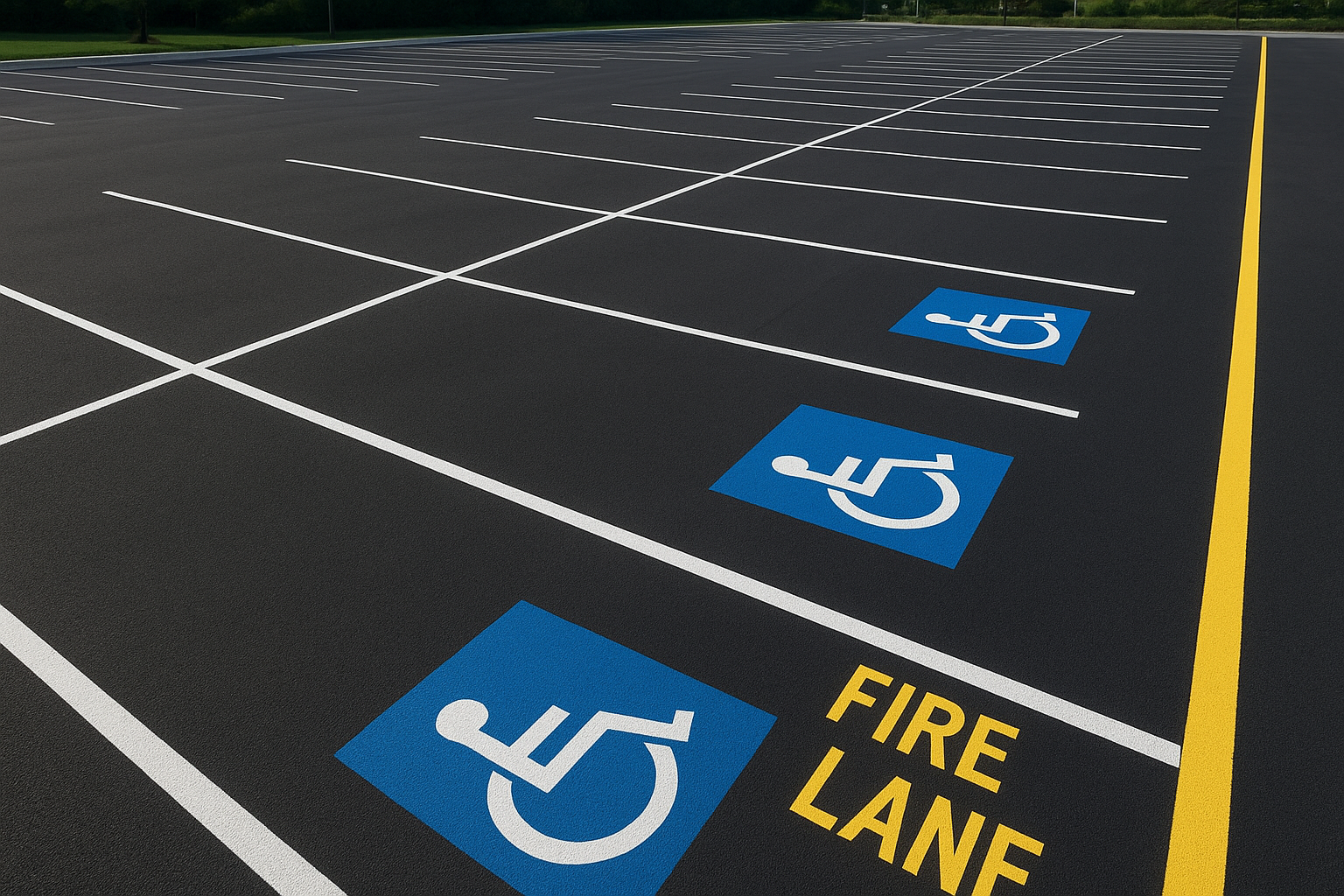
An aerial view of a professionally marked lot shows how proper parking lot marking organizes traffic flow and designates accessible and fire lane areas.
Frequently Asked Questions About Parking Lot Marking
What is parking lot marking?
Parking lot marking is the process of painting stall lines, directional arrows, ADA symbols, and fire lane text onto a parking surface. It also covers layout planning and surface preparation, and it is sometimes searched as “otto parking marking” by people looking for a contractor rather than a specific brand.
How long does parking lot marking paint last?
Standard traffic paint typically lasts one to three years depending on traffic volume, weather, and surface condition. High-traffic areas may need restriping annually, while low-traffic lots can go longer between applications.
What type of paint is used for parking lot marking?
Most contractors use water-based latex traffic paint or oil-based alkyd paint. Thermoplastic markings are also common for high-durability applications because they bond directly to asphalt and resist fading far longer than standard paint.
How wide should parking stall lines be?
Standard stall lines are typically 4 inches wide, though some property owners prefer 6-inch lines for better visibility. ADA-compliant stalls require specific dimensions beyond line width alone, including access aisle sizing.
What ADA requirements apply to parking lot marking?
Accessible spaces must meet minimum size requirements, include an access aisle, display the International Symbol of Accessibility, and sit on the shortest accessible route to the entrance. The number of required accessible spaces scales with total lot capacity.
How much does professional parking lot marking cost?
Costs vary based on lot size, stall count, marking type, and surface condition. Small lots may cost a few hundred dollars, while large commercial lots can run into the thousands. Requesting a free quote is the best way to get an accurate figure.
How do I know when my parking lot needs restriping?
If stall lines are faded, cracked, or hard to see from a normal driving distance, it is time to restripe. Faded markings can cause confusion, raise accident risk, and signal non-compliance with local codes or ADA standards.
Can parking lot marking be done on a newly paved surface?
Yes, but newly paved asphalt should cure for at least 30 days before paint is applied to ensure proper adhesion. Marking too early can cause the paint to peel or fail prematurely.
What is a fire lane marking and why is it required?
Fire lane markings designate areas where vehicles must not park so emergency vehicles can access a building quickly. Local fire codes require them, and they typically include red curb paint and stenciled “NO PARKING FIRE LANE” text.
How long does it take to complete a parking lot marking project?
A standard commercial lot can typically be marked in a few hours to a full day, depending on size and complexity. Paint dry time is usually 30 to 60 minutes, after which the lot can reopen to traffic.
What is the difference between restriping and new lot layout striping?
Restriping follows existing faded lines to refresh markings, while new lot layout striping designs a completely new configuration. New layouts require more planning and measurement to maximize capacity and ensure code compliance.
Do I need a permit for parking lot marking in Texas?
Permit requirements vary by city and county in Texas. Routine restriping usually does not require a permit, but new lot construction or significant layout changes may. Checking with your local municipality first is always recommended.
Can I mark my own parking lot, or should I hire a professional?
DIY kits exist, but they rarely account for ADA measurements, code compliance, or proper paint selection. Consequently, most commercial properties hire a professional to avoid liability and rework costs down the line.
What colors are used in parking lot marking and what do they mean?
White typically marks standard stalls and lane lines, blue designates accessible parking, red indicates fire lanes and no-parking zones, and yellow separates opposing traffic flows, following widely adopted traffic-control color conventions.
Conclusion
Parking lot marking sits at the intersection of safety, legal compliance, and everyday property function. From choosing the right paint type to meeting ADA and fire lane requirements, professional parking lot marking is a multi-step process that rewards careful planning and skilled execution. Whether you manage a retail center, a school, a healthcare facility, or any commercial property in North Texas, partnering with an experienced local contractor keeps your lot organized, code-compliant, and ready for the traffic it serves every day. For expert parking lot marking services in the Denton and Plano areas, visit stripespls.com to request your free quote today.