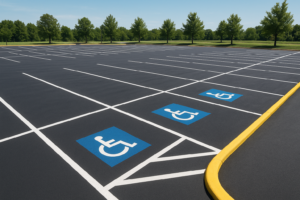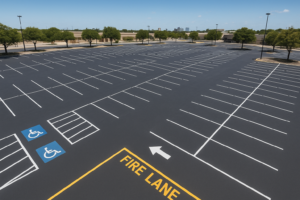

When property owners search for stripes n more, they are looking for something beyond a single painted line — they want a complete parking lot marking solution that covers every detail from standard stalls to ADA-compliant spaces and fire lane designations. Stripes n more is a phrase that captures the full scope of professional parking lot marking services, and understanding what that scope includes can help you make smarter decisions for your property. In this guide, we break down every element of a thorough parking lot marking project so you know exactly what to expect.
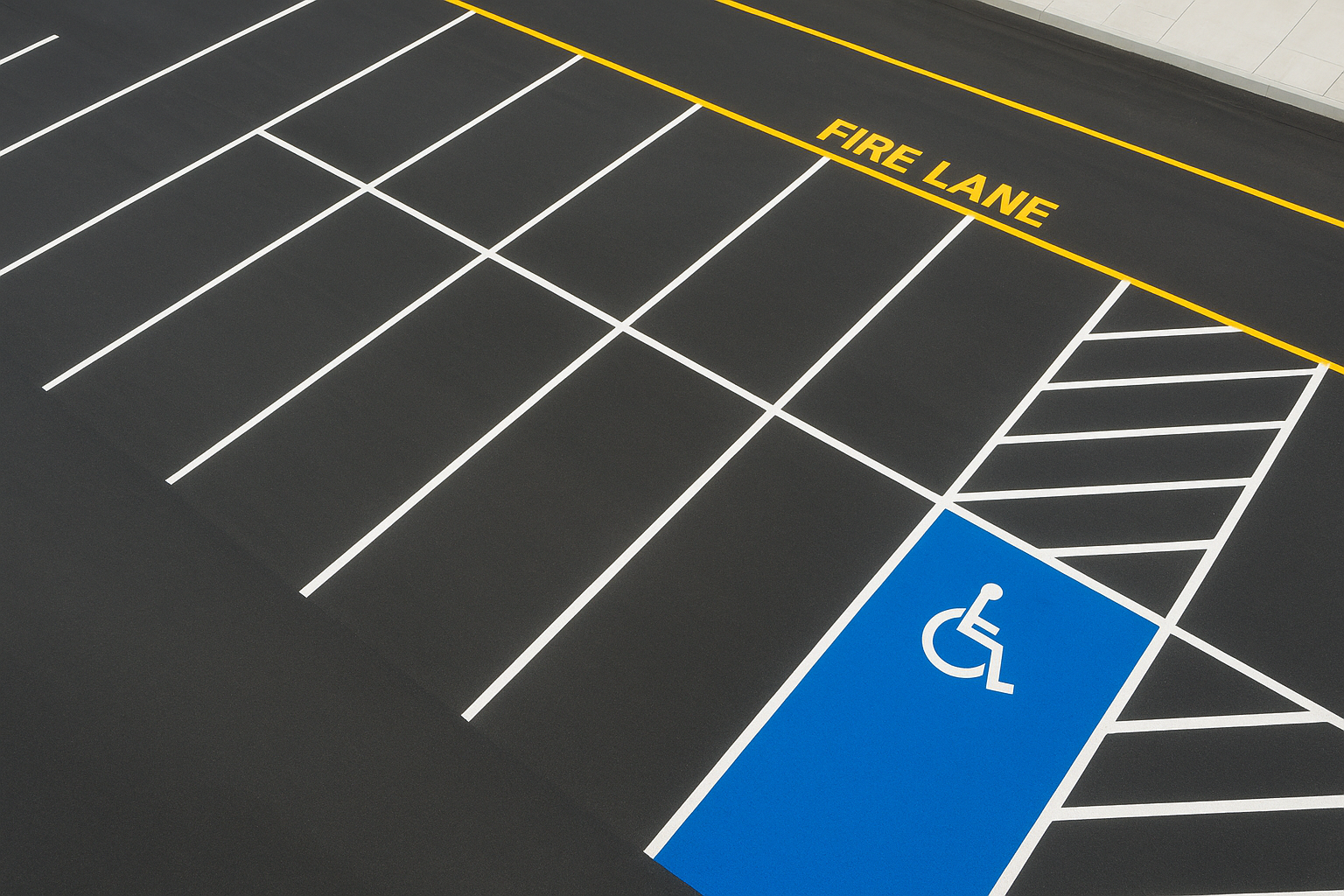
A complete stripes n more service covers standard stalls, ADA spaces, and fire lane markings in a single professional visit.
What Is Stripes N More? A Full-Service Parking Lot Marking Overview
Stripes n more is a term that describes comprehensive parking lot marking — the combination of line striping, specialty markings, and compliance-driven designations that together create a safe, organized, and legally sound parking facility. Simply repainting faded white lines is only one part of the picture. A truly complete service also addresses ADA accessibility, fire safety, traffic flow, and visual clarity for drivers.
According to the ADA Standards for Accessible Design, parking facilities must provide a specific number of accessible spaces relative to total lot capacity. For example, lots with 1 to 25 spaces require at least one accessible space, while larger lots follow a proportional scale. These requirements make proper marking not just a cosmetic issue but a legal obligation for property owners.
Furthermore, fire lane markings are governed by local fire codes and must remain clearly visible at all times. Faded or missing fire lane designations can result in blocked emergency access — a situation that carries serious liability. Therefore, a full-service approach ensures nothing is overlooked.
Core Components of Professional Parking Lot Striping
A professional parking lot marking project typically includes several distinct elements. Each one plays a specific role in the overall function and safety of the facility.
Standard Parking Stall Lines
Standard stall lines define individual parking spaces and guide drivers into orderly rows. Typically painted in white, these lines must be straight, consistently spaced, and the correct width. In addition, proper stall depth and aisle width are critical for safe vehicle movement. Most commercial stalls are 8.5 to 9 feet wide and 18 to 20 feet deep, though local codes may specify different dimensions.
ADA Handicap Space Markings
ADA-compliant handicap spaces require more than just a blue symbol on the pavement. Specifically, they must include the correct stall width (at least 8 feet), an adjacent access aisle (5 feet for standard, 8 feet for van-accessible spaces), proper signage mounted at the right height, and the International Symbol of Accessibility painted on the surface. Missing any of these elements puts a property out of compliance with federal law.
Fire Lane Designations
Fire lanes are designated areas where parking is prohibited so that emergency vehicles can reach buildings quickly. These zones are typically marked with red or yellow curb paint and “No Parking — Fire Lane” stenciling on the pavement. Local fire marshals set the specific requirements, and failure to maintain visible fire lane markings can result in fines and increased insurance risk.
Directional Arrows and Traffic Flow Markings
Directional arrows guide drivers through the lot safely, reducing the risk of collisions in narrow aisles. Similarly, stop bars, crosswalk stripes, and speed bump markings all contribute to a well-organized traffic pattern. These elements are especially important in high-traffic commercial facilities like retail centers, schools, and healthcare campuses.

Directional arrows and fire lane curb paint are essential elements of a complete parking lot marking service.
How to Plan a Full Parking Lot Marking Project
Planning a comprehensive parking lot marking project does not have to be complicated. However, following a structured process ensures that nothing is missed and that the finished result meets all safety and compliance standards.
- Assess the current lot condition. Walk the entire parking lot and document faded markings, damaged pavement, missing ADA spaces, and any fire lane areas that need attention before work begins.
- Determine the required markings. Identify all markings needed, including standard stalls, ADA-compliant handicap spaces, fire lanes, directional arrows, crosswalks, and any custom stenciling required by local codes.
- Request a professional quote. Contact a licensed parking lot striping company to measure the lot, confirm the scope of work, and provide a detailed written quote covering materials, labor, and timeline.
- Schedule the work during low-traffic hours. Coordinate with the striping crew to perform the work during off-peak hours or overnight to minimize disruption to tenants, customers, and daily operations.
- Inspect the completed markings. After the paint has fully cured, walk the lot with the contractor to verify all lines are straight, ADA markings meet code dimensions, and fire lane designations are clearly visible.
Restriping vs. New Lot Layout: Which Do You Need?
One of the most common questions property owners ask is whether they need a full new layout or simply a restripe of the existing configuration. In most cases, restriping — refreshing faded lines over the current layout — is sufficient if the existing design is functional and code-compliant. However, several situations call for a new layout instead.
For example, if the lot has recently been repaved, the old lines are gone entirely and a new layout must be designed from scratch. Similarly, if a property has expanded, added new tenants, or needs to increase its parking capacity, a redesigned layout can maximize the number of usable spaces. Research from the Institute of Transportation Engineers shows that optimized parking lot design can increase capacity by 10 to 15 percent compared to older, less efficient layouts.
Furthermore, if ADA compliance audits reveal that the current stall count or configuration does not meet federal standards, a partial or full redesign may be necessary to avoid penalties. In these cases, working with an experienced marking professional is essential.
Why Durability and Paint Quality Matter
Not all parking lot paint is created equal. Consequently, the longevity of your markings depends heavily on the type of paint used and the surface preparation before application. The two most common options are water-based latex traffic paint and oil-based alkyd paint.
Water-based latex paint dries quickly — typically within 30 minutes — and is more environmentally friendly. It performs well in most climates and is the standard choice for most commercial projects. Oil-based alkyd paint, on the other hand, offers greater durability in high-wear areas but takes longer to cure and has a stronger odor during application.
In North Texas specifically, intense summer sun and UV exposure accelerate paint fading. Therefore, using high-quality traffic paint with UV-resistant additives can extend the life of your markings significantly. According to the Federal Highway Administration, retroreflective pavement markings — those with glass beads added for nighttime visibility — improve driver awareness and reduce accident risk in low-light conditions.

Professional-grade striping equipment ensures straight, consistent lines that last longer under heavy traffic and sun exposure.
Serving the Denton and Plano Areas with Complete Marking Solutions
For property owners across the greater North Texas region, stripespls.com delivers the full stripes n more experience — every marking your property needs, handled by a team that understands local codes and climate conditions. From Denton to Plano, the company serves commercial properties, retail centers, schools, healthcare facilities, and municipal organizations with customized solutions.
Whether you need a simple restripe, a complete new lot layout, ADA compliance upgrades, or fire lane restoration, the team brings precision and reliability to every project. You can explore completed projects in the project gallery to see the quality of work firsthand. Additionally, you can learn more about the company’s background and values on the about page.
Requesting a free quote is straightforward and requires no commitment. Simply visit the website, describe your property’s needs, and a professional will follow up with an accurate estimate tailored to your specific lot. Before engaging any contractor, it is also worth reviewing the company’s terms and conditions and privacy policy for full transparency.
Common Mistakes Property Owners Make with Parking Lot Markings
Even well-maintained properties can fall into avoidable traps when it comes to parking lot markings. Understanding these common mistakes helps you stay ahead of compliance issues and safety risks.
First, many owners wait too long between restriping cycles. Faded lines create confusion for drivers and signal neglect to visitors and tenants. As a result, accident risk increases and property value perception decreases. Most professionals recommend inspecting markings annually and restriping every one to two years.
Second, underestimating ADA requirements is a costly error. Federal law mandates specific space counts, dimensions, and signage — and these standards are updated periodically. Therefore, properties that were compliant several years ago may no longer meet current requirements without an updated inspection.
Third, neglecting fire lane visibility is both a safety hazard and a liability issue. Consequently, local fire marshals can issue citations and require immediate remediation, which is far more disruptive than proactive maintenance.
Quick Tip: The ADA requires that for every 100 parking spaces, at least 2 must be accessible — with at least one being van-accessible. Lots with 1–25 spaces need a minimum of 1 accessible space. Always verify your current count against the latest federal guidelines.
Frequently Asked Questions About Stripes N More
What does stripes n more mean in the context of parking lot services?
Stripes n more refers to the full range of parking lot marking services beyond basic line striping, including ADA compliance markings, fire lane designation, directional arrows, curb painting, and stenciling. A complete service provider handles every element needed to make a parking facility safe, organized, and code-compliant.
How often should parking lot striping be redone?
Most parking lots need restriping every one to two years, depending on traffic volume, sun exposure, and the type of paint used. High-traffic commercial lots may require more frequent attention to keep markings visible and safe.
What are ADA parking requirements for commercial properties?
The Americans with Disabilities Act requires a minimum number of accessible parking spaces based on total lot size, with at least one van-accessible space per accessible cluster. Spaces must meet specific width, signage, and access aisle requirements outlined in the ADA Standards for Accessible Design.
Why is fire lane marking important?
Fire lane markings ensure emergency vehicles have unobstructed access to buildings during a crisis. Improperly marked or faded fire lanes can result in blocked access, fines, and serious liability for property owners.
What type of paint is used for parking lot striping?
Most professional striping companies use water-based latex traffic paint or oil-based alkyd paint, depending on the surface and climate. Water-based paints dry faster and are more environmentally friendly, while oil-based options offer greater durability in high-wear areas.
How long does parking lot striping take to dry?
Water-based traffic paint typically dries to the touch within 30 minutes and is ready for vehicle traffic within one hour under normal conditions. Oil-based paint may take longer, especially in humid or cool weather.
Can striping be done on an existing asphalt lot without repaving?
Yes, striping can be applied directly to existing asphalt as long as the surface is clean, dry, and structurally sound. Severely cracked or deteriorated pavement may need repairs before new markings will adhere properly and last.
What is the difference between restriping and a new lot layout?
Restriping refreshes faded markings using the existing layout, while a new lot layout involves designing and painting an entirely new configuration. New layouts are common after repaving, property expansions, or when owners want to maximize parking capacity.
How much does professional parking lot striping cost?
Costs vary based on lot size, number of spaces, required markings, and surface condition. Most commercial restriping projects range from a few hundred to several thousand dollars; requesting a free quote from a local provider gives the most accurate estimate.
Do I need permits for parking lot striping in Texas?
Standard restriping of existing markings generally does not require permits in Texas. However, new lot layouts or changes that affect ADA compliance, fire lanes, or traffic flow may require approval from local authorities.
What common mistakes do property owners make with parking lot markings?
Common mistakes include waiting too long to restripe faded lines, failing to meet ADA space count requirements, and neglecting fire lane visibility. These oversights can lead to safety hazards, code violations, and potential fines.
What is the best time of year to stripe a parking lot in North Texas?
Spring and fall offer ideal conditions for parking lot striping in North Texas, with moderate temperatures and lower humidity. Extreme summer heat can cause paint to dry too quickly, while cold winter temperatures can affect adhesion.
Conclusion: Getting More Than Just Stripes
A well-marked parking lot is one of the most visible reflections of a property’s professionalism and safety standards. The stripes n more approach — combining standard line striping with ADA compliance, fire lane marking, directional signage, and quality paint application — ensures that your facility meets every legal requirement while creating a positive first impression for visitors. Whether you manage a retail center in Plano, a healthcare campus in Denton, or any commercial property in between, investing in comprehensive parking lot marking protects your tenants, reduces liability, and keeps your property looking its best year-round. For a free, no-obligation quote tailored to your specific property, visit stripespls.com and take the first step toward a cleaner, safer, and fully compliant parking facility.