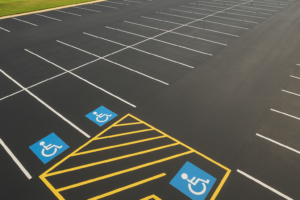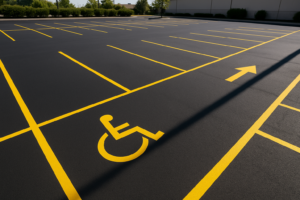
ADA striping experts are the specialists property owners in Denton, Plano, and across North Texas rely on to keep parking lots safe, legally accessible, and free of costly compliance headaches. Faded blue paint, an undersized access aisle, or a missing van-accessible sign might seem minor, however these small details are exactly what trigger fines, lawsuits, and frustrated visitors. Therefore, this guide walks through everything a property manager needs to know before hiring ADA striping experts — from federal requirements and stall dimensions to real pricing, timelines, and the mistakes that cost the most to fix later.
Unlike a typical service brochure, this resource goes deep. As a result, you will find technical specifications, cost breakdowns, paint comparisons, maintenance schedules, and a full FAQ built specifically to answer the questions property managers ask before signing a contract. In particular, we also cover how national ADA standards interact with state-level programs like California’s CASp inspections, so this guide is useful no matter where your property sits.
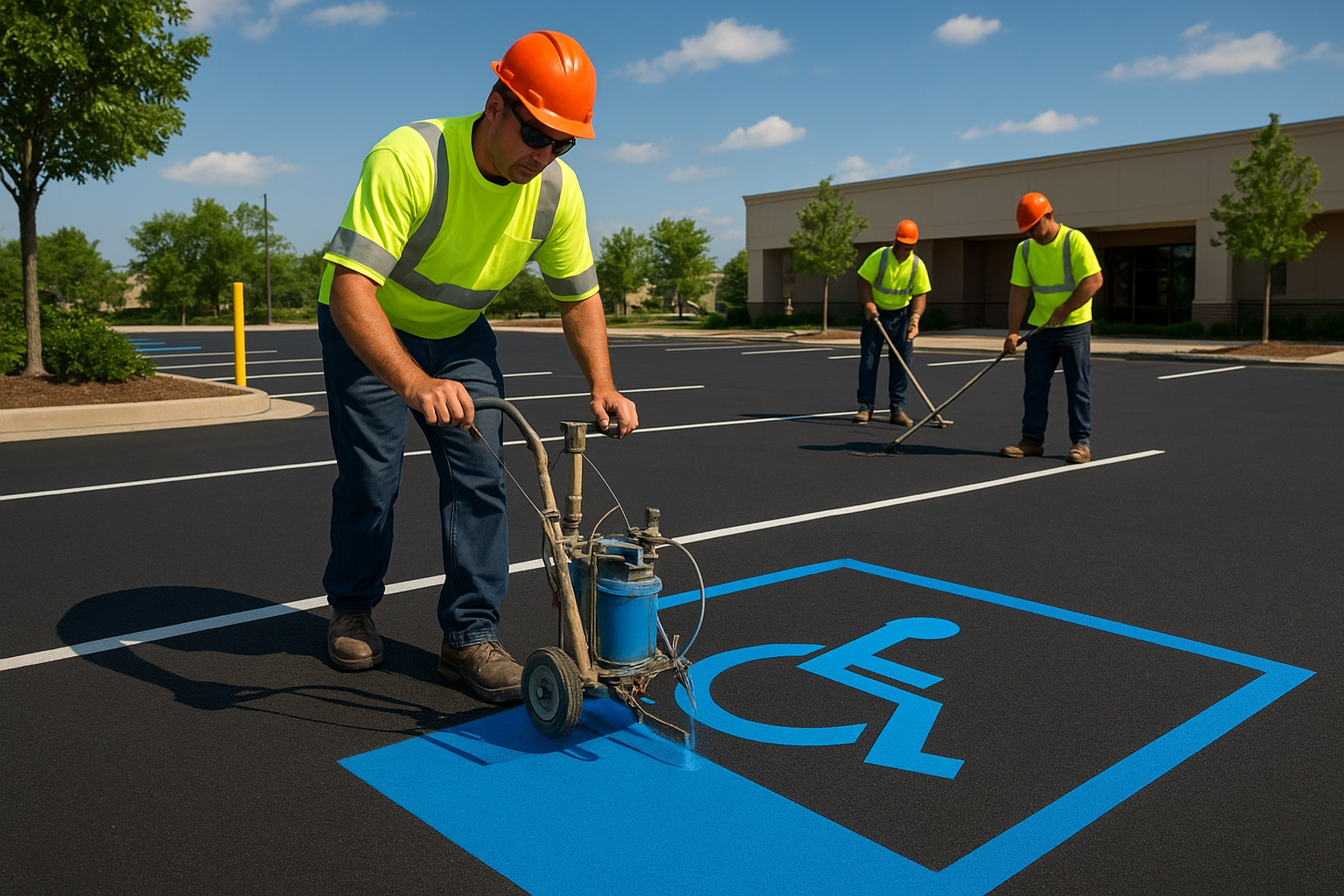
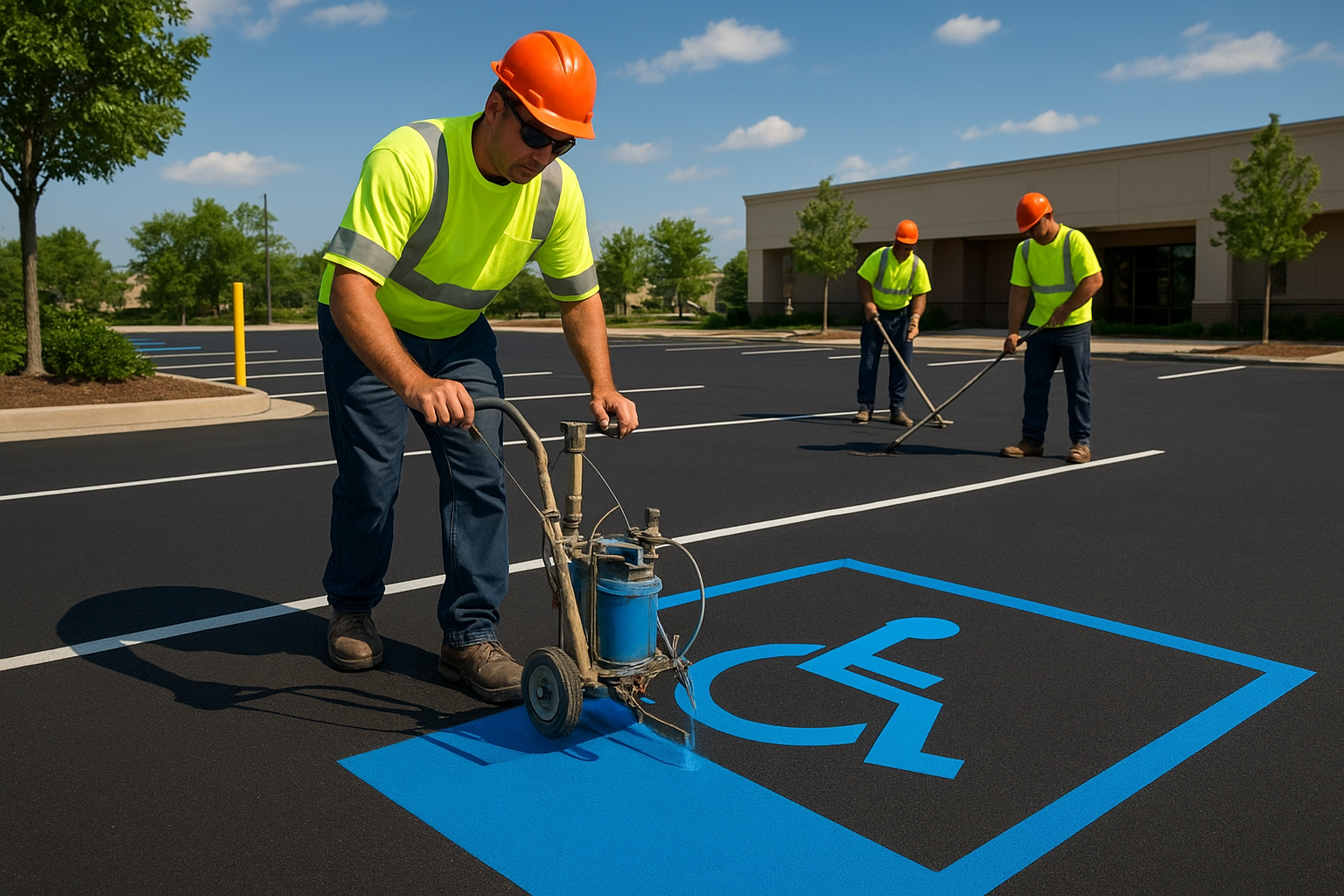
ADA striping experts measure stall widths and access aisles precisely before a single line goes down.
What Are ADA Striping Experts?
ADA striping experts are contractors who specialize in painting accessible parking stalls, access aisles, curb ramps, and van-accessible loading zones according to the Americans with Disabilities Act, a federal civil rights law that guarantees equal access for people with disabilities. Specifically, they combine three things a general painting crew usually lacks: precise field measurement, code-grade knowledge, and durable traffic paint rated for heavy vehicle use.
In contrast, an untrained crew might paint a stall that looks perfectly fine to the eye yet still fails inspection because the access aisle is two inches too narrow or the signage sits at the wrong height. Consequently, hiring true ADA striping experts protects property owners long before a complaint or inspection ever happens.
How ADA Striping Experts Differ From General Painting Crews
General painting crews typically focus on aesthetics — clean lines, fresh color, and quick turnaround. ADA striping experts, however, layer compliance on top of aesthetics. For example, they verify stall counts against the total parking spaces, confirm slope tolerances so wheelchairs and walkers can move safely, and check that signage meets exact mounting height requirements. Above all, this dual focus is what separates a compliant lot from one that merely looks compliant.
You can review the exact federal specifications these professionals follow inside the 2010 ADA Standards for Accessible Design, published by the U.S. Department of Justice.
Why ADA Compliance Matters for Every Parking Lot
ADA compliance is not optional guidance; it is a legal requirement for most commercial properties, including retail centers, schools, medical offices, and municipal buildings. According to the Centers for Disease Control and Prevention, roughly 1 in 4 adults in the United States lives with some type of disability. Therefore, accessible parking directly affects a significant share of every property’s visitors, employees, and customers every single day.
In addition, non-compliant lots can trigger complaints filed with the Department of Justice or spark expensive civil lawsuits. Similarly, local fire codes require clearly marked fire lanes so emergency vehicles can respond without delay. Above all, an inaccessible parking lot sends the wrong message to every community a business serves.
For background on the underlying legislation itself, see Wikipedia’s overview of the Americans with Disabilities Act.
Federal Law, State Programs, and CASp Inspections
Although ADA is a federal law that applies in every state, some states layer additional programs on top of it. In California, for instance, properties often undergo a Certified Access Specialist (CASp) inspection, a state-recognized review confirming accessibility compliance. In contrast, Texas relies primarily on the federal standard alongside local fire marshal and building code review.
Either way, the underlying stall dimensions, slope limits, and signage rules trace back to the same source: the federal ADA Standards. Consequently, whether a property sits in Plano, Texas or anywhere else in the country, hiring ADA striping experts who understand both the federal baseline and any regional add-on program is the safest path to full compliance.
Core ADA Parking Lot Requirements Explained
Specifically, four elements determine whether a parking lot passes inspection: stall count, stall dimensions, slope, and signage. First, the number of required accessible stalls scales with total lot size — larger lots need proportionally more accessible and van-accessible spaces. Second, standard accessible stalls generally measure 96 inches wide with a 60-inch access aisle, though exact figures can shift based on local amendments.
Third, surface slope cannot exceed 2 percent in any direction, since a steeper grade makes it unsafe for wheelchairs and walkers to travel across. Fourth, signage must be mounted at a minimum height, be reflective for nighttime visibility, and clearly indicate any van-accessible designation.
Standard vs. Van-Accessible Spaces
Van-accessible spaces include a wider access aisle — typically 96 inches — to accommodate wheelchair lifts and ramps. Standard accessible spaces, on the other hand, use a narrower 60-inch aisle. Therefore, a lot that only paints standard stalls without any van-accessible spaces is not compliant, regardless of how fresh the paint looks.
How to Choose the Right ADA Striping Experts
Choosing the right contractor takes more than a quick online search. Instead, follow this five-step process to compare candidates fairly before signing anything.
- Verify ADA and local code knowledge. Confirm the contractor understands current federal ADA Standards along with any city-specific fire lane and signage codes in your area, since local rules often add requirements on top of the federal baseline.
- Check licensing, insurance, and local experience. Ask for proof of insurance and examples of completed commercial projects nearby, because local experience helps crews anticipate inspection quirks before they become problems.
- Request a written measurement and paint plan. A qualified crew should provide a written layout showing accessible stall counts, van-accessible spaces, slope notes, and the exact traffic-grade paint being used on your surface.
- Ask for references or completed project photos. Reviewing before-and-after photos or speaking with past clients confirms the contractor consistently delivers clean, code-compliant results across different property types.
- Compare free quotes and warranty terms. Requesting multiple free quotes and comparing warranty coverage helps property owners choose confidently, and it also reveals which contractors are transparent about their pricing structure.
For a deeper dive into vetting contractors, this resource on what to look for in a reliable striping service covers additional red flags worth watching for before you sign.
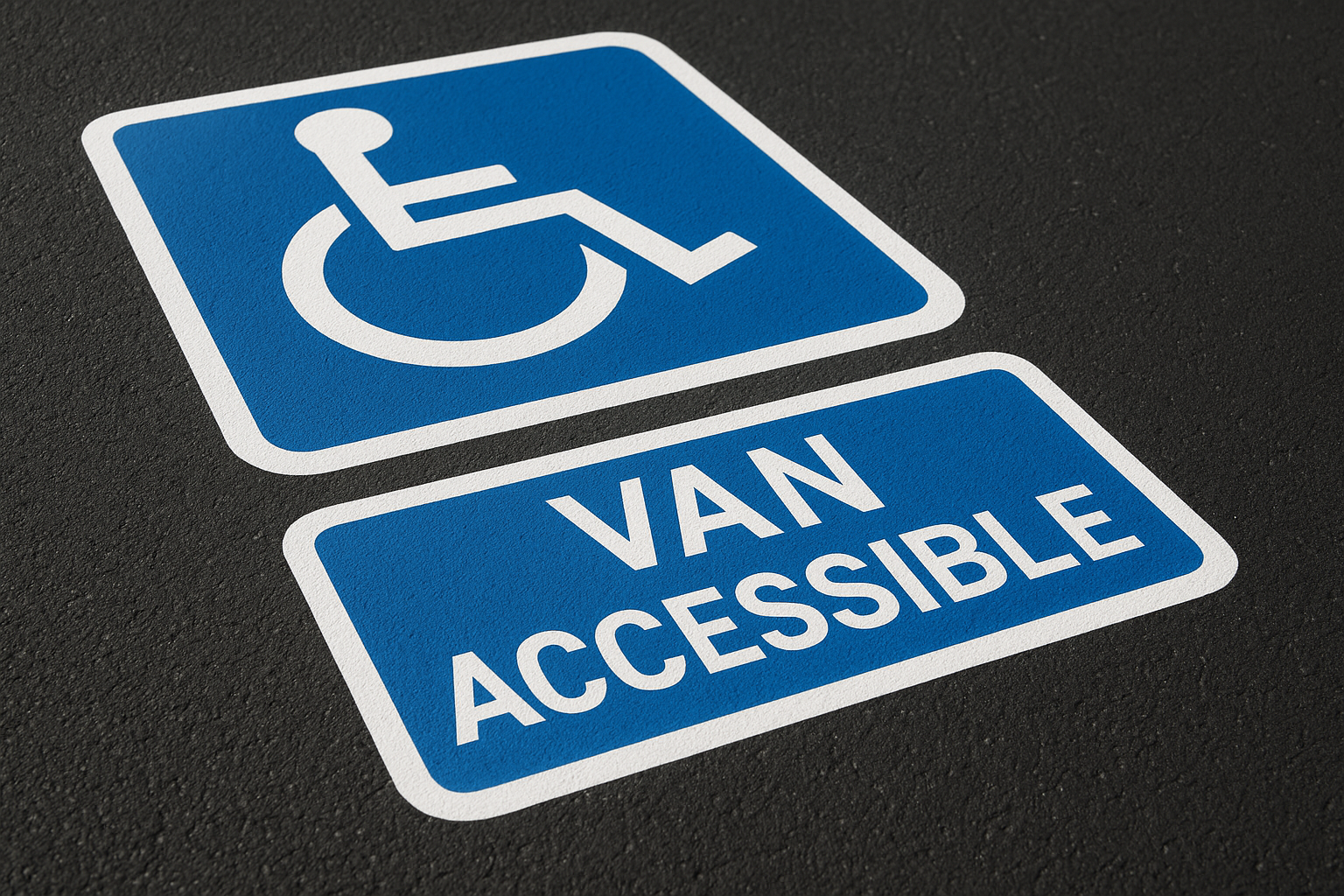
Crisp, durable paint keeps accessible parking symbols visible for months after installation.
Full Range of Services Provided by ADA Striping Experts
Beyond accessible stall painting, most ADA striping experts offer a full menu of related services. For example, this typically includes fire lane marking, directional arrows, curb painting, wheel stop installation, and complete lot layout redesigns for freshly paved surfaces. For a deeper walkthrough, see our Road Marking Services Texas: Expert Striping Guide.
- Accessible stall and access-aisle painting with wheelchair symbols
- Van-accessible space marking and required signage installation
- Fire lane painting and “No Parking Fire Lane” lettering
- Directional arrows, crosswalks, and pedestrian pathway markings
- Full lot layout design for new construction and repaving projects
If you are comparing regional options, this breakdown of companies offering parking lot striping across DFW is a helpful starting point, and property owners near Dallas can also check this guide on what to know about parking lot striping in Dallas.
Signs You Need Certified ADA Striping Contractors Now
Faded blue paint, peeling wheelchair symbols, and worn stall lines are the most obvious signals. However, less obvious issues include incorrect access aisle widths, a missing van-accessible sign, or a slope that has shifted after years of asphalt settling.
In these cases, hiring certified ADA striping contractors sooner rather than later reduces the odds of a surprise fine during a city inspection. For more technical background, this asphalt striping guide to parking lot line marking explains paint types and layout basics in more detail.
What Does ADA-Compliant Striping Cost?
Pricing depends on lot size, the number of accessible stalls required, and current surface condition. Generally speaking, though, professional ADA striping costs far less than the fines or legal fees tied to non-compliance. Specifically, most projects are priced per stall or per linear foot, with signage and fire lane lettering quoted separately.
As a result, most property managers find it more cost-effective to schedule regular restriping every 18 to 24 months rather than waiting for a complaint to force the issue. If you are curious who handles this work well locally, see this guide on who does the best parking lot striping in Denton, TX.
Paint Types Compared: Acrylic vs. Thermoplastic
Most ADA striping experts use one of two paint systems. Traffic-grade acrylic paint dries quickly and costs less upfront, making it popular for standard restriping cycles. Thermoplastic, in contrast, is heated and fused directly into the asphalt, lasting considerably longer under heavy traffic and intense sun exposure.
Therefore, high-traffic properties — think grocery stores, hospitals, and schools — often benefit from thermoplastic despite the higher initial cost, since fewer repaint cycles offset the price difference over time.
How Long Does the Striping Process Take?
Most commercial lots can be striped in a single day, though larger properties or complete restriping projects may take one to two days. Weather and paint cure time can also affect the schedule, so ADA striping experts typically plan around dry, mild conditions to guarantee a clean, durable finish.
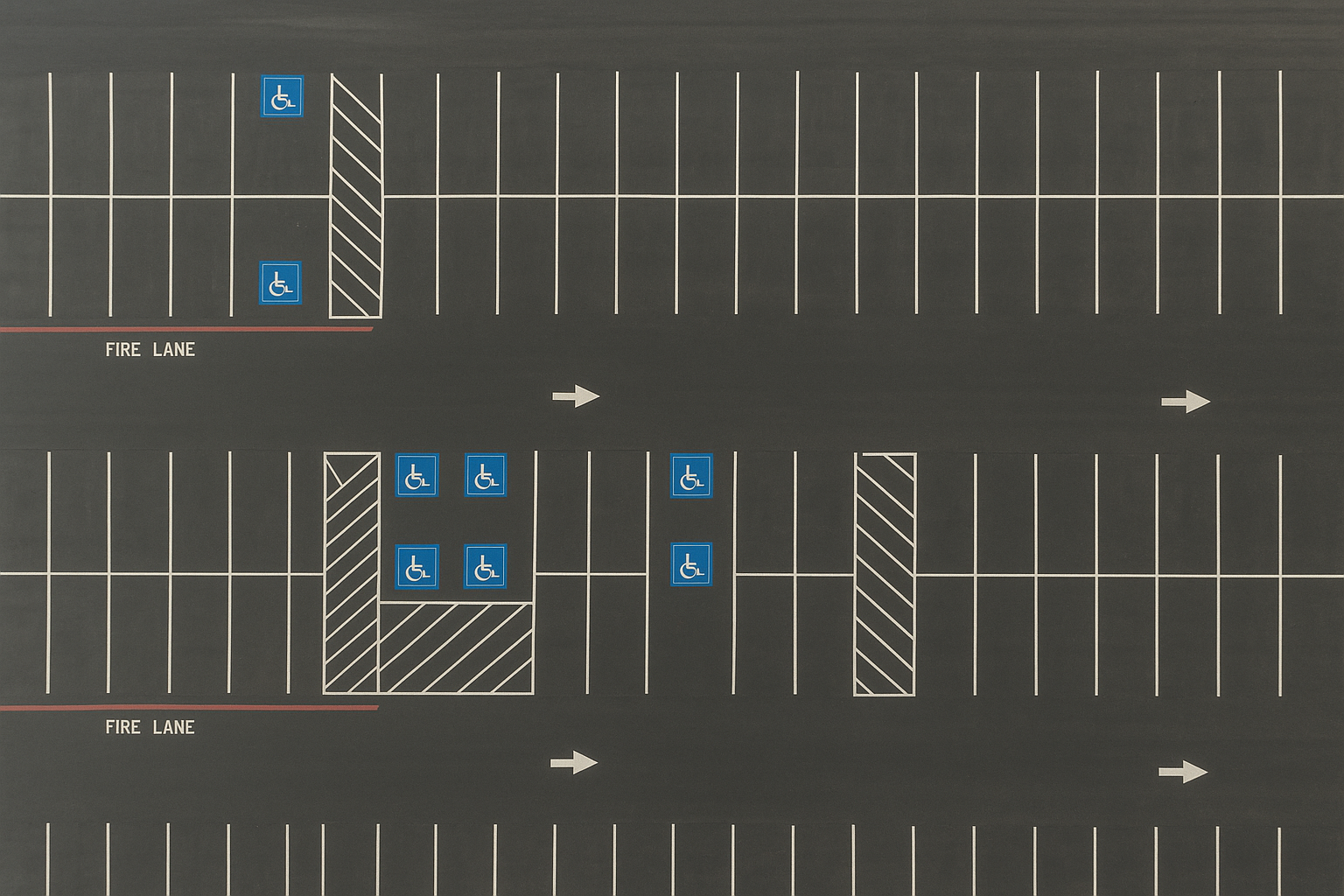
A well-organized, fully striped lot improves both safety and accessibility for every visitor.
Maintenance Schedule: How Often to Restripe
Most parking lots need restriping every 18 to 24 months, though high-traffic Texas properties exposed to intense sun may need it sooner. Faded blue paint or peeling symbols are a clear sign it’s time to call ADA striping experts back for a refresh.
In addition, property managers should schedule a quick visual inspection every quarter. This way, small fading issues get caught early, well before they turn into a full compliance failure during a city or insurance walkthrough.
Common ADA Layout Mistakes to Avoid
Common mistakes include placing accessible spaces too far from building entrances, using incorrect stall widths, and forgetting van-accessible aisle requirements. Similarly, some properties paint the correct number of stalls overall but forget to distribute van-accessible spaces evenly across multiple building entrances.
Working with experienced ADA striping experts helps property owners avoid these costly errors, since a trained eye catches problems a standard walkthrough often misses.
Why Property Managers Choose stripespls.com’s ADA Striping Experts
As a full-service parking lot marking company based in Texas, stripespls.com specializes in professional striping, ADA compliance solutions, and fire lane marking for commercial and residential properties throughout Denton and Plano. In particular, the team serves property managers, retail centers, schools, healthcare facilities, and municipal organizations across the greater North Texas region. For a deeper walkthrough, see our Line Marking Services for Parking Lots | stripespls.com.
Whether a client needs handicap stall markings, fire lane designation, directional arrows, or a full lot refresh, the crew tailors each project to the property’s specific needs. Above all, prospective clients can request a free quote directly through stripespls.com.
You can also review official accessibility guidance from the U.S. Access Board, the federal agency responsible for developing ADA accessibility standards, to compare against any quote you receive.
Service Areas We Cover
ADA striping experts from stripespls.com typically serve the greater North Texas region, including Denton, Plano, and surrounding DFW communities. Coverage areas usually include commercial centers, schools, healthcare facilities, and municipal properties, with scheduling flexible enough to accommodate after-hours work when lots need to stay open during the day.
Frequently Asked Questions About ADA Striping Experts
What is ADA compliant parking lot striping?
ADA compliant parking lot striping refers to line markings, symbols, and signage that meet accessibility requirements set by the Americans with Disabilities Act. This includes properly sized accessible stalls, access aisles, and van-accessible spaces painted with approved dimensions and colors.
How do ADA striping experts determine the number of accessible spaces needed?
ADA striping experts calculate required accessible spaces based on the total number of parking spots, following the ratio table published in the 2010 ADA Standards for Accessible Design. Larger lots need a higher number of accessible and van-accessible stalls.
How much does ADA striping cost in Denton and Plano, TX?
Pricing varies by lot size, number of accessible stalls, and paint condition, but most Denton and Plano properties pay a modest amount per space compared to potential non-compliance fines. Requesting a free quote is the fastest way to get an accurate number.
How long does ADA parking lot striping take to complete?
Most commercial lots can be striped in a single day, though larger properties or complete restriping projects may take one to two days. Weather and paint cure time can also affect the schedule.
What happens if my parking lot isn’t ADA compliant?
Non-compliant lots can expose property owners to civil rights complaints, lawsuits, and fines from state or federal agencies. In addition, non-compliance can create real safety hazards for visitors with mobility challenges.
How often should ADA parking markings be repainted?
Most parking lots need restriping every 18 to 24 months, though high-traffic properties exposed to intense sun may need it sooner. Faded blue paint or peeling symbols are a clear sign it’s time.
What’s the difference between van-accessible and standard accessible spaces?
Van-accessible spaces include a wider access aisle to accommodate wheelchair lifts, while standard accessible spaces have a narrower aisle. Federal code requires at least one van-accessible space for every six accessible stalls.
Can I stripe my own parking lot instead of hiring ADA striping experts?
While general striping can sometimes be done in-house, ADA-specific work requires precise measurements, signage placement, and code knowledge that most property staff don’t have. Hiring ADA striping experts reduces the risk of costly compliance mistakes.
What paint is used for ADA-compliant striping?
Most contractors use durable traffic-grade acrylic or thermoplastic paint designed to withstand vehicle traffic, UV exposure, and weather. These paints hold color and visibility far longer than standard exterior paint.
Do fire lanes need to be marked separately from ADA spaces?
Yes, fire lanes are a separate safety requirement, typically marked with red curb paint and “No Parking Fire Lane” lettering per local fire code. They serve a different purpose than ADA accessible parking markings.
What areas do ADA striping experts serve near Denton and Plano?
ADA striping experts typically serve the greater North Texas region, including Denton, Plano, and surrounding DFW communities. Coverage areas usually include commercial centers, schools, healthcare facilities, and municipal properties.
How do I get a free quote for ADA striping?
Most striping companies, including stripespls.com, offer a simple online form or phone call to request a free quote. Property owners typically just need to share the lot size and current condition of existing markings.
What mistakes should I avoid when planning ADA parking layouts?
Common mistakes include placing accessible spaces too far from building entrances, using incorrect stall widths, and forgetting van-accessible aisle requirements. Working with experienced contractors helps property owners avoid these costly errors.
Are ADA striping requirements different for new construction vs. existing lots?
New construction must fully meet current ADA Standards, while existing lots generally follow a “readily achievable” standard for updates. However, any major renovation or restriping project usually triggers full compliance requirements.
Does a CASp inspection replace the need for ADA striping experts?
No, a CASp inspection identifies compliance issues, but it does not fix them. Property owners still need experienced ADA striping experts to repaint stalls, correct signage, and address any violations the inspection uncovers.
Final Thoughts
In summary, ADA striping experts help property owners avoid fines, protect visitors, and maintain a professional appearance across their parking facilities. From accurate stall measurements to durable traffic-grade paint, the right contractor turns accessibility compliance into a straightforward, predictable process rather than a stressful one.
Ultimately, whether you’re refreshing faded lines or planning a brand-new lot layout in Denton or Plano, working with experienced ADA striping experts ensures the job gets done right the first time. For a tailored quote, visit stripespls.com and take the next step toward a fully compliant, well-marked property.