Category: Uncategorized

  • Denton Commercial Striping: A Property Owner’s Guide

    Denton Commercial Striping: A Property Owner’s Guide

    Denton Commercial Striping: A Property Owner’s Guide

    Denton commercial striping is the process of painting and maintaining parking lot lines, ADA-accessible stalls, and fire lane markings for businesses throughout Denton, Texas. Property managers, retail centers, schools, and healthcare facilities all rely on clean, visible striping to keep traffic organized and parking lots safe. However, faded or missing lines can quickly turn into a liability, a compliance violation, or simply a frustrating experience for visitors. In this guide, we’ll cover what quality striping involves, why it matters, and how to choose a dependable provider for your property.

    What Is Denton Commercial Striping?

    Denton commercial striping refers to the professional line-marking work applied to commercial parking lots across Denton, Texas. This includes standard parking stalls, ADA-accessible spaces, fire lanes, directional arrows, and curb markings, typically applied using water-based traffic paint or thermoplastic material — a durable, heated-and-fused striping compound. As a result, properties end up with clearly defined traffic patterns that reduce confusion and improve safety.

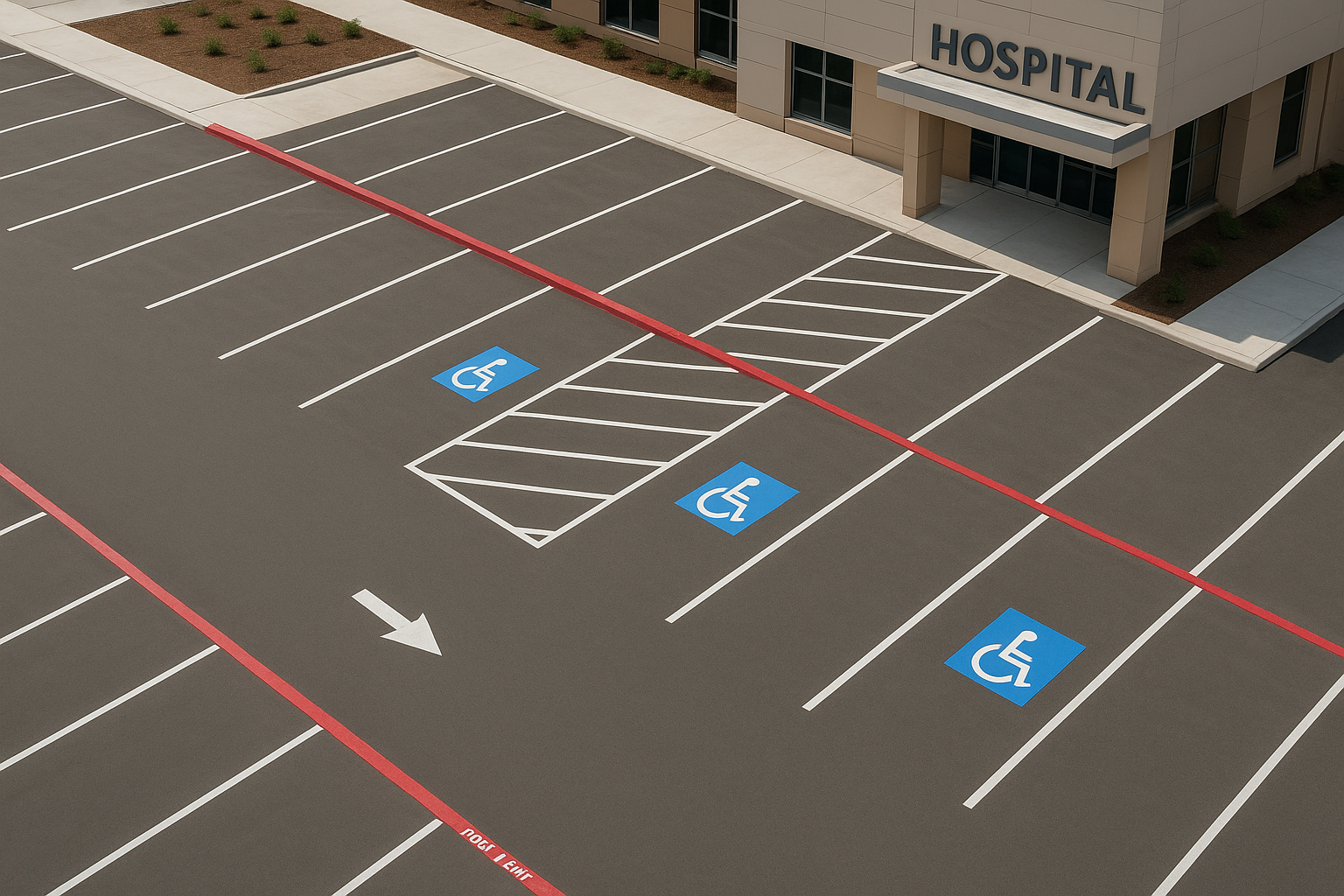
    For example, a retail center might need dozens of standard stalls alongside several ADA-compliant spaces near the entrance. Similarly, a hospital parking lot may require fire lanes, visitor parking, and staff-only zones, each marked distinctly. Because every property has different needs, a qualified striping company like the team behind stripespls.com typically starts with a site walk before recommending a layout.

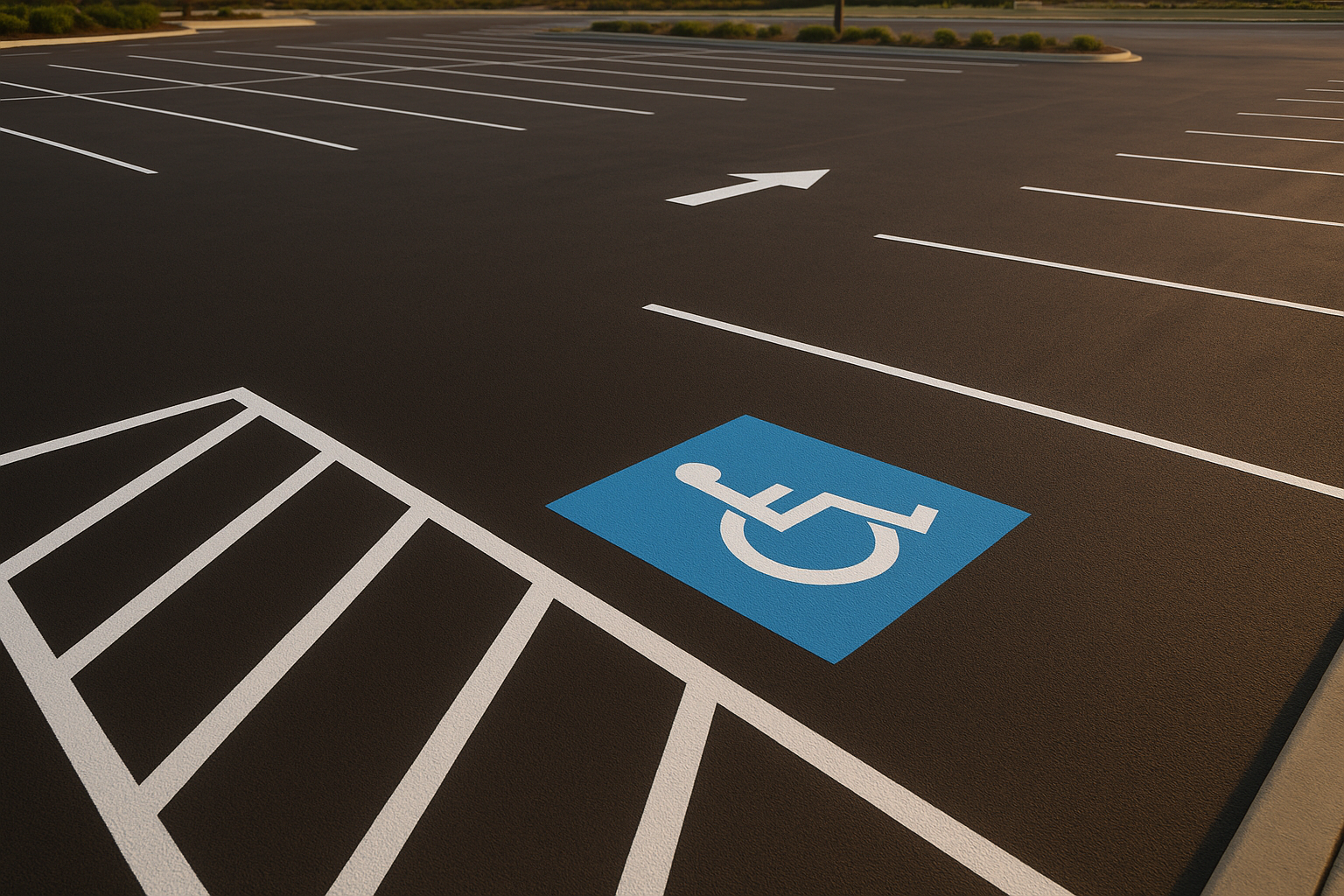
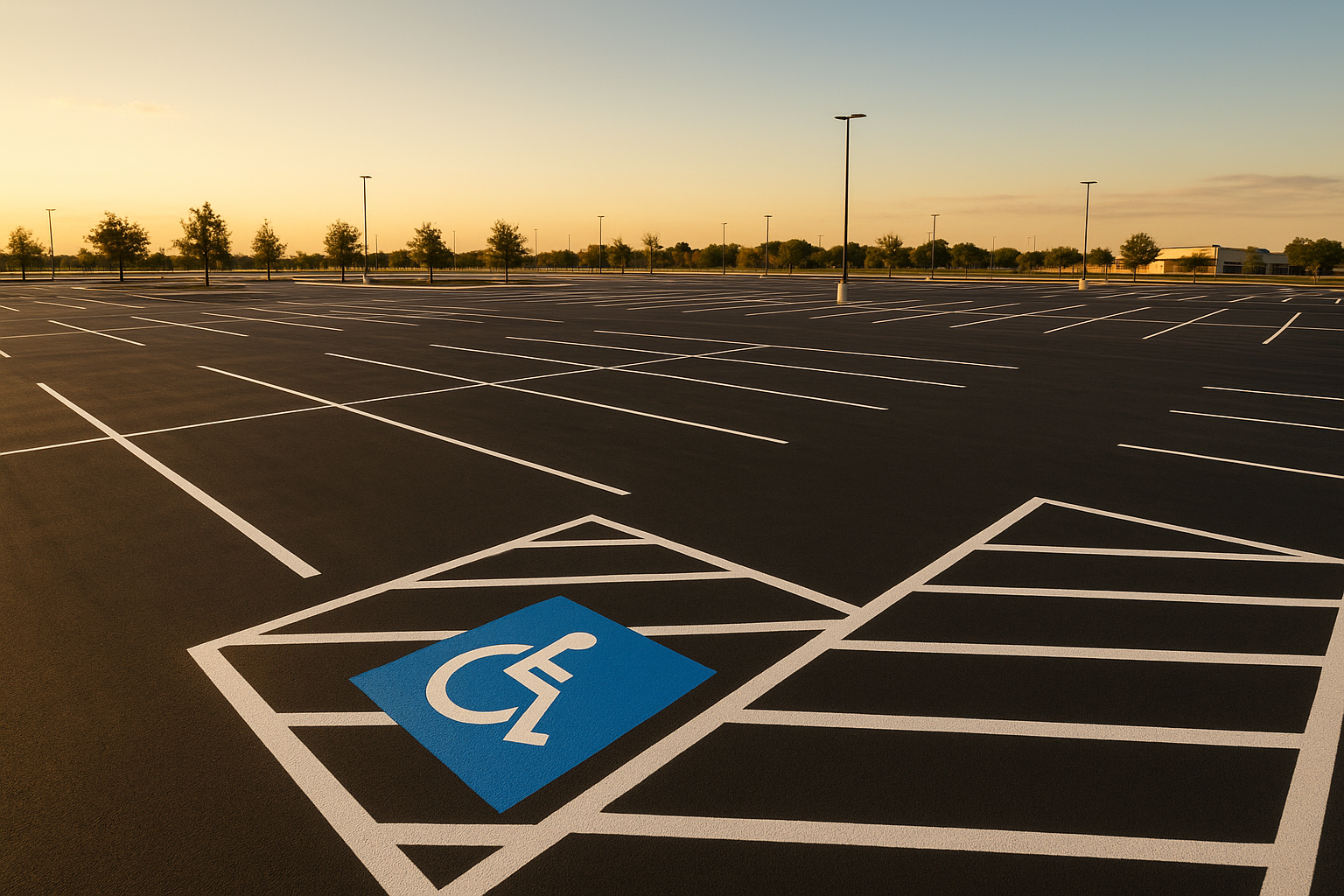
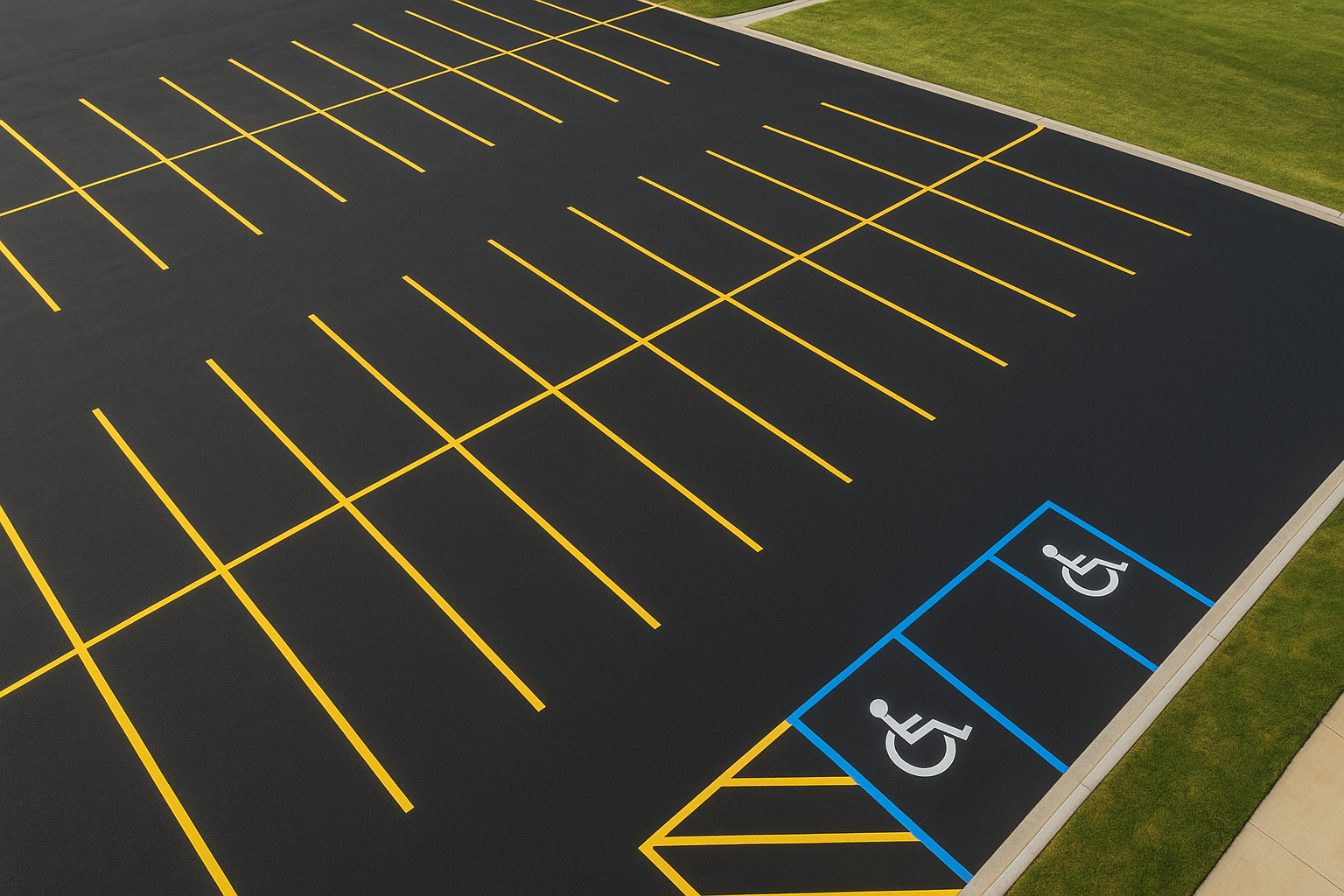
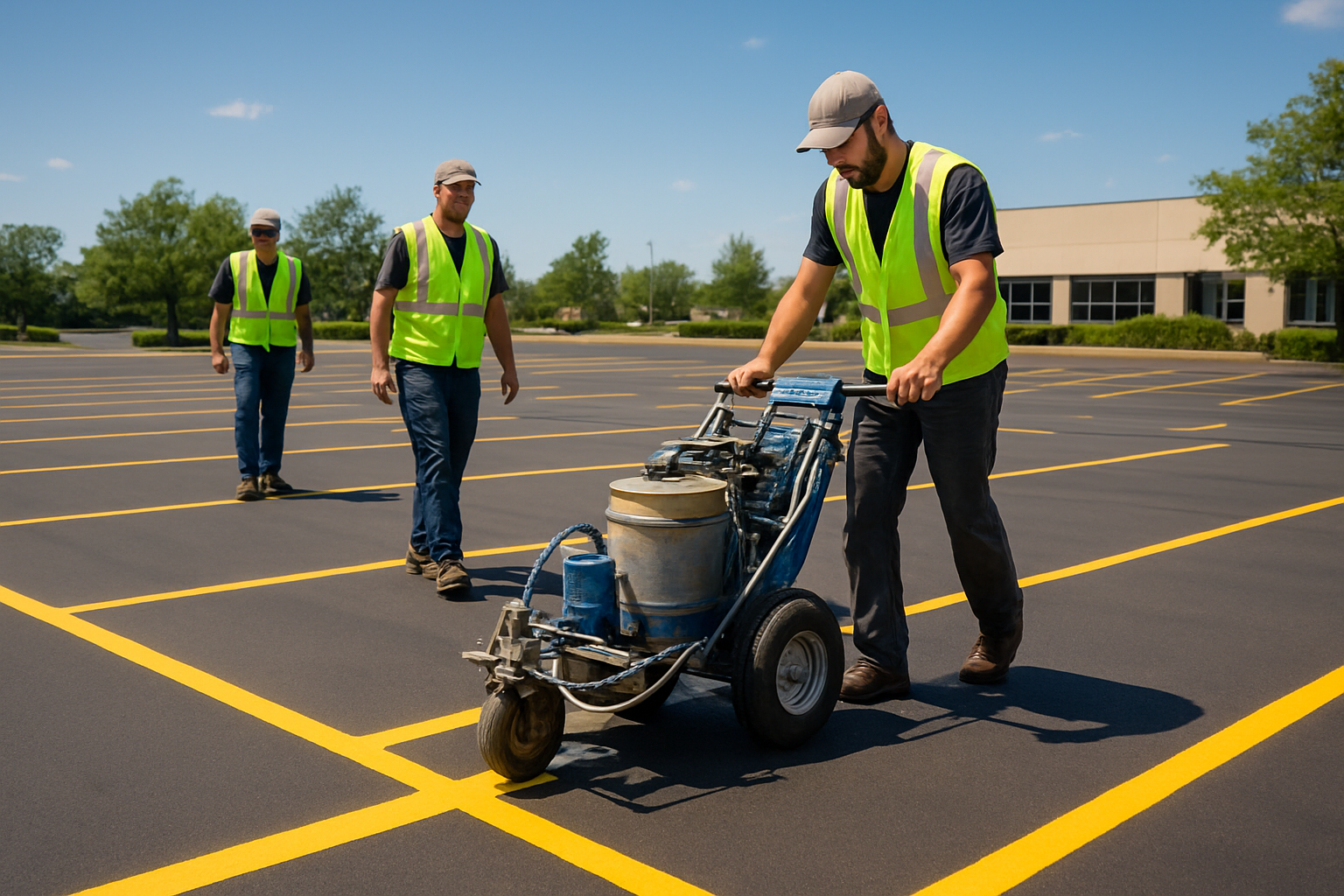
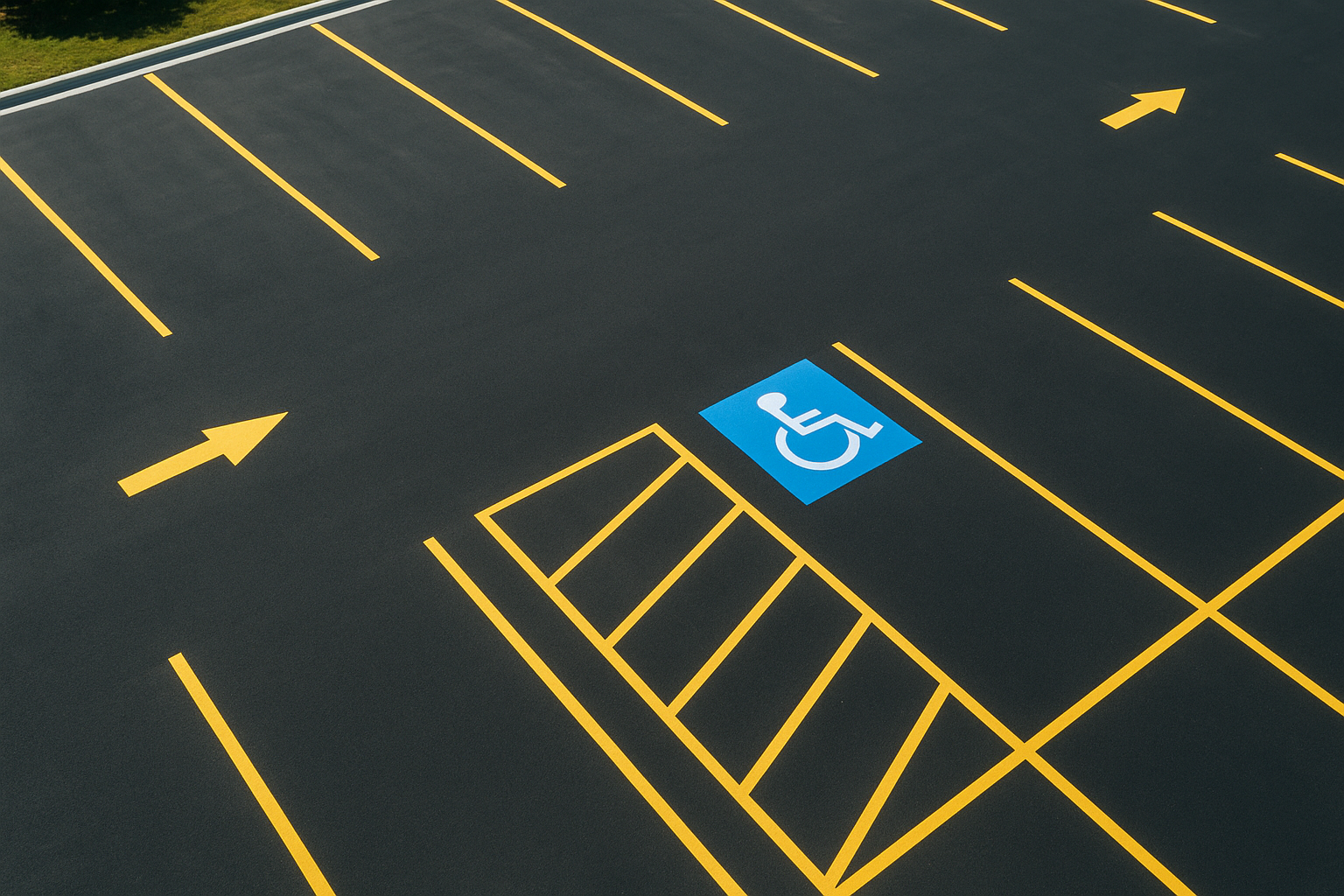
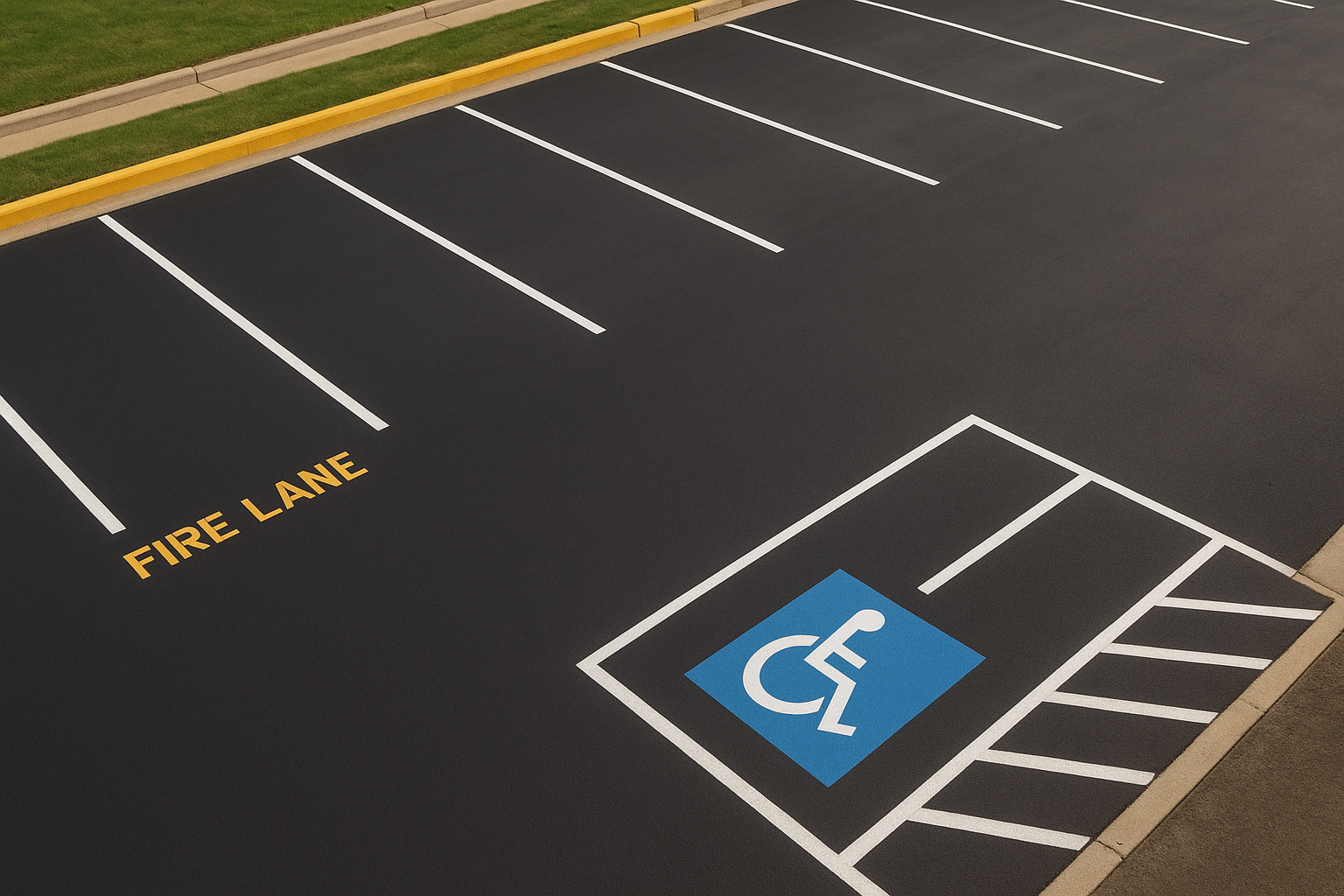
    Freshly painted Denton commercial striping lines on a large retail parking lot

    Clear, freshly applied lines are the hallmark of quality Denton commercial striping.

    Why Commercial Parking Lot Striping Matters in Denton, TX

    Commercial parking lot striping matters for more reasons than curb appeal alone. Well-marked lots help drivers navigate safely, reduce the risk of accidents, and make the most of available parking capacity. In addition, clearly marked ADA stalls and fire lanes are not optional extras — they’re often required by law.

    According to the U.S. Access Board and ADA.gov, commercial properties must provide accessible parking spaces that meet specific size, signage, and location requirements under the Americans with Disabilities Act. Consequently, property owners who neglect striping upkeep risk fines, liability claims, or failed inspections. Furthermore, faded lines make it harder for property managers to enforce fire lane restrictions, which can delay emergency responders during a crisis.

    Key Elements of Professional Line Striping Services

    Not all striping projects look the same. Depending on the property type, a few core elements typically come into play.

    ADA Compliance Markings

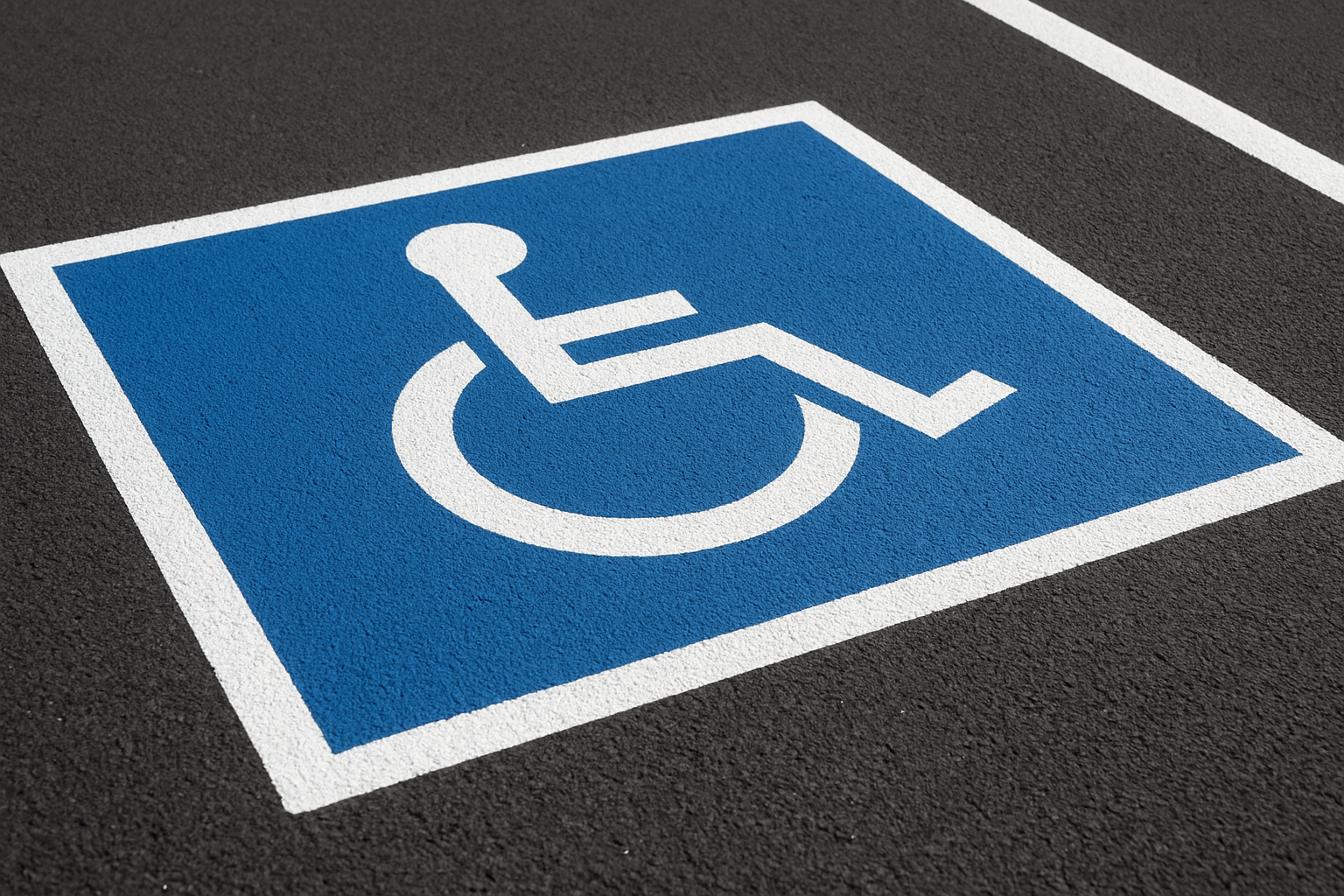
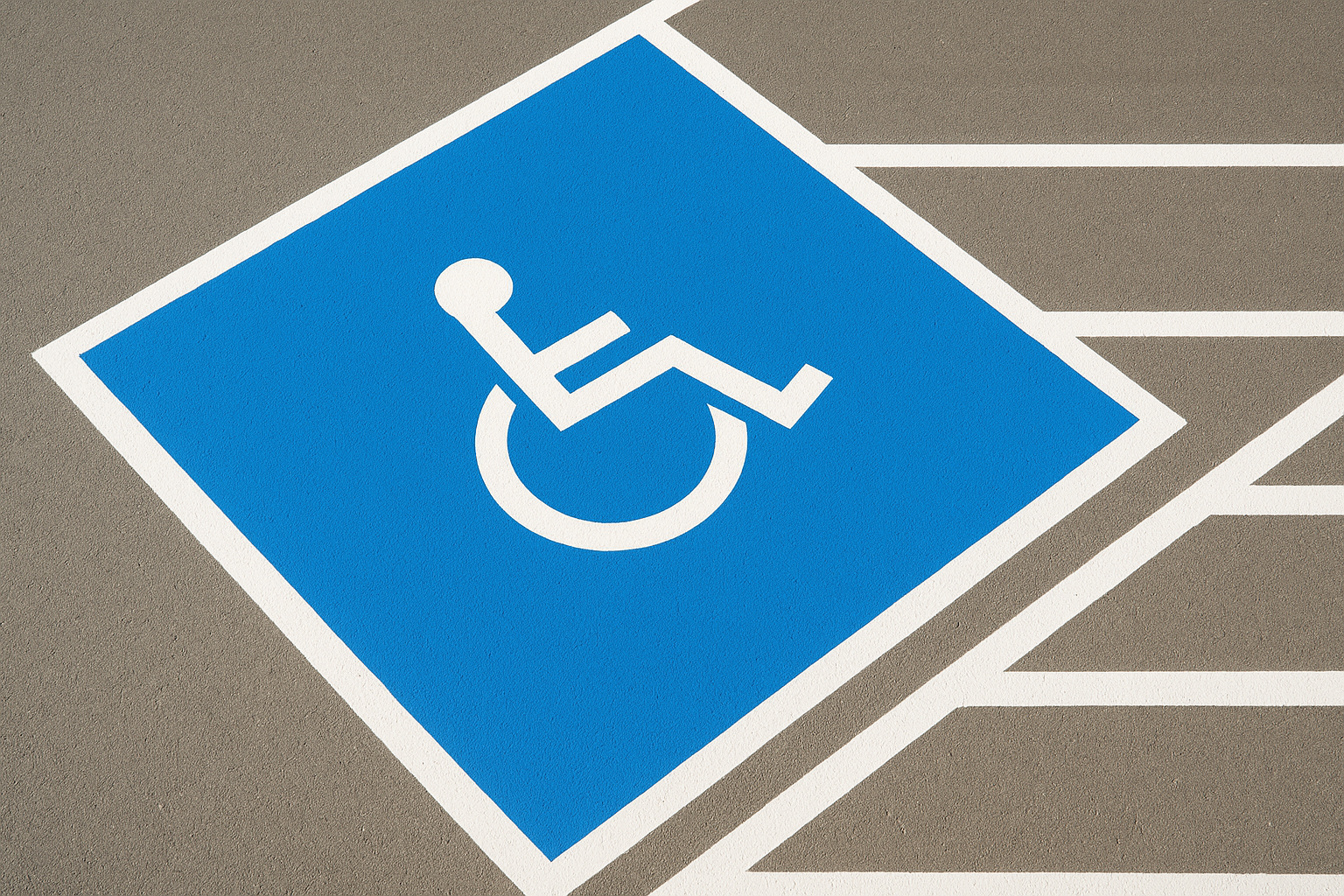
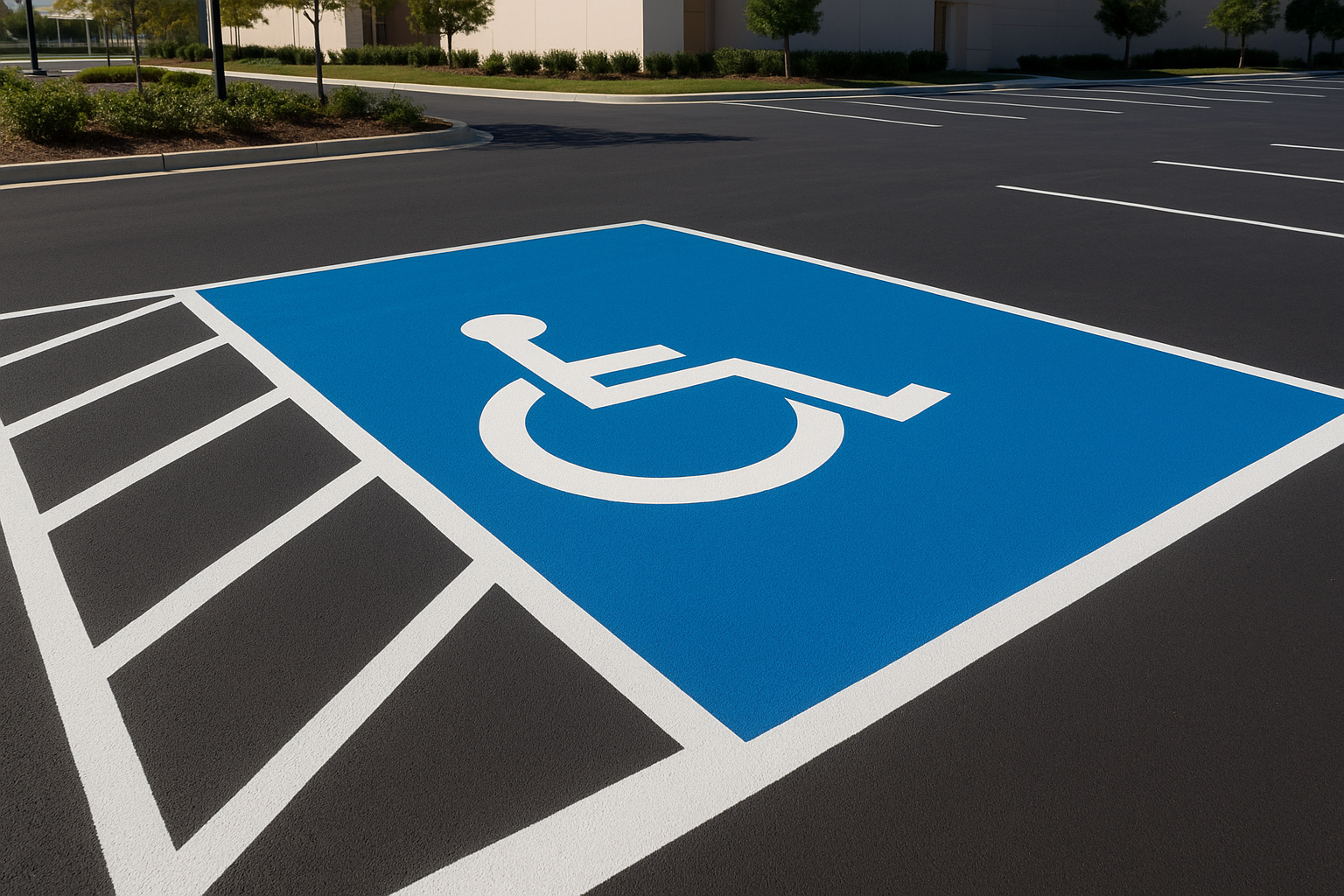
    ADA compliance markings ensure that accessible parking spaces meet federal guidelines for width, signage, and proximity to building entrances. Specifically, these markings often include the blue accessibility symbol, van-accessible signage, and properly sized access aisles. Because requirements can vary slightly by jurisdiction, it’s wise to confirm local code details with the ADA and fire lane specialists serving the Denton, TX area.

    Fire Lane Marking and Safety

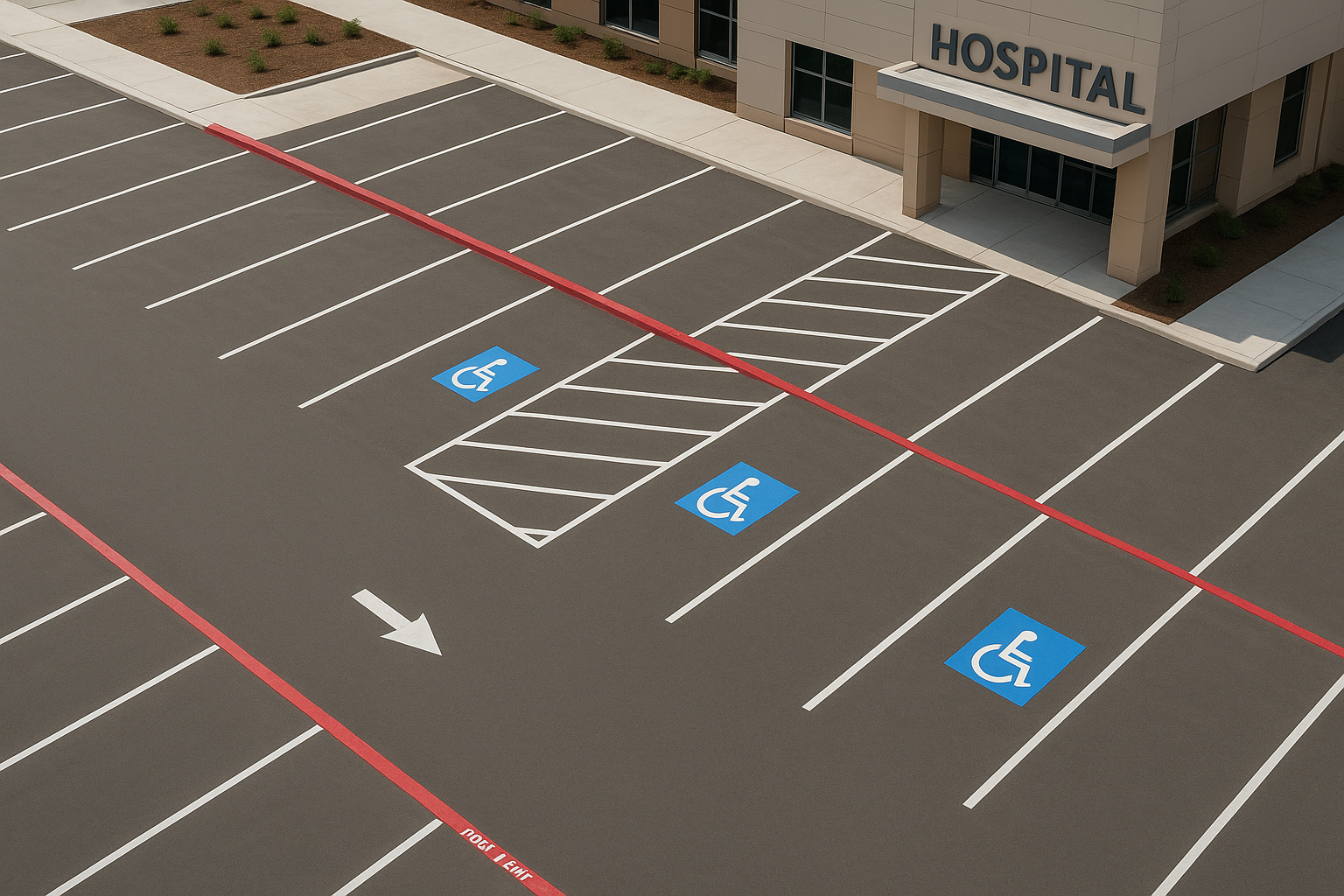
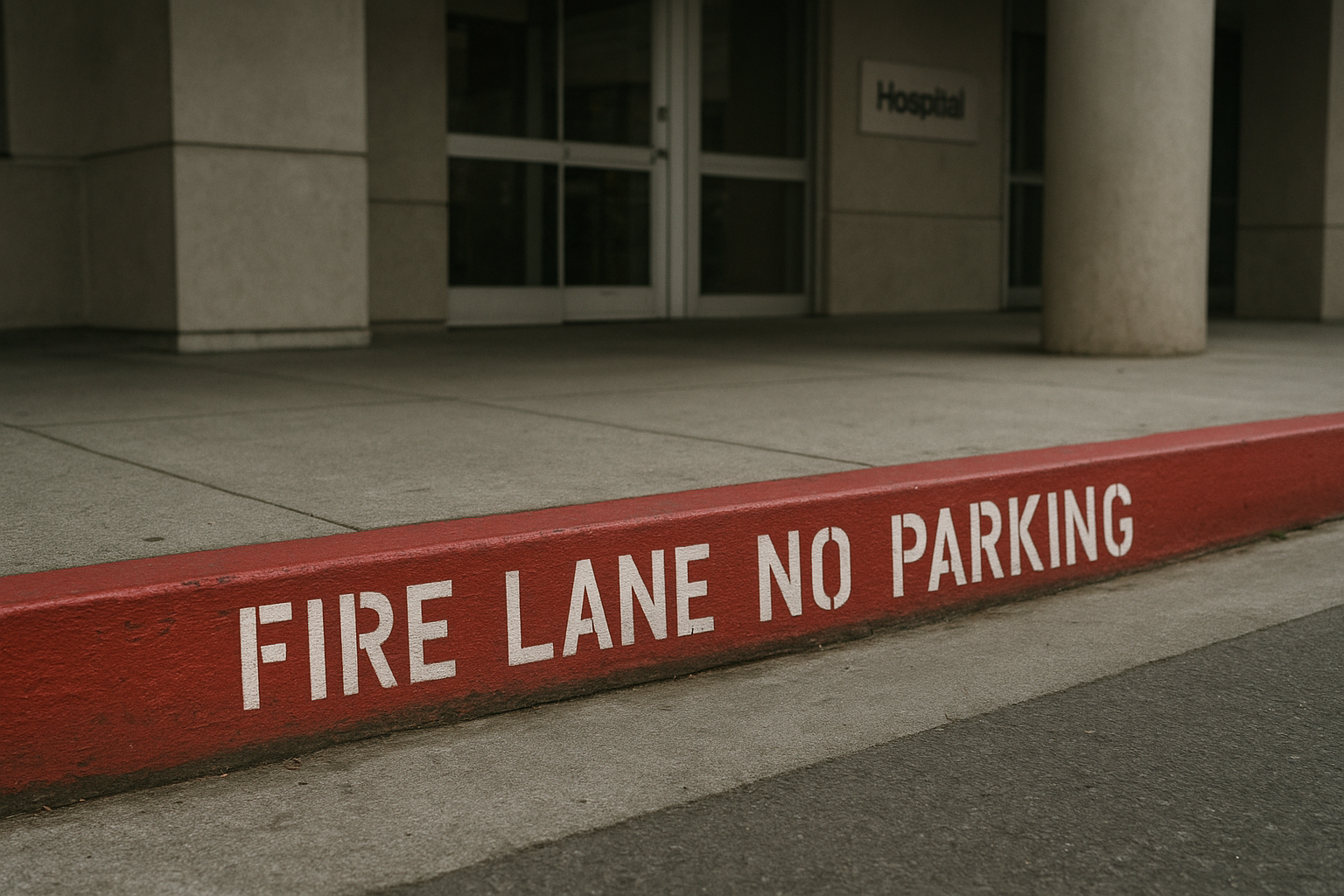
    Fire lane marking uses red paint and bold lettering to warn drivers that a zone must remain clear for emergency vehicles. Typically, these lanes follow guidelines set by local fire departments and the Manual on Uniform Traffic Control Devices, which standardizes road and lot markings nationwide. Above all, keeping fire lanes visible and unobstructed can make a critical difference during an emergency response.

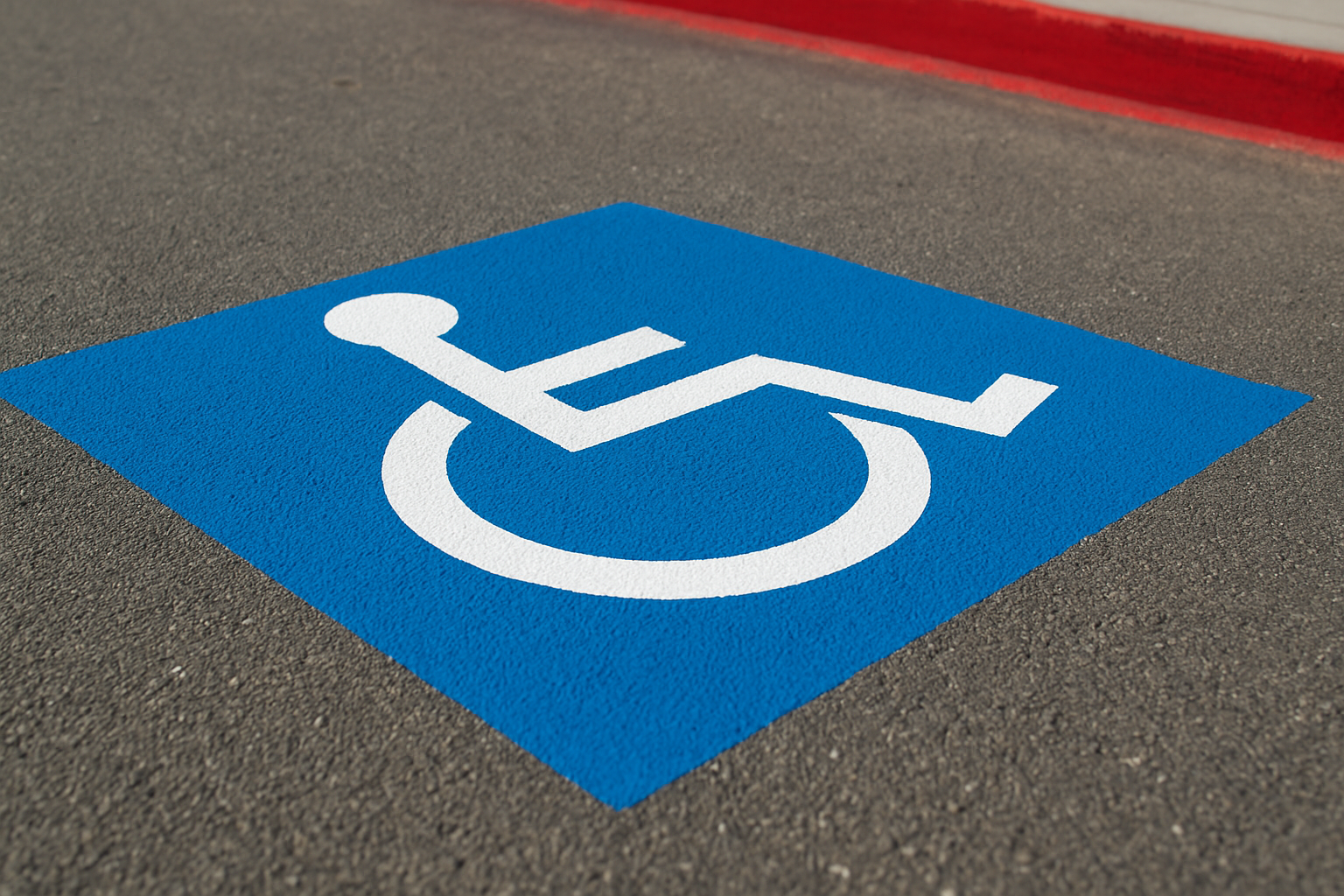
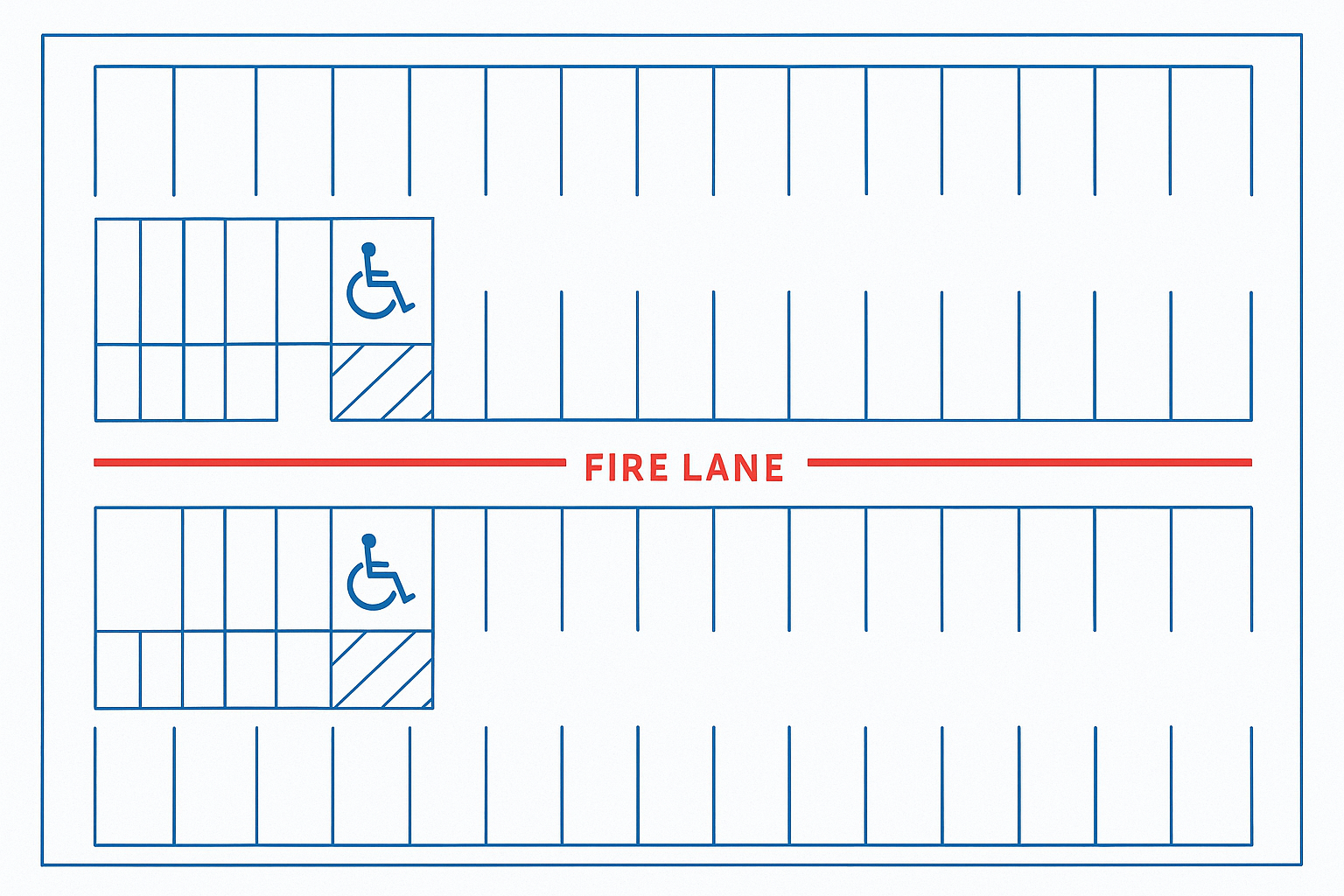
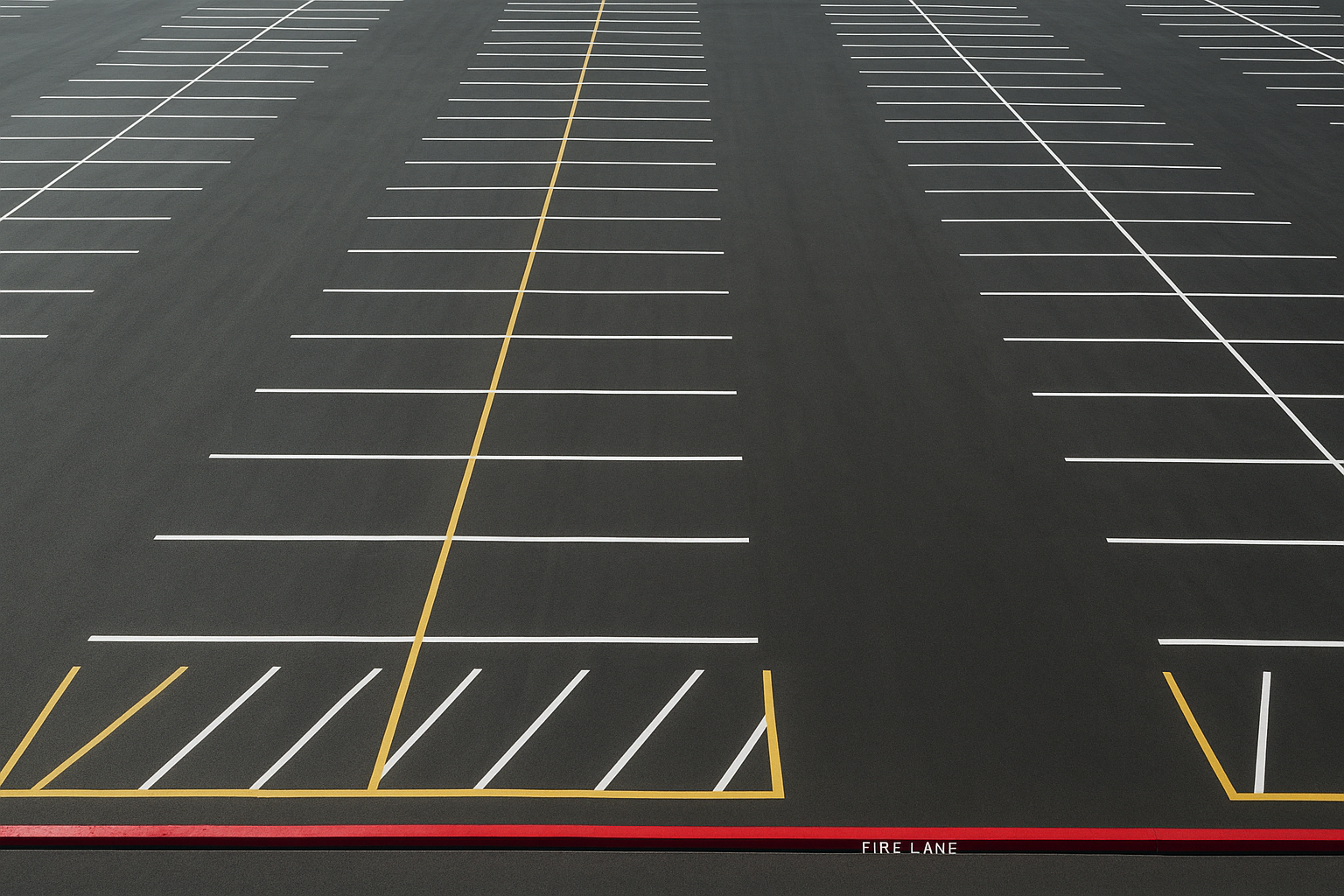
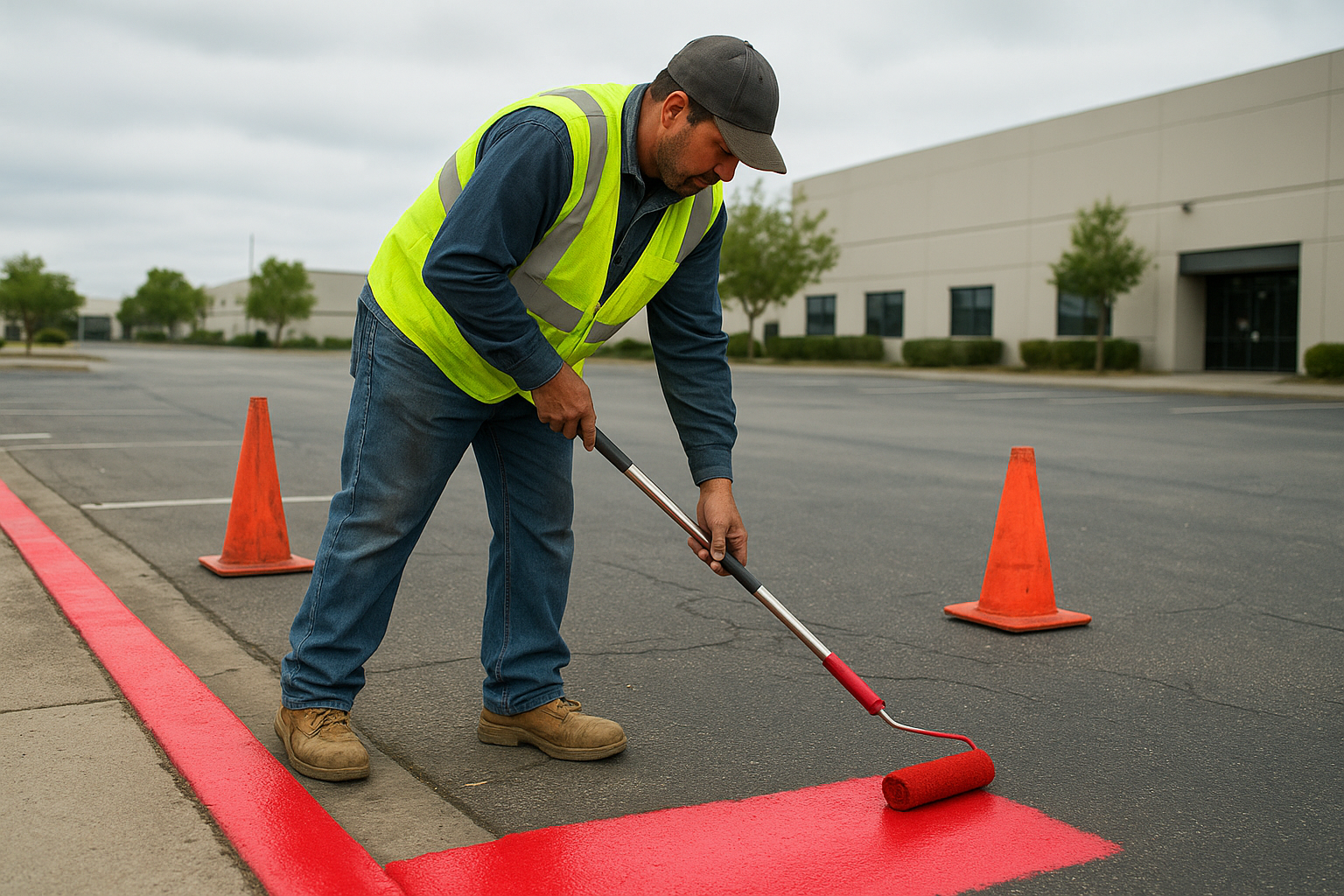
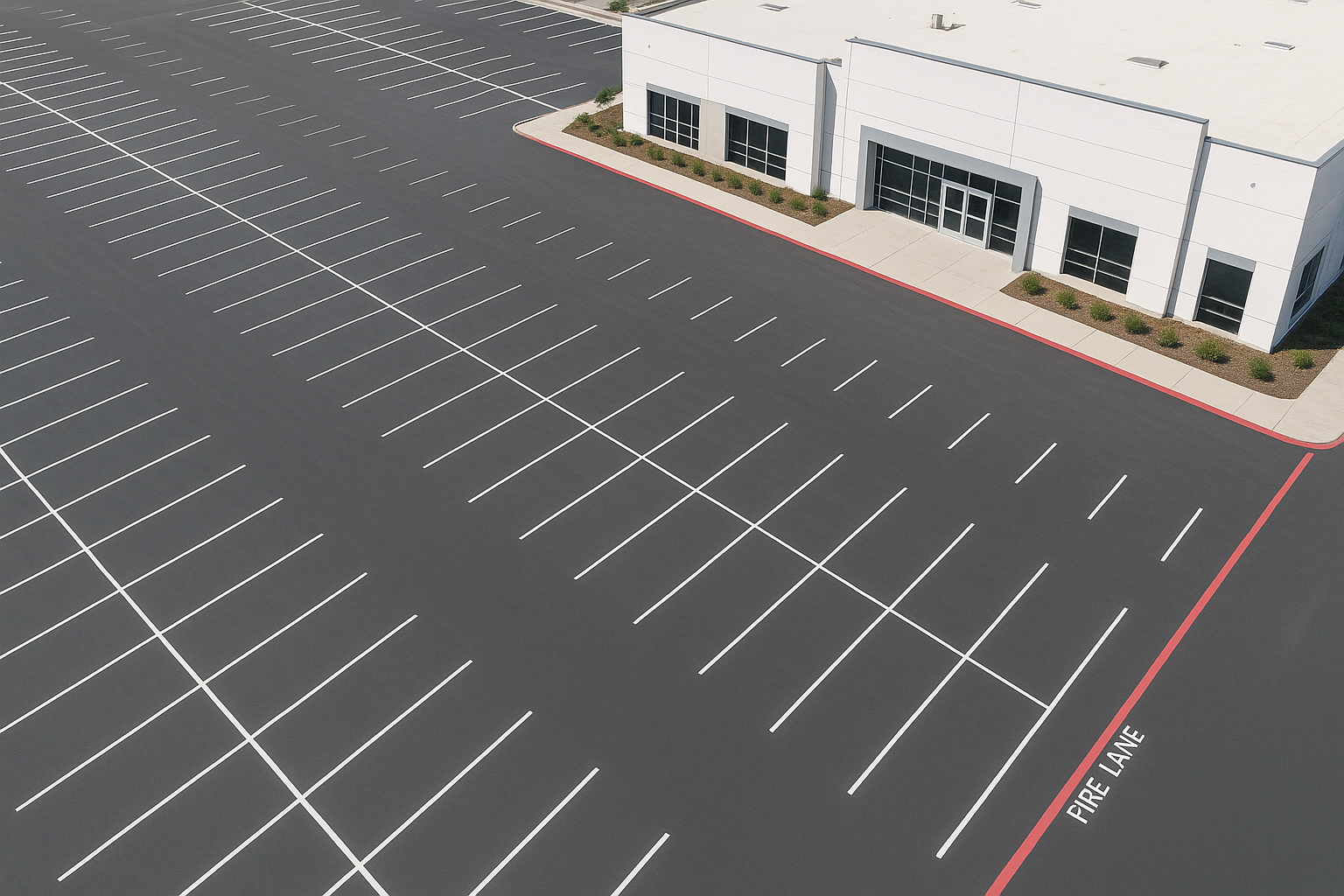
    Red fire lane curb marking on a Denton commercial parking lot

    Fire lane markings keep emergency access routes clear at all times.

    Directional Arrows and Traffic Flow

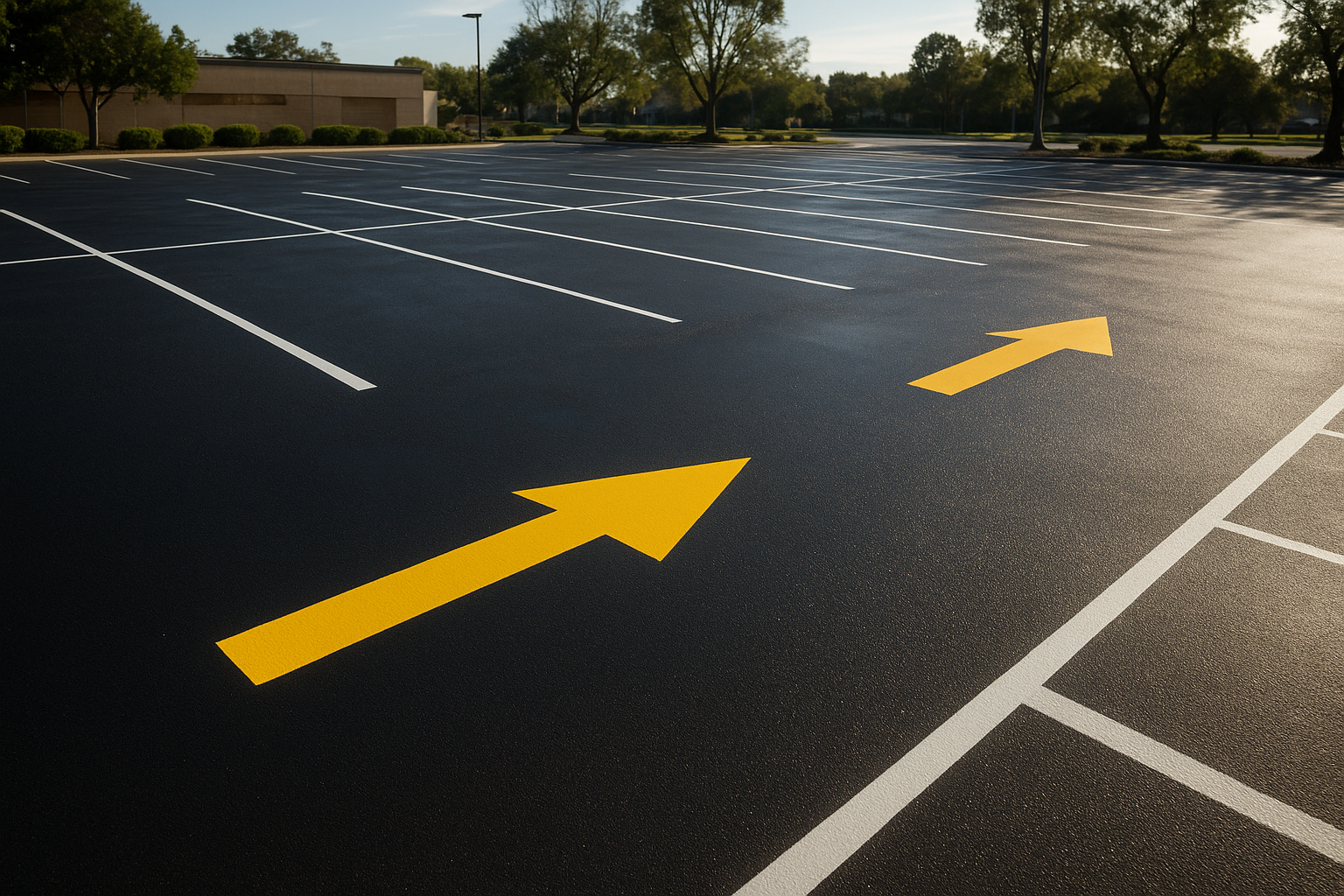
    Directional arrows and curb markings guide vehicles through a lot safely, especially in busy retail centers or school pick-up zones. Similarly, one-way arrows help prevent head-on conflicts in tight aisles. Well-planned traffic flow patterns, therefore, reduce congestion and make parking lots easier to navigate for everyone.

    The Denton Commercial Striping Process: Step-by-Step

    Every Denton commercial striping project follows a similar sequence, regardless of the property’s size. Here’s what property owners can generally expect:

    1. Site Assessment and Layout Planning: A crew inspects the lot, measures dimensions, and reviews any existing layout to plan stall counts, ADA requirements, and fire lane placement.
    2. Surface Cleaning and Preparation: The pavement is swept, power-washed if needed, and cleared of debris or old paint chips so new lines adhere properly.
    3. Measuring and Laying Out New Lines: Technicians use chalk lines, string, or laser-guided tools to mark accurate stall widths, angles, and spacing before painting begins.
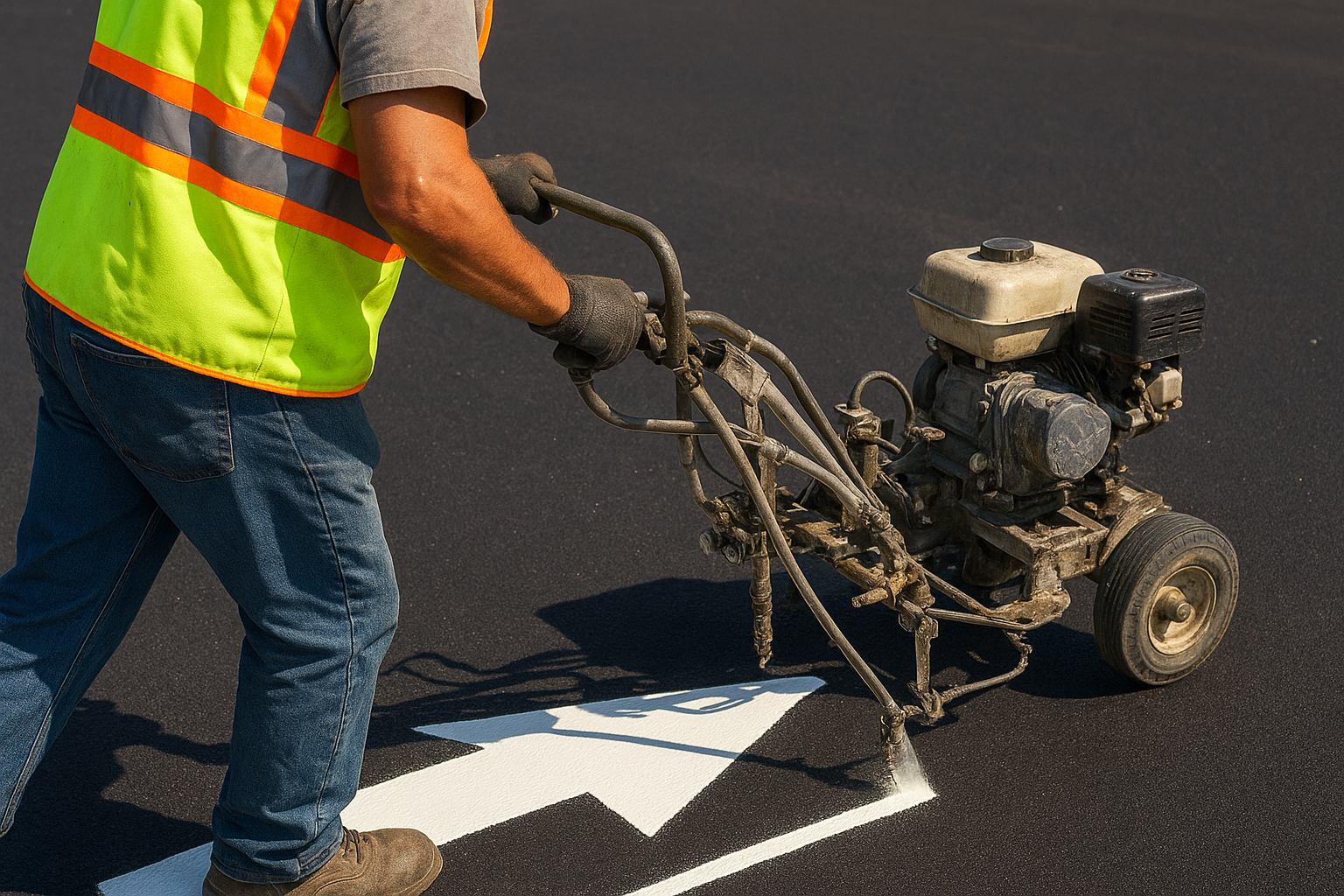
    4. Applying Paint or Thermoplastic Material: Crews apply traffic paint or thermoplastic striping using specialized machines, ensuring consistent width and crisp edges throughout the lot.
    5. Curing, Inspection, and Cleanup: Once markings are applied, the area is cordoned off to cure, then inspected for quality before equipment and materials are cleared away.

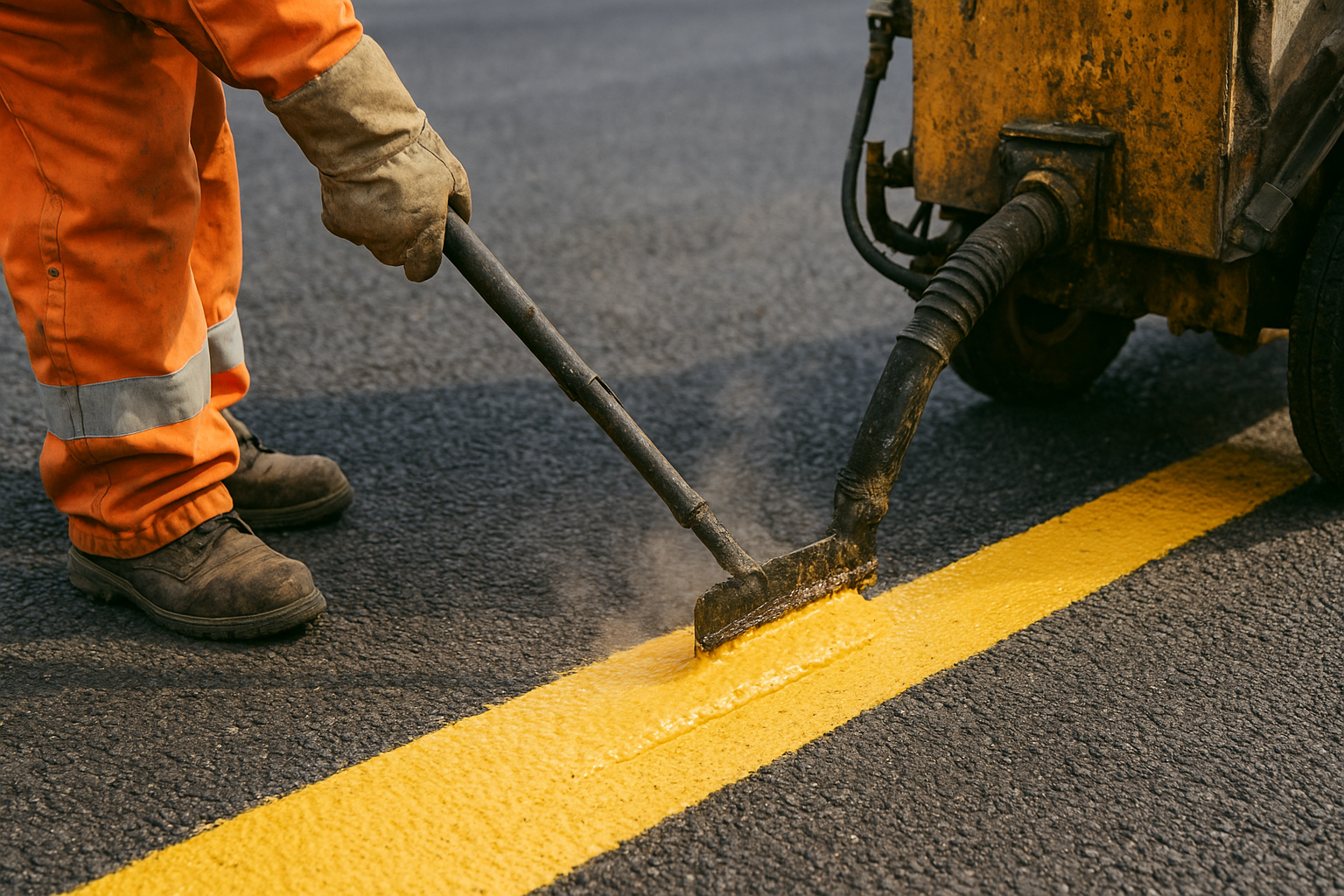
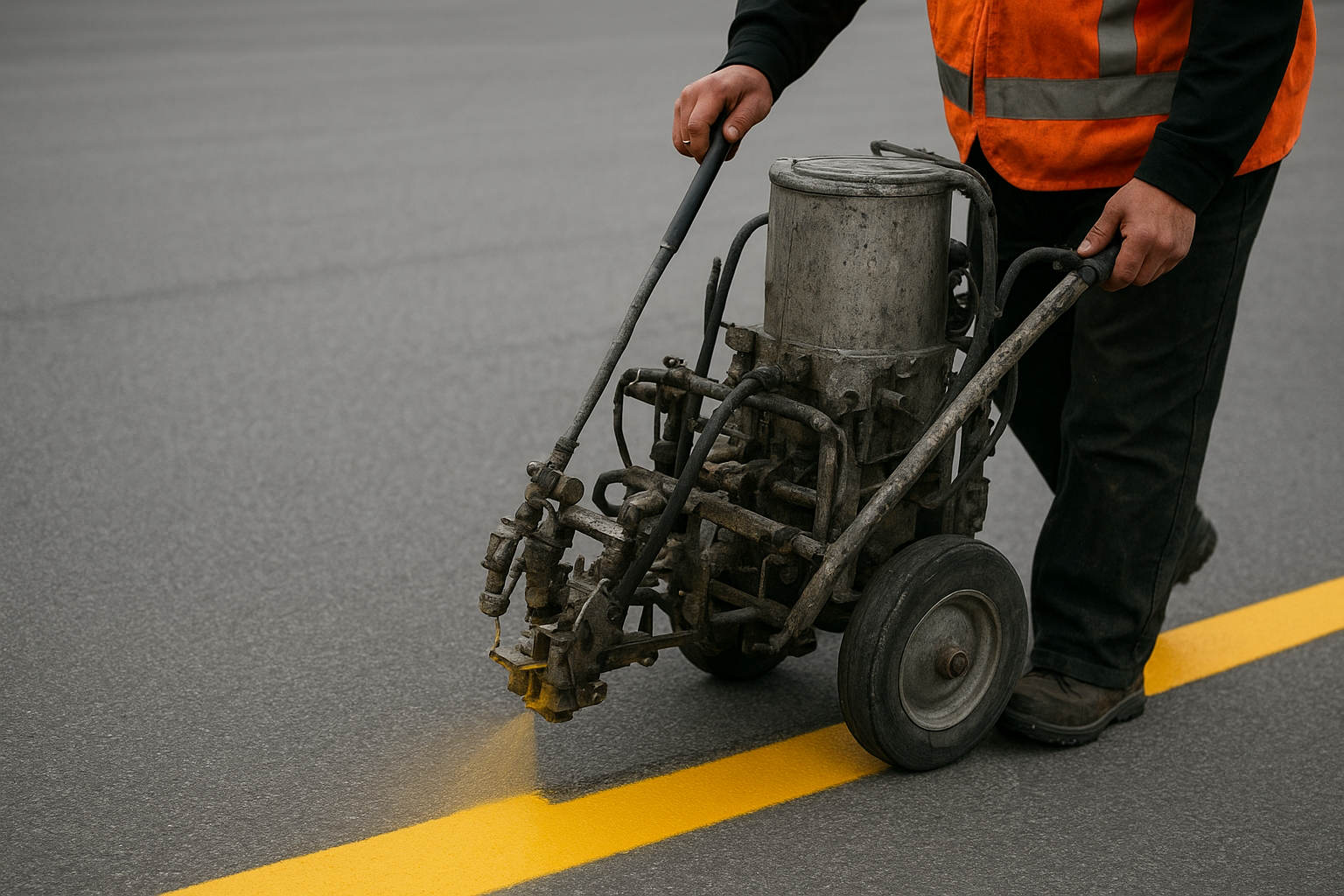
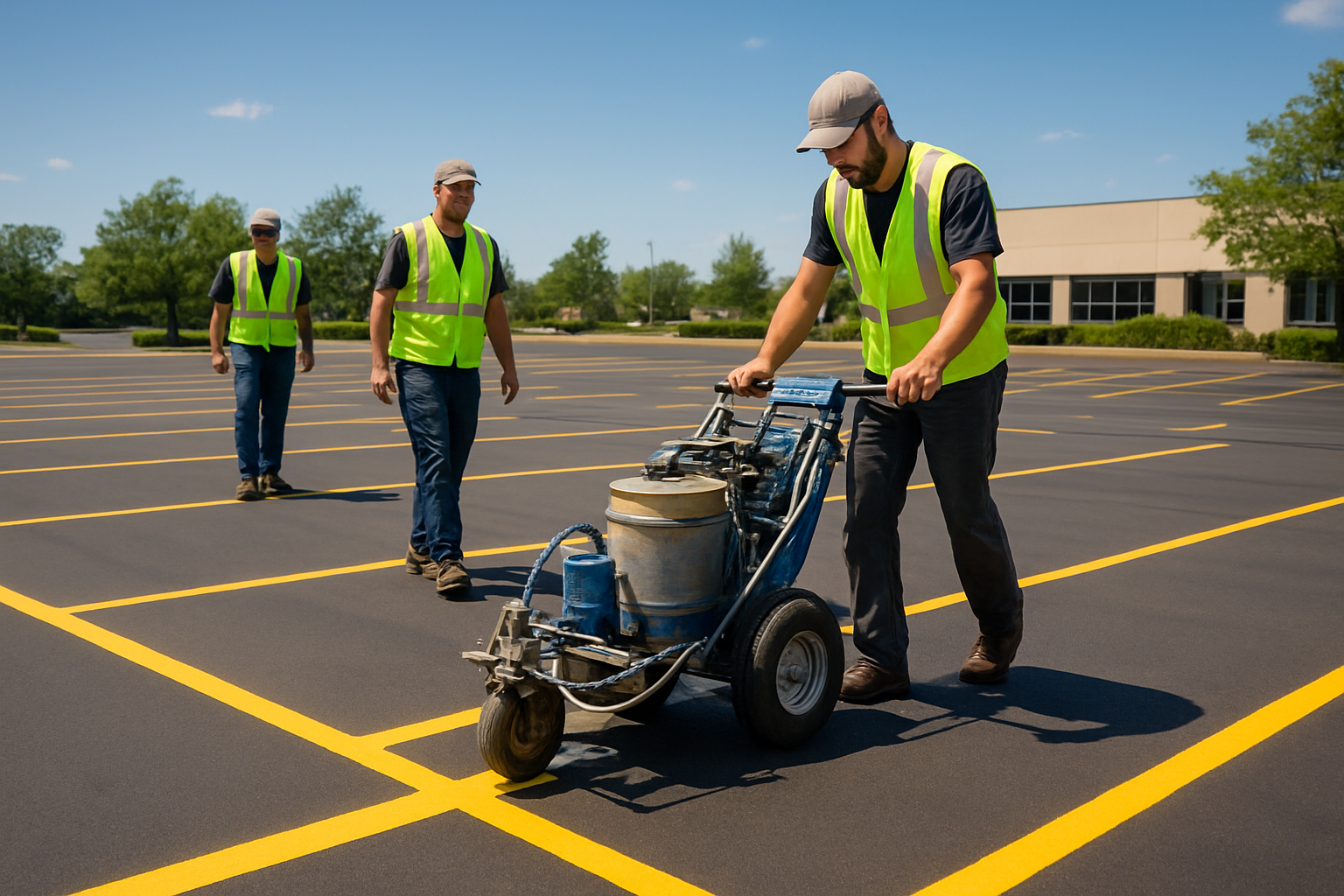
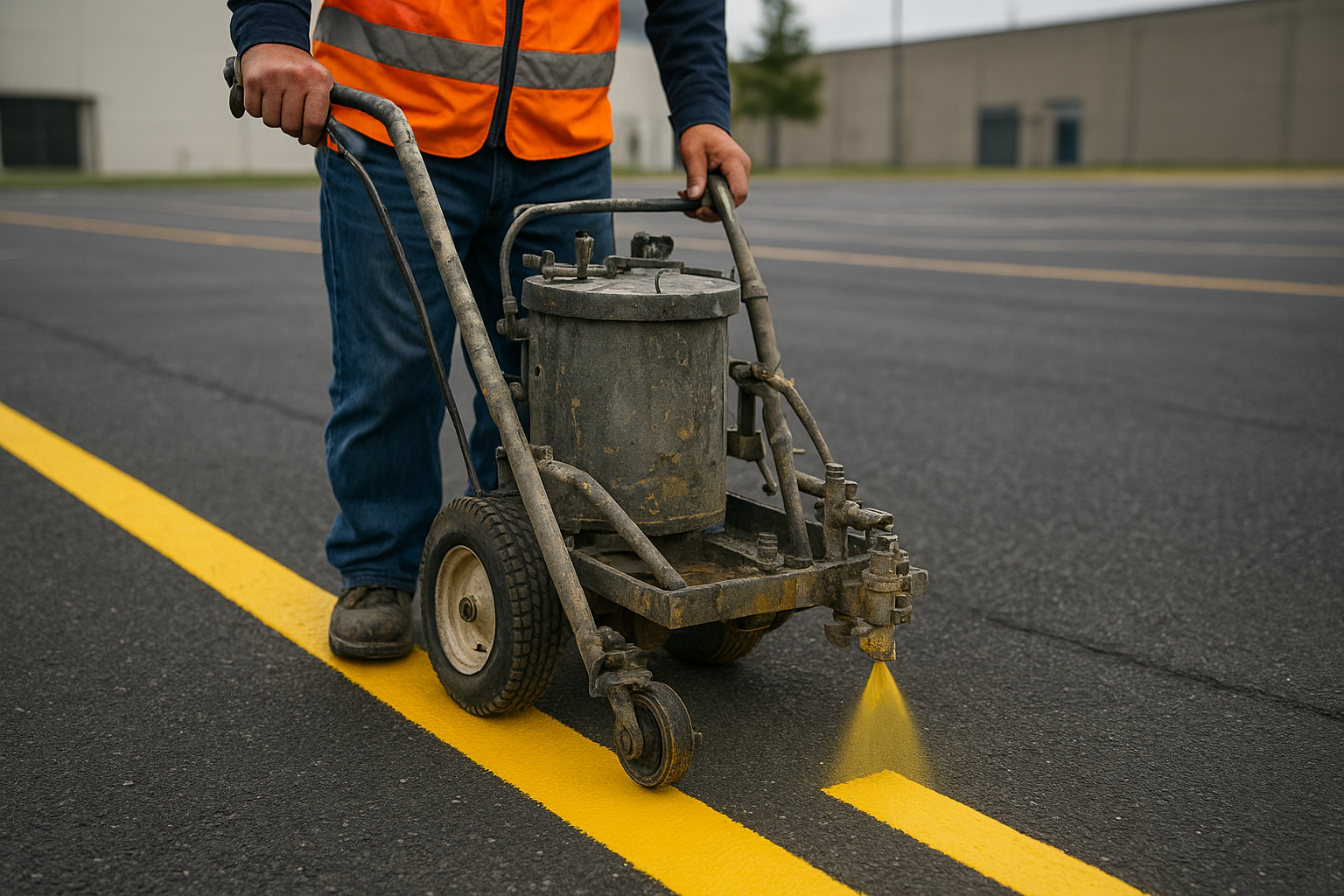
    Crew applying fresh line striping paint during a commercial parking lot project

    Specialized equipment keeps lines straight and consistent from start to finish.

    How Often Should You Restripe a Commercial Parking Lot?

    Most commercial lots need restriping every 12 to 24 months, though high-traffic properties like retail centers or schools may need it annually. Sun exposure, heavy vehicle traffic, and Texas weather all contribute to faster fading.

    Specifically, watch for warning signs such as barely visible stall lines, chipped fire lane paint, or ADA markings that are hard to see from a distance. Otherwise, waiting too long can lead to confused traffic patterns and potential compliance issues during an inspection.

    Choosing the Right Striping Company in Denton and Plano

    Choosing a striping company involves more than picking the lowest bid. Instead, look for a provider with experience across property types, from retail centers to municipal facilities. For instance, stripespls.com specializes in professional parking lot striping, ADA compliance, and fire lane marking throughout the Denton and Plano, TX areas.

    In addition, ask potential providers about the materials they use, their turnaround time, and whether they offer free, no-obligation quotes. A company familiar with local codes and property types across North Texas can typically spot compliance issues that less experienced crews might miss. You can review available parking lot striping services in Denton to compare options before requesting a quote.

    Cost Factors for Commercial Striping Projects

    Several factors influence the cost of a commercial striping project, including lot size, the number of ADA stalls required, and whether paint or thermoplastic material is used. Thermoplastic striping, for example, costs more upfront but lasts significantly longer than standard paint, which can make it more economical over time.

    Similarly, complex layouts with fire lanes, directional arrows, and multiple lot sections take longer to complete, which can affect the final quote. Because pricing varies so much by property, most reputable providers offer a free site visit rather than a flat online estimate. To see how pricing can differ, it helps to review the differences between commercial and residential striping services, and learn more about thermoplastic striping options before budgeting for a project.

    Frequently Asked Questions About Denton Commercial Striping

    What is Denton commercial striping?

    Denton commercial striping is the professional application of parking lot lines, ADA-accessible stalls, fire lanes, and directional markings for businesses in Denton, Texas. It keeps parking areas organized, safe, and compliant with local and federal regulations.

    How much does commercial parking lot striping cost in Denton, TX?

    Cost varies by lot size, layout complexity, and material used, with most commercial projects ranging from a few hundred to several thousand dollars. Requesting a free, on-site quote is the most accurate way to get pricing for your property.

    How long does striping paint take to dry?

    Traffic paint typically dries to the touch within 30 minutes and cures fully within 24 to 48 hours, depending on temperature and humidity. Thermoplastic striping hardens within minutes because it’s melted and fused to the pavement.

    How often should a commercial parking lot be restriped?

    Most commercial lots need restriping every 12 to 24 months, though high-traffic properties may need it annually. Faded lines, peeling paint, or hard-to-see ADA markings are clear signs it’s time for a refresh.

    What paint is used for commercial line striping?

    Most striping companies use water-based traffic paint or thermoplastic material, both formulated to withstand vehicle traffic, UV exposure, and weather changes. Thermoplastic lasts longer but costs more upfront than standard paint.

    Is ADA-compliant striping required for all commercial properties?

    Yes, any commercial property with public parking must provide a minimum number of accessible spaces that meet Americans with Disabilities Act guidelines. The required number of ADA stalls depends on total parking spaces available on the property.

    What’s the difference between commercial and residential striping?

    Commercial striping usually involves larger lots, stricter compliance requirements, and higher-traffic layouts like fire lanes and loading zones. Residential striping projects are typically smaller in scale and focus mainly on basic space delineation.

    How do fire lane markings work?

    Fire lanes are marked with red paint and lettering that reads “NO PARKING FIRE LANE,” warning drivers to keep the area clear for emergency vehicles. Local fire codes typically dictate the exact width, color, and placement requirements.

    What is thermoplastic striping, and how is it different from paint?

    Thermoplastic striping uses a solid material that’s heated and melted directly onto the pavement, creating a thick, reflective line that lasts longer than standard paint. It costs more initially but often reduces how frequently restriping is needed.

    Can striping be done in cold or wet weather?

    Striping generally requires dry pavement and temperatures above a certain threshold for proper paint adhesion and curing. Most Denton-area striping projects are scheduled during dry conditions to ensure the markings last as long as possible.

    What are common mistakes property owners make with parking lot striping?

    Common mistakes include waiting too long to restripe faded lines, ignoring ADA compliance updates, and hiring inexperienced crews who use low-quality paint. These issues can lead to safety hazards, fines, or costly rework down the line.

    How do I get a free striping quote in Denton or Plano?

    Property owners can request a free quote by contacting a local striping company directly through its website, such as stripespls.com, or by phone. Providing lot dimensions and photos in advance can help speed up the quoting process.

    Final Thoughts on Denton Commercial Striping

    Denton commercial striping plays a bigger role in property safety and compliance than many owners realize. From ADA-accessible stalls to fire lane markings and directional arrows, well-maintained lines keep traffic organized and reduce liability risks. Ultimately, whether your lot needs a full layout redesign or a simple restriping refresh, working with an experienced local provider makes the process straightforward.

    If your Denton or Plano property is due for an update, requesting a free quote through stripespls.com is a simple first step toward a safer, more compliant parking lot.

  • ADA Compliant Striping: Complete Guide for Property Owners

    ADA Compliant Striping: Complete Guide for Property Owners

    ADA Compliant Striping: Complete Guide for Property Owners

    ADA compliant striping is the process of laying out and painting parking lot markings so that accessible stalls, access aisles, and signage meet the technical standards set under the Americans with Disabilities Act. For property owners across Denton and Plano, TX, getting these markings right isn’t optional — it’s a legal requirement that protects visitors, employees, and the business itself. In this guide, we’ll walk through exactly what ADA compliant striping involves, why it matters, and how to keep a property in compliance year after year.

    Quick answer: ADA compliant striping requires correctly sized accessible stalls (96 inches minimum), adjacent access aisles, van-accessible spaces at the right ratio, the International Symbol of Accessibility, and posted signage. Lots must also be repainted periodically as markings fade.

    What Is ADA Compliant Striping?

    ADA compliant striping refers to parking lot markings that satisfy the accessibility rules published under the Americans with Disabilities Act (ADA), a federal civil rights law protecting people with disabilities. In practical terms, this means painting accessible stalls at the correct width, adding access aisles beside them, and marking each stall with the recognizable wheelchair symbol.

    Beyond paint, compliance also involves signage, curb ramps, and route markings that connect the parking area to the building entrance. Consequently, a lot can look freshly striped and still fail an inspection if the stall counts, aisle widths, or signage don’t match current code. That’s why many property managers rely on a specialized parking lot striping team rather than attempting a DIY layout.

    Why ADA Compliant Parking Lot Markings Matter

    Accessible markings matter because they directly affect whether people with mobility limitations can safely enter a building. In addition, non-compliant lots expose property owners to real financial risk. According to the U.S. Department of Justice’s ADA guidance, thousands of accessibility complaints are filed each year, and parking lot violations remain one of the most common triggers.

    Furthermore, an inaccessible lot can quietly turn away customers, patients, and employees before they ever reach the front door. For schools, healthcare facilities, and retail centers throughout North Texas, that translates into lost trust as well as legal exposure. A well-maintained lot, on the other hand, signals professionalism and care for every visitor.

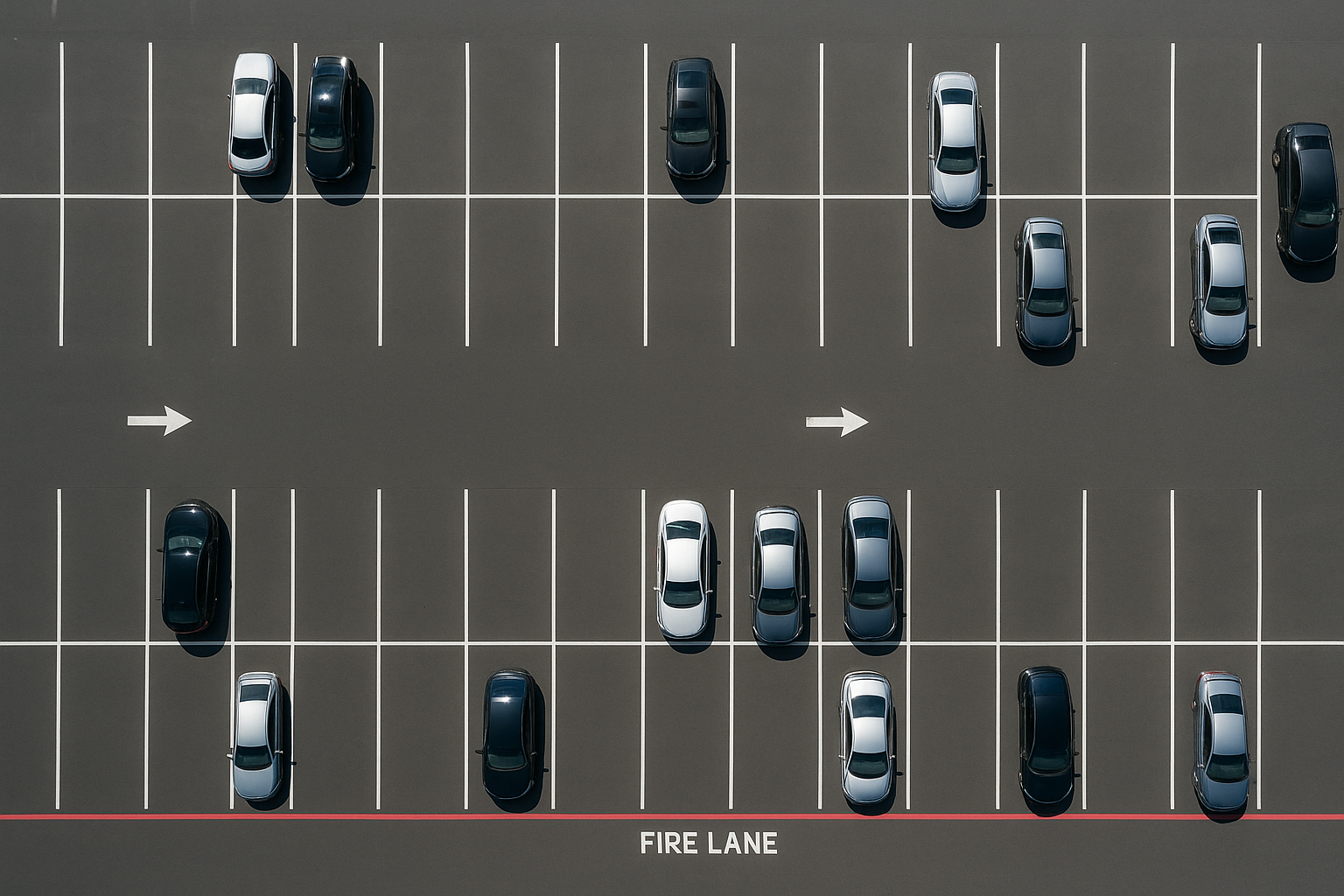
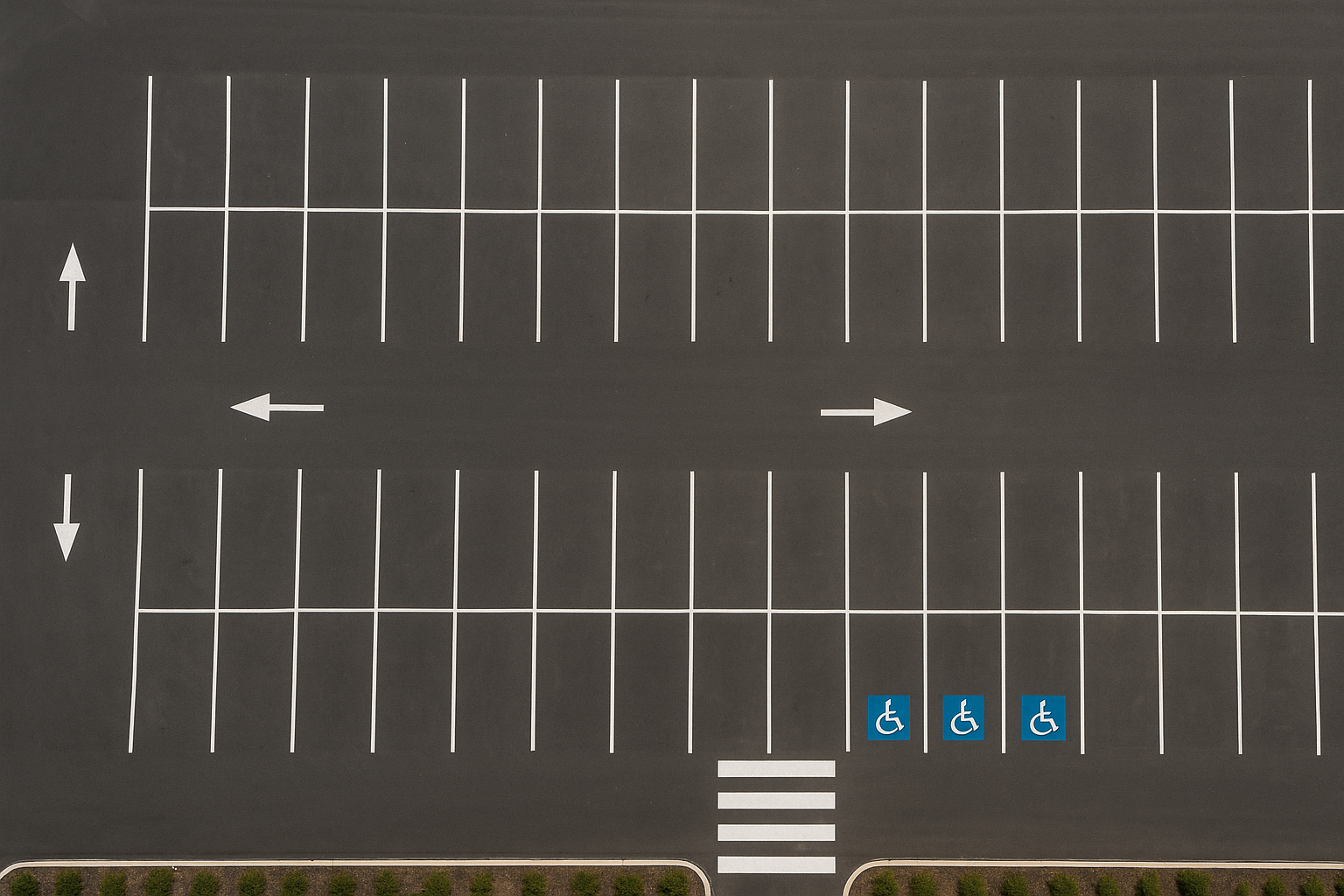
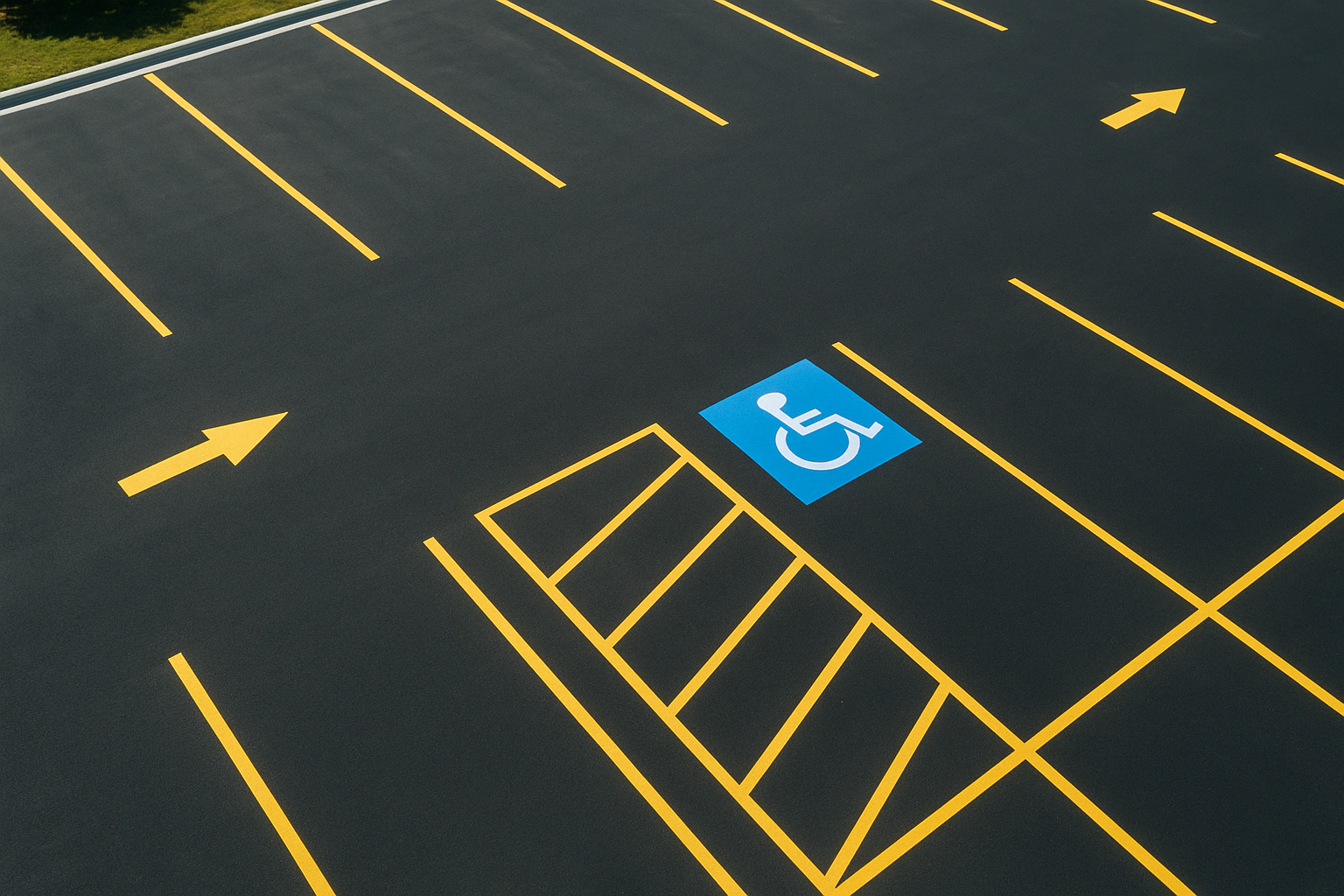
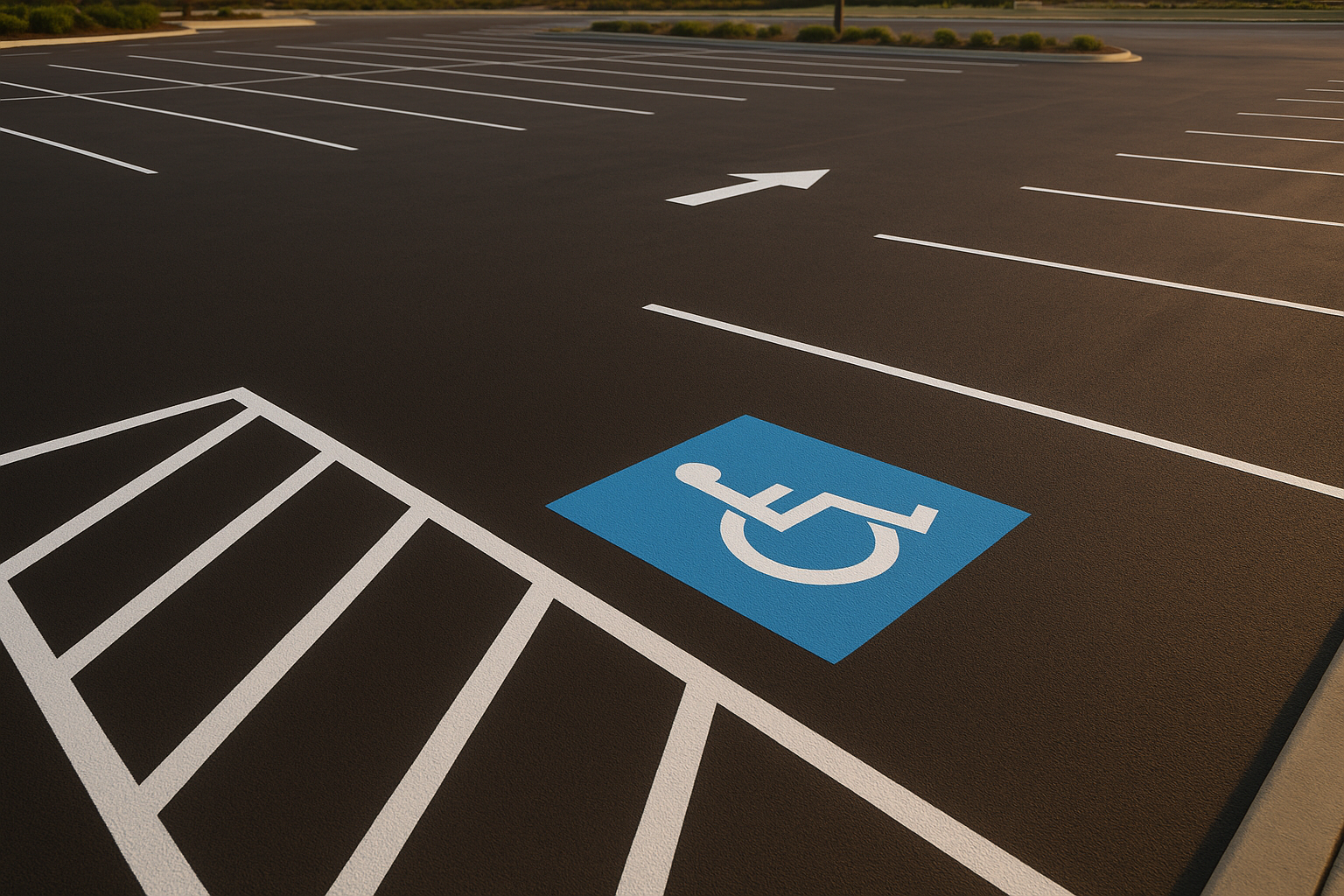
    Aerial view of a parking lot with ADA compliant striping and marked accessible stalls

    A properly striped lot makes ADA compliant striping easy to identify from the access aisle to the accessibility symbol.

    Key ADA Striping Requirements for Commercial Properties

    Several technical rules govern how accessible spaces must be laid out. Specifically, the U.S. Access Board’s ADA Standards for Accessible Design set the baseline dimensions and ratios that every commercial lot must follow.

    • Standard accessible stalls must be at least 96 inches wide with a 60-inch access aisle beside them.
    • Van-accessible stalls need either a 96-inch stall with a 96-inch aisle or a 132-inch aisle alongside a standard-width stall.
    • At least one in every six accessible spaces must be van-accessible.
    • Each stall requires the International Symbol of Accessibility plus a mounted sign, and van spaces need an additional “van accessible” placard.

    These rules trace back to the broader Americans with Disabilities Act of 1990, which established nationwide accessibility protections. Because local jurisdictions sometimes add their own layers, it’s worth pairing this checklist with a broader parking lot safety and compliance guide before finalizing a layout.

    How to Achieve ADA Compliant Striping in 6 Steps

    Planning a compliant layout is easier when it’s broken into a clear process. Below is the sequence most professional crews follow when striping a lot for accessibility.

    1. Measure your parking lot and count total parking spaces to determine the exact number of accessible stalls required under ADA guidelines.
    2. Mark van-accessible spaces with a wider access aisle, ensuring at least one in every six accessible spaces meets the van-accessible width requirement.
    3. Paint the International Symbol of Accessibility on each accessible stall using approved traffic paint that meets reflectivity and durability standards.
    4. Install and stripe access aisles between accessible spaces so wheelchair users can safely transfer in and out of vehicles without crossing traffic lanes.
    5. Add required signage at each accessible space, including van-accessible signs where applicable, mounted at the height specified by local building codes.
    6. Schedule regular inspections and repainting every one to two years, since faded lines can quickly fall out of compliance and expose owners to fines.

    Following this order helps avoid rework, since aisle placement depends on stall counts, and signage depends on final paint layout. For a closer look at how this applies specifically to North Texas properties, see this expert line marking guide for Texas properties.

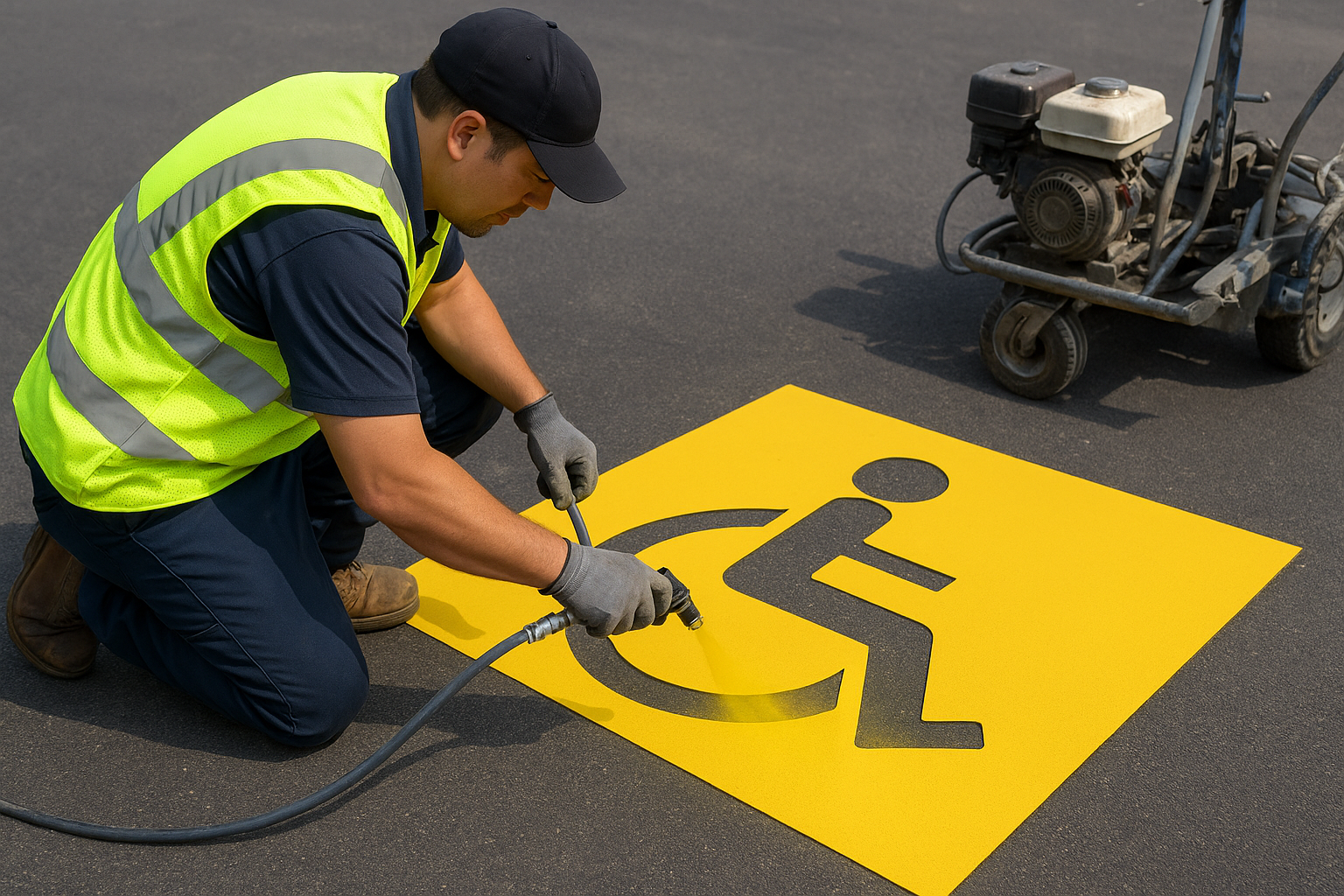
    Worker painting an accessibility symbol as part of ADA compliant striping on asphalt

    Careful stencil work keeps ADA compliant striping crisp and easy to read from a moving vehicle.

    Common ADA Striping Mistakes to Avoid

    Even experienced property managers run into the same handful of errors. For instance, undersized access aisles are one of the most frequent violations, since a few missing inches can make a stall unusable for a wheelchair lift.

    Similarly, many lots miscalculate how many van-accessible stalls are required, or they skip signage updates after restriping. In contrast, a lot that pairs correct stall counts with fresh paint and proper signage rarely runs into compliance trouble. Above all, treating ADA compliant striping as a one-time task rather than ongoing maintenance is the mistake that causes the most repeat violations.

    Cost of ADA Compliant Parking Lot Striping

    Pricing varies based on lot size, the number of accessible stalls needed, and whether old markings need removal first. As a general benchmark, small commercial lots often fall in the low hundreds of dollars, while larger retail centers or municipal lots can run into the low thousands.

    Because every property is different, the most reliable way to budget is a site-specific quote. Property owners in the Plano area can compare notes with this breakdown of professional line striping services in Plano, TX to see what typically factors into pricing.

    Choosing a Professional ADA Striping Contractor in Denton and Plano

    Because ADA compliant striping involves exact measurements and legal requirements, it’s usually worth hiring a specialist rather than a general painting crew. A qualified contractor should understand stall ratios, aisle widths, fire lane coordination, and local signage rules for North Texas municipalities.

    stripespls.com is a full-service parking lot marking company based in Texas, focused on professional striping, ADA compliance solutions, and fire lane marking for commercial and residential properties throughout Denton and Plano. The team works with property managers, retail centers, schools, healthcare facilities, and municipal organizations, and property owners can learn more about what to look for in a provider through this overview of a quality parking lot striping company in Plano. Prospective clients can also request a free quote directly at stripespls.com.

    Frequently Asked Questions About ADA Compliant Striping

    What is ADA compliant striping?

    ADA compliant striping is the painting and layout of parking lot markings that meet the technical accessibility standards set by the Americans with Disabilities Act. It covers accessible stall dimensions, access aisles, signage, and the International Symbol of Accessibility.

    How wide must an ADA accessible parking space be?

    A standard accessible parking space must be at least 96 inches wide, paired with an adjacent access aisle of at least 60 inches. Van-accessible spaces require a wider 132-inch access aisle or a 96-inch space with an 8-foot aisle.

    How many accessible parking spaces does a parking lot need?

    The number of required accessible spaces is based on total lot size, following a sliding scale from the ADA Standards for Accessible Design. For example, lots with 25 or fewer spaces need at least one accessible stall, while larger lots require a higher percentage.

    What paint is used for ADA compliant striping?

    Most contractors use water-based traffic paint or durable epoxy coatings designed for outdoor pavement. These products meet reflectivity and durability standards so markings stay visible through weather and heavy traffic.

    How often should ADA parking lot markings be repainted?

    Most properties need restriping every one to two years, depending on traffic volume and climate exposure. Faded ADA compliant striping can fall out of compliance quickly, so periodic inspection is recommended.

    What is the difference between van-accessible and standard accessible stalls?

    Van-accessible stalls include a wider access aisle to accommodate wheelchair lifts and ramps, along with a specific van-accessible sign. Standard accessible stalls use a narrower aisle and serve passenger vehicles without lift equipment.

    How much does ADA compliant striping cost?

    Cost depends on lot size, number of accessible stalls, and existing pavement condition, but most projects range from a few hundred to a few thousand dollars. Getting a free, site-specific quote is the most accurate way to budget.

    What happens if a parking lot is not ADA compliant?

    Non-compliant properties risk federal lawsuits, local code violations, and fines from municipal inspectors. In addition, inaccessible parking can prevent customers and employees with disabilities from safely using the property.

    Can I install ADA compliant striping myself?

    While small property owners sometimes attempt DIY striping, precise measurements, paint durability, and signage placement are difficult to get right without training. Professional contractors carry the equipment and knowledge to meet code on the first attempt.

    How long does it take to restripe a parking lot for ADA compliance?

    Most commercial lots can be restriped in a single day or overnight to avoid disrupting business hours. Larger properties with extensive accessible parking requirements may take two to three days.

    What are common mistakes in ADA compliant striping?

    Common mistakes include undersized access aisles, missing van-accessible signage, incorrect stall counts, and using paint that fades too quickly. Each of these issues can trigger a compliance violation even if the lot looks organized.

    Do fire lanes need to be ADA compliant too?

    Fire lanes follow separate fire code requirements rather than ADA standards, but they often overlap on the same property. A professional striping company typically coordinates both fire lane marking and ADA compliant striping in one project.

    How do I know if my parking lot needs new ADA striping?

    If accessible symbols are faded, access aisle lines are hard to see, or signage is missing, it is time for an update. A quick site walk or professional inspection can confirm whether the lot still meets current standards.

    Who enforces ADA compliant striping requirements?

    ADA compliance is enforced through federal civil rights law, while local building departments often check striping during permitting and inspections. Property owners remain responsible for ongoing compliance regardless of who last performed the striping.

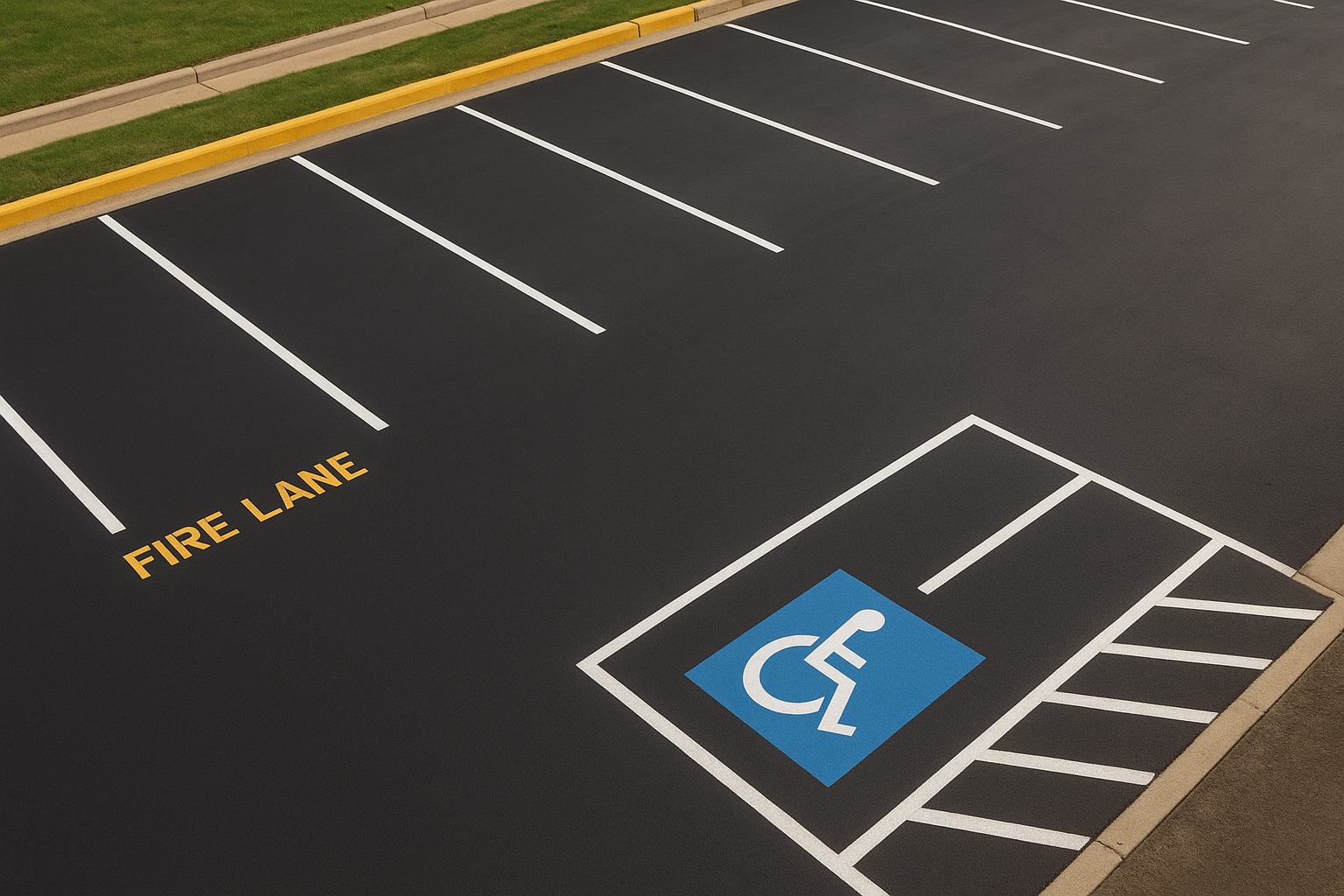
    Accessible parking signage and striped access aisle near a commercial building entrance

    Proper signage paired with clean lines completes an ADA compliant striping layout.

    Final Thoughts on ADA Compliant Striping

    In short, ADA compliant striping protects people, reduces legal risk, and keeps a property looking professional. From correct stall widths to van-accessible ratios and proper signage, every detail plays a role in true compliance.

    Therefore, regular inspections and timely restriping matter just as much as getting the initial layout right. Whether a property needs a brand-new layout or a simple refresh, working with an experienced local team helps ensure the lot stays safe, organized, and fully compliant for years to come.

  • Striping for Event Parking: Denton & Plano TX Guide

    Striping for Event Parking: Denton & Plano TX Guide

    Striping for Event Parking: Denton & Plano TX Guide

    Striping for event parking is the process of creating clear, temporary, or semi-permanent pavement markings that guide vehicles, organize traffic flow, and maximize capacity during large gatherings, festivals, sporting events, and community functions. Whether a stadium expects thousands of vehicles or a church hosts a weekend festival, well-planned striping keeps traffic moving safely instead of turning into gridlock. In North Texas, where events range from high school football games to major concerts, property owners in Denton and Plano increasingly turn to professional striping crews to handle sudden surges in vehicle volume. This guide explains how striping for event parking works, what it costs, and how to plan it correctly.

    What Is Striping for Event Parking?

    Striping for event parking is the practice of marking temporary or semi-permanent lines, arrows, and signage across a lot to organize high-volume, short-duration vehicle traffic. Unlike standard commercial striping, event striping often needs to flex for changing attendance numbers from one event to the next. As a result, contractors may combine temporary paint, cones, or removable tape with permanent lines to adapt the space quickly.

    For everyday retail centers or office parks, striping rarely changes once it’s installed. Event venues, however, face a different challenge. Consequently, a fairground, church campus, or school stadium may need one layout for a small weekday gathering and a completely different one for a season-opening game with ten times the attendance.

    Why Event Parking Lot Striping Matters

    Above all, clear markings prevent the confusion that causes bottlenecks at entrances and exits. When drivers can see exactly where to go, they spend less time circling and more time parked. In particular, this matters for venues near busy roadways in Denton and Plano, where backed-up traffic can spill into public streets.

    Furthermore, well-marked lots help event staff manage flow with fewer traffic cones and personnel. According to industry parking-design estimates from the International Parking Institute, a well-designed striping layout can increase usable parking capacity by up to 20 percent compared to an unmarked lot. That difference can mean dozens of extra vehicles fitting safely into the same footprint.

    Aerial view showing striping for event parking guiding rows of vehicles at an outdoor venue

    Clear striping for event parking helps large venues organize traffic without added staff or signage.

    Key Elements of Temporary Parking Lot Striping for Events

    Every event lot layout should account for a few core elements. Specifically, these include entry and exit lanes, directional arrows, standard stalls, accessible stalls, and fire lanes. Without all five, even a large lot can become disorganized once vehicles start arriving in waves.

    Directional Arrows and One-Way Lanes

    One-way lanes reduce head-on conflicts between arriving and departing vehicles. In fact, many venues stripe temporary one-way patterns specifically for event days, then remove or repaint them once the event ends.

    Pickup, Drop-Off, and Overflow Zones

    Meanwhile, dedicated drop-off zones keep rideshare and shuttle traffic separate from parked vehicles. Overflow areas, marked with temporary striping, give staff a backup plan when attendance exceeds initial estimates.

    How to Plan Striping for Event Parking in 5 Steps

    Planning ahead makes the difference between a smooth event and a frustrating one. The following steps outline a practical process property managers can follow before booking a striping crew.

    1. Assess the site and expected vehicle volume. Walk the entire lot with a contractor to measure square footage, note obstacles, and estimate how many vehicles the event is expected to draw based on attendance projections.
    2. Design a traffic flow layout. Map out entrance and exit points, one-way lanes, and pedestrian walkways so vehicles move through the lot without crossing paths or causing congestion during peak arrival times.
    3. Mark ADA-compliant accessible stalls. Reserve and paint accessible parking stalls near event entrances using the correct width, signage, and blue striping required under current accessibility guidelines.
    4. Add fire lanes and emergency access markings. Paint red or yellow fire lane markings along routes that emergency vehicles will need to use, keeping these paths completely clear of parked cars throughout the event.
    5. Apply durable or temporary striping paint. Choose fast-drying temporary paint for one-time events or durable acrylic paint for recurring events, then allow adequate curing time before vehicles are allowed to enter the lot.

    Property managers can review real examples of completed layouts in the project gallery before deciding on a final design.

    ADA Compliance and Fire Lanes for Event Parking

    Accessibility and emergency access are not optional extras; they are requirements. Under guidance published by the Americans with Disabilities Act program, any lot serving the public should include a proportional number of accessible stalls positioned close to entrances, regardless of whether the event is temporary.

    Similarly, fire lanes must remain clear so emergency vehicles can reach any point in the lot. The National Fire Protection Association outlines fire lane clearance standards that many Texas municipalities reference when inspecting event venues. In addition, line placement and stall dimensions should follow guidance from the federal Manual on Uniform Traffic Control Devices, which governs how markings and signage should look on public-facing pavement.

    Property owners who want a deeper breakdown of these requirements can review this complete safety and compliance guide for additional detail.

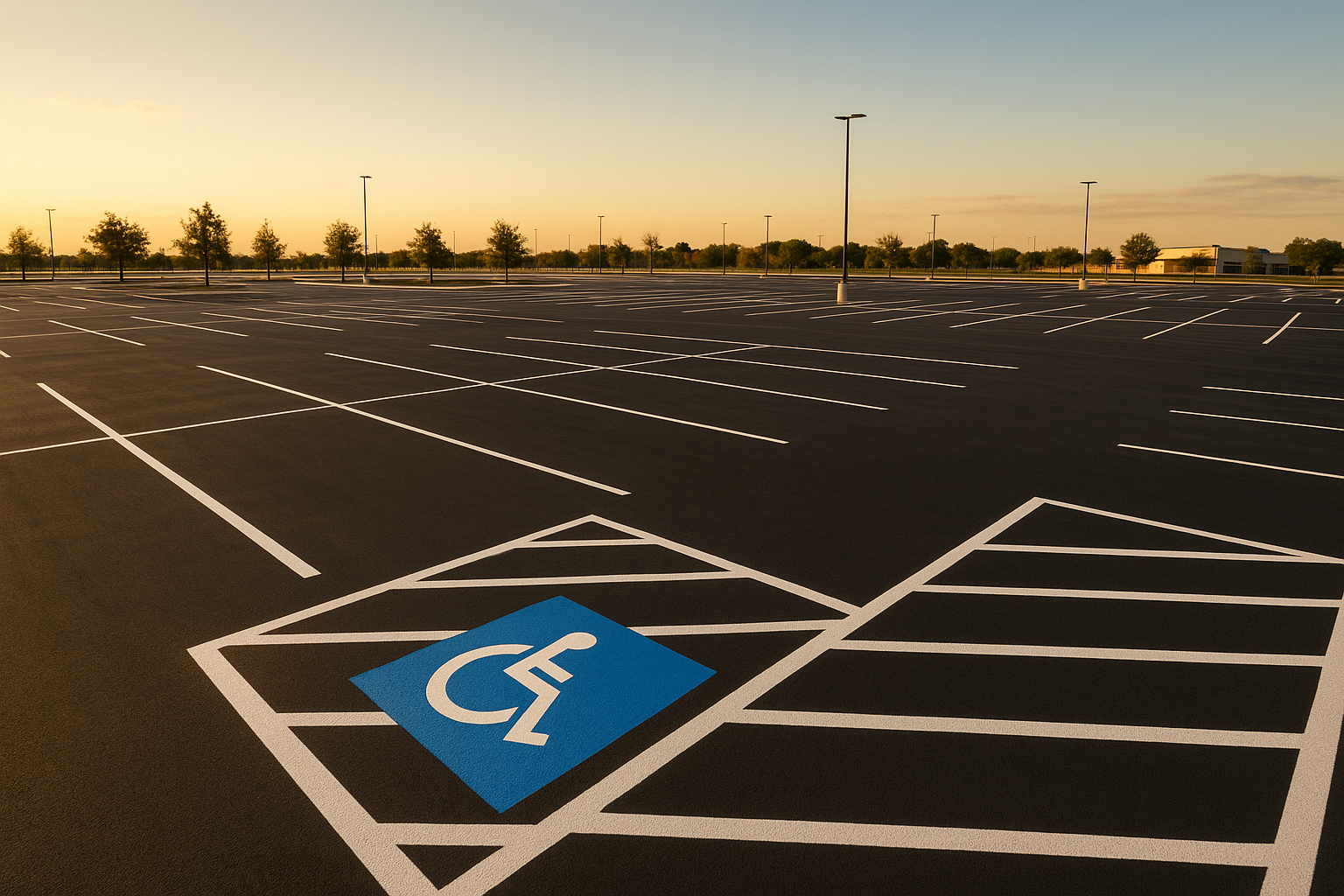
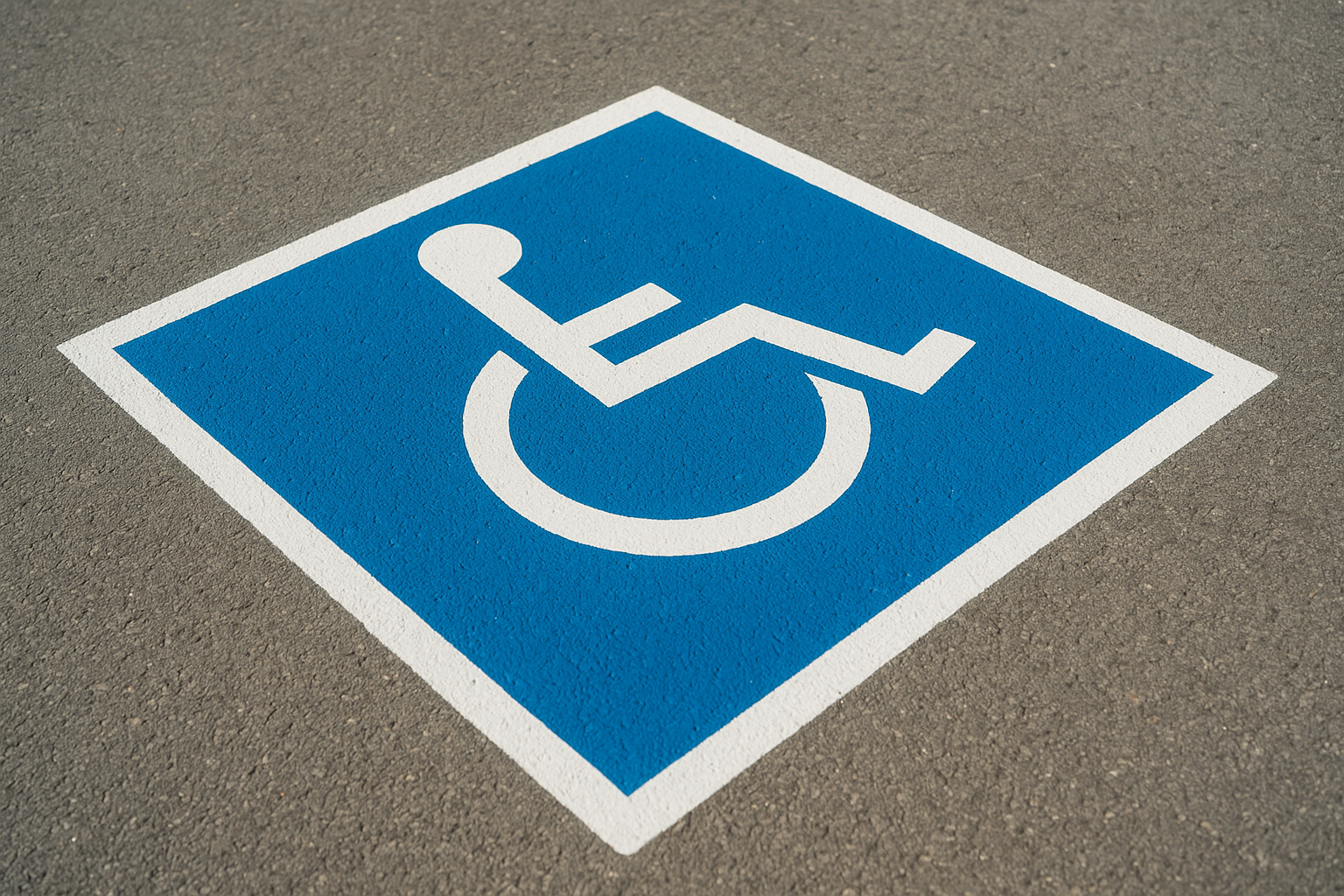
    Close-up of an ADA-compliant accessible parking stall marking painted on asphalt

    ADA-compliant stall markings are a required part of any event parking layout.

    Choosing a Contractor for Event Parking Line Striping

    Not every striping company handles event work the same way. Therefore, it helps to ask potential contractors about their experience with temporary layouts, quick-turnaround scheduling, and municipal code knowledge. A crew familiar with local fire marshal expectations in Denton and Plano can move faster through inspections.

    For property managers researching local options, this overview of quality parking lot striping providers in Plano is a useful starting point. Readers can also learn more about the team’s background on the company’s about page, or browse standard parking lot striping services offered year-round beyond event work.

    Cost Factors for Event Parking Striping Projects

    Pricing varies based on several factors. In general, larger lots, tighter timelines, and additional ADA or fire lane markings raise the overall cost of a project.

    Factor Impact on Cost
    Lot size Larger square footage requires more paint and labor time
    Paint type Durable acrylic costs more than temporary water-based paint
    Turnaround time Rush or overnight scheduling can add to labor rates
    Compliance features ADA stalls and fire lanes add extra marking work

    Because every lot is different, the most reliable way to budget is to request a free, on-site quote from a local provider rather than relying on generic price estimates.

    Striping crew painting directional arrows on a parking lot ahead of a scheduled event

    Professional crews often work early morning or overnight to finish striping for event parking before gates open.

    Frequently Asked Questions About Striping for Event Parking

    What is striping for event parking?

    Striping for event parking is the process of painting temporary or semi-permanent lines, arrows, and stall markings on a lot to organize high volumes of vehicles during a specific occasion. It helps direct traffic flow, designate accessible stalls, and maximize how many cars a lot can hold.

    How much does striping for event parking cost?

    Costs typically range from a few hundred dollars for a small lot to several thousand for a large venue, depending on square footage, paint type, and required markings. Getting a free on-site quote is the most accurate way to budget for a specific event.

    How long does it take to stripe a lot for an event?

    Most event parking striping projects take between two hours and a full day, depending on lot size and layout complexity. Crews often schedule work overnight or early morning so paint can cure before vehicles arrive.

    What paint is used for temporary event parking striping?

    Fast-drying water-based traffic paint is common for temporary event markings because it cures quickly and wears down naturally over time. Durable acrylic or epoxy paint is used instead when lines need to last through multiple events.

    Do event parking lots need ADA-compliant markings?

    Yes, any temporary or permanent lot serving the public should include ADA-compliant accessible stalls near entrances, regardless of event size. Skipping this step can create safety issues and compliance problems.

    What is the difference between event striping and standard parking lot striping?

    Standard striping is designed for everyday, steady traffic and typically uses long-lasting paint. Striping for event parking, in contrast, often needs to flex for higher vehicle density and temporary layouts.

    How many parking spaces can striping add to a lot?

    A well-designed striping layout can increase usable parking capacity by up to 20 percent compared to an unmarked or poorly organized lot. The exact gain depends on the lot’s shape and existing obstacles.

    What are common mistakes when striping for event parking?

    Common mistakes include ignoring fire lane requirements, skipping ADA stalls, and failing to plan pedestrian walkways between rows. These oversights can create safety hazards during peak arrival times.

    Can temporary striping be removed after an event?

    Yes, temporary event striping made with certain water-based paints or removable tape can be pressure-washed or worn away after the event concludes. This works well for properties needing a different daily layout.

    Why do fire lanes matter for event parking?

    Fire lanes keep a clear path for emergency vehicles even when a lot is packed with event traffic. Blocking these lanes can delay first responders and violate local fire code requirements.

    How far in advance should I schedule event parking striping?

    Property owners should schedule striping for event parking at least one to two weeks before the event to allow time for site assessment and paint curing. Larger venues may require even more lead time.

    What size vehicles need extra-wide striping for events?

    Buses, RVs, and oversized vehicles typically need wider stalls or dedicated zones separate from standard passenger rows. Planning for these vehicles ahead of time prevents bottlenecks near entrances.

    Who should I hire for striping for event parking in Denton or Plano?

    Property owners in the Denton and Plano area can work with a local, full-service striping company that understands regional codes and event traffic patterns. Choosing a crew with ADA and fire lane experience helps ensure the layout meets safety standards.

    Does weather affect event parking striping?

    Yes, temperature and moisture affect how quickly paint cures and adheres to pavement. Most contractors monitor forecasts closely and reschedule if rain or extreme heat is expected before an event.

    What colors are used in event parking line striping?

    White is standard for general parking stalls, blue marks ADA-accessible spaces, and red or yellow typically designates fire lanes and no-parking zones. Consistent color use helps drivers understand the layout quickly, even at unfamiliar venues.

    Final Thoughts on Striping for Event Parking

    In short, striping for event parking is one of the most cost-effective ways to keep a large gathering organized, safe, and compliant. From ADA stalls to fire lanes and directional arrows, every marking plays a role in moving vehicles smoothly and avoiding last-minute chaos. Because timing and code requirements vary by venue, planning ahead with an experienced local contractor makes a measurable difference on event day.

    Property managers, schools, and venues throughout Denton and Plano can request a free quote directly through stripespls.com to get a layout ready before the next big event.

  • High Visibility Line Marking: A Texas Property Guide

    High Visibility Line Marking: A Texas Property Guide

    High Visibility Line Marking: A Texas Property Guide

    High visibility line marking is the process of painting parking lots, fire lanes, and pedestrian areas with bright, reflective, or high-contrast paint so drivers and pedestrians can read the layout clearly, even at night or in bad weather. For property owners across Denton and Plano, TX, this isn’t just about looks — it directly affects safety, traffic flow, and code compliance. In this guide, we’ll break down what high visibility line marking involves, why it matters, and how to choose a contractor who gets it right the first time.

    Quick answer: High visibility line marking uses bright pigments, thicker application, or reflective additives to keep parking stalls, fire lanes, and crosswalks legible in low light. As a result, properties see fewer accidents, smoother traffic flow, and better ADA and fire code compliance.

    What Is High Visibility Line Marking?

    High visibility line marking is a specialized approach to pavement striping that prioritizes contrast and durability over basic appearance. Instead of standard white or yellow paint applied thinly, contractors use brighter pigments, thicker coats, or reflective glass beads that catch headlights at night. Consequently, drivers and pedestrians can identify lanes, stalls, and crosswalks even in rain, fog, or dim lighting.

    In practice, this technique shows up most often in fire lanes, ADA-accessible stalls, crosswalks, and directional arrows — areas where a missed line could create real safety risk. For example, a faded fire lane marking might delay emergency responders by seconds that matter. Because of that, many municipalities across Texas require specific colors and reflectivity standards for these zones.

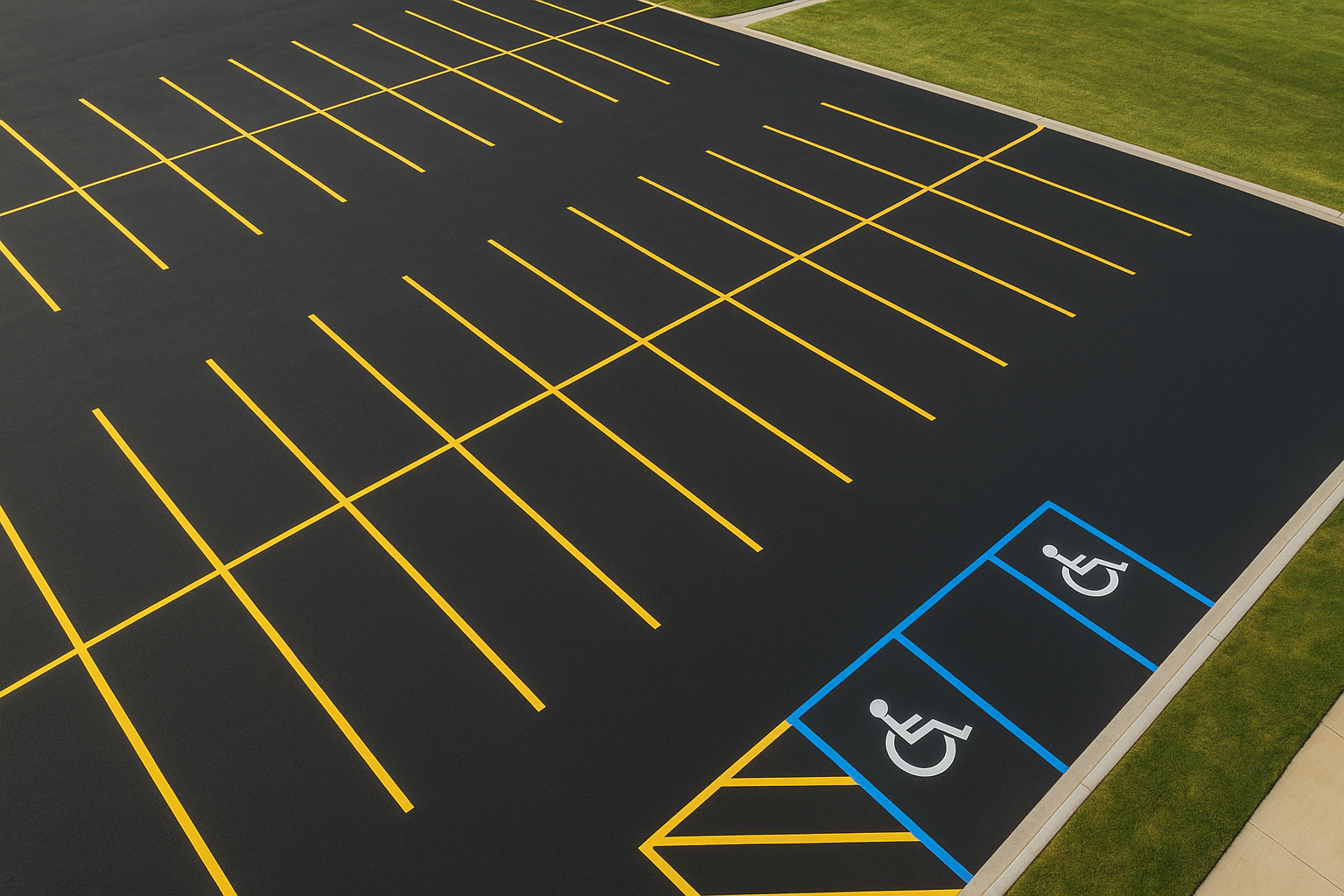
    High visibility line marking on a freshly striped commercial parking lot

    Bright, high-contrast striping like this keeps stalls and traffic lanes easy to read in any lighting condition.

    Why High-Visibility Pavement Markings Improve Safety

    Safety is the biggest reason property managers invest in high-visibility pavement markings. Clear, bright lines guide drivers into stalls correctly, reduce fender-benders, and help pedestrians know exactly where it’s safe to walk. In particular, retail centers, schools, and healthcare facilities benefit from this clarity because of the higher volume of foot traffic they handle daily.

    According to the Federal Highway Administration, retroreflective and high-contrast pavement markings measurably improve nighttime visibility for both drivers and pedestrians, which is why the Manual on Uniform Traffic Control Devices (MUTCD) sets national standards for marking reflectivity and color. Similarly, the Americans with Disabilities Act outlines exact requirements for accessible stall markings, which you can review directly through ADA.gov. Therefore, following these standards isn’t optional for many commercial properties — it’s a legal safeguard against liability.

    Beyond compliance, well-marked lots also maximize usable parking capacity. Above all, clear striping prevents drivers from parking haphazardly across two spaces, which can quietly cost a busy retail center dozens of spots during peak hours.

    Where Bright Line Striping Makes the Biggest Difference

    Not every square foot of pavement needs the same treatment. However, certain zones benefit disproportionately from bright line striping because the stakes for visibility are higher.

    Fire Lane Marking and Emergency Access

    Fire lanes must stay clear at all times, and high-contrast red or yellow curb paint with visible lettering makes that expectation obvious to every driver. Our fire lane marking services follow local Texas fire code requirements so emergency vehicles never lose precious seconds navigating a blocked or unclear lane. In addition, properly marked fire lanes reduce the risk of fines during municipal inspections.

    ADA-Compliant Handicap Stall Markings

    Accessible parking stalls require precise dimensions, access aisle widths, and the international symbol of accessibility painted in blue and white. Because these requirements are strict, many property owners pair striping with professional curb painting to clearly designate no-parking zones and accessible loading areas. As a result, the entire lot reads as organized and code-compliant at a glance.

    The High Visibility Line Marking Process

    Every quality striping project follows a similar sequence, whether it’s a small retail lot or a large municipal facility. Below is the typical process a professional crew follows from start to finish.

    1. Inspect and measure the lot. A technician walks the property to assess pavement condition and confirm stall counts, fire lane placement, and ADA requirements.
    2. Clean and prep the pavement. Sweeping and power washing remove debris and oil so new paint bonds properly to the surface.
    3. Layout guidelines. Chalk lines or laser-guided tools establish precise stall widths and access aisles before any paint touches the pavement.
    4. Apply high visibility traffic paint. A striping machine lays down fast-drying, high-contrast paint in the correct colors and thickness for each zone.
    5. Cure and inspect. After several hours of curing, a final walkthrough confirms straightness, color accuracy, and compliance before the lot reopens.

    Contractor applying reflective fire lane striping with a professional line marking machine

    Professional-grade equipment ensures consistent thickness and coverage during a striping project.

    How to Choose a High-Contrast Striping Contractor

    Not every painting crew understands fire codes, ADA specifications, or the reflectivity standards required for durable results. Consequently, it’s worth vetting a contractor’s experience before signing a contract. For a broader look at red flags to watch for, this breakdown on what to know before you hire a striping company covers common pitfalls property managers run into.

    In North Texas specifically, look for a team with hands-on experience across parking lot striping for retail centers, schools, and healthcare facilities. Furthermore, a contractor who offers a line marking service for parking lots in Texas will already understand regional climate factors, like extreme summer heat, that affect paint curing and longevity. Property owners in Denton and Plano can request a free, no-obligation quote directly through stripespls.com to compare pricing and scope before committing.

    Cost and Maintenance of Reflective Line Marking

    Pricing for high visibility line marking depends on lot size, paint type, and how many specialty markings — like ADA symbols or fire lane lettering — are needed. Generally speaking, most commercial projects range from a few hundred dollars for small lots to several thousand for large retail or municipal properties. In contrast, skipping proper prep work to save money often leads to premature fading, which ends up costing more in the long run.

    Maintenance matters just as much as the initial application. Specifically, high-traffic lots should be inspected annually and restriped every 12 to 24 months to keep contrast levels strong. For further background on how pavement markings are studied and standardized, the Wikipedia entry on road surface marking offers a helpful overview of materials and reflectivity science used industry-wide.

    Aerial view of a parking lot with high-contrast directional arrows and ADA accessible stalls

    An organized, high-contrast layout helps maximize usable parking capacity across the property.

    Frequently Asked Questions About High Visibility Line Marking

    What is high visibility line marking?
    High visibility line marking is the practice of painting parking lots, fire lanes, and walkways with bright, reflective, or high-contrast paint so markings stay clearly visible day or night. It typically uses thicker paint or reflective additives compared to standard striping.

    How long does high visibility line marking last?
    Most high visibility line marking lasts between one and three years, depending on traffic volume and weather exposure. High-traffic fire lanes often need touch-ups sooner than lightly used areas.

    Why is high visibility line marking important for parking lots?
    It reduces accidents by making stalls, lanes, and pedestrian paths easy to read at a glance. It also helps owners avoid liability tied to confusing or faded layouts.

    How much does high visibility line marking cost?
    Costs vary by lot size and marking type, but most commercial projects range from a few hundred to several thousand dollars. Requesting a free quote is the best way to get an accurate estimate.

    What paint is used for high visibility line marking?
    Contractors typically use fast-drying acrylic or thermoplastic traffic paint, sometimes mixed with reflective glass beads. The choice depends on climate, budget, and durability needs.

    How often should parking lot lines be repainted?
    Most lots benefit from restriping every 12 to 24 months. Heavy traffic and sun exposure can shorten that timeline.

    Is high visibility line marking required by law?
    ADA-accessible stalls and fire lane designations are legally required under accessibility and fire codes. General parking lines are not always mandated but are strongly recommended.

    What’s the difference between standard and high visibility line marking?
    Standard striping uses basic paint at typical thickness, while high visibility line marking uses brighter pigments or reflective additives for stronger contrast. The result stays legible in low light or bad weather.

    Can high visibility line marking be applied in cold weather?
    Most traffic paints need surface temperatures above roughly 50°F to cure properly. In North Texas, milder months typically produce the most durable results.

    How long does it take to complete a parking lot striping project?
    A typical commercial lot can be striped in a single day, though larger properties may take two to three days. Paint also needs several hours to cure before reopening.

    What mistakes should property owners avoid with line marking?
    Common mistakes include skipping surface cleaning, choosing low-grade paint, and ignoring ADA measurement requirements. These shortcuts often lead to faster fading and compliance issues.

    Do fire lanes need high visibility line marking?
    Yes, fire lanes require clear, high-contrast markings with visible lettering so emergency vehicles can access the area without delay. Local fire codes often specify exact color and spacing.

    What colors are used in high visibility line marking?
    Common colors include white for standard stalls, yellow for high-traffic zones, blue for ADA-accessible spaces, and red for no-parking or curb zones.

    How does ADA compliance relate to line marking?
    ADA compliance requires specific stall widths, access aisles, and the accessibility symbol painted correctly. Accurate line marking helps properties meet federal standards and avoid penalties.

    Who should I hire for high visibility line marking in Texas?
    Look for a licensed, experienced local contractor familiar with Texas fire codes and ADA requirements. Property owners in Denton and Plano can request a free quote through stripespls.com for a customized assessment.

    Final Thoughts

    High visibility line marking plays a bigger role in property safety and functionality than most owners realize. From ADA compliance to fire lane access, bright and durable striping protects both people and property while keeping a lot looking sharp. Ultimately, investing in professional high visibility line marking now helps Denton and Plano property owners avoid costly compliance issues and accidents down the road.

  • Navigational Arrows Parking Lots: A Complete Guide

    Navigational Arrows Parking Lots: A Complete Guide

    Navigational Arrows Parking Lots: A Complete Guide

    The navigational arrows parking lots use to direct traffic are more than simple painted lines—they’re essential safety tools that reduce confusion and prevent accidents. Whether you manage a retail center, school, or medical facility, clear directional markings keep vehicles moving safely through the property. In this guide, we’ll explain why these markings matter, how they’re installed, and what property owners in Denton and Plano, TX should know before scheduling a striping project.

    Quick answer: Navigational arrows parking lots are painted directional symbols—like straight arrows, turn arrows, and combination markings—that guide drivers through entrances, exits, and travel lanes. They’re often required alongside ADA-compliant striping and fire lane markings to keep traffic organized and code compliant.

    What Are Navigational Arrows in Parking Lots?

    Navigational arrows parking lots are painted directional markings placed on the pavement to control how vehicles move through a lot. They typically appear near entrances, exits, intersections, and one-way lanes. In addition, arrows often pair with other markings, such as fire lane text and ADA-compliant stall symbols, to create a complete wayfinding system.

    Most arrows fall into a few standard shapes: straight arrows, turn arrows, and combination arrows that indicate a lane can go straight or turn. For example, a straight arrow tells drivers to continue forward, while a curved arrow directs them toward an exit lane. As a result, well-placed arrows prevent head-on conflicts and reduce the guesswork drivers face in unfamiliar lots.

    Navigational Arrows Parking Lots: Why They Matter for Safety

    Confusing traffic patterns are one of the leading causes of minor collisions in commercial parking lots. Because drivers often move slowly while scanning for open spaces, they can miss cues about lane direction unless markings stay clear and consistent. Consequently, well-maintained navigational arrows parking lots rely on become a low-cost, high-impact safety measure.

    Furthermore, arrows help emergency vehicles, delivery trucks, and pedestrians move predictably through a site. In particular, hospitals, schools, and retail centers with heavy foot traffic benefit from arrows that separate vehicle lanes from walkways. According to the Manual on Uniform Traffic Control Devices, consistent pavement markings are a core part of national traffic control standards that many municipalities reference when reviewing commercial site plans. Similarly, insurance carriers sometimes review striping quality when assessing liability after an on-site accident. To learn more about how these markings affect liability and flow, see this breakdown of why directional arrows are important in parking lots.

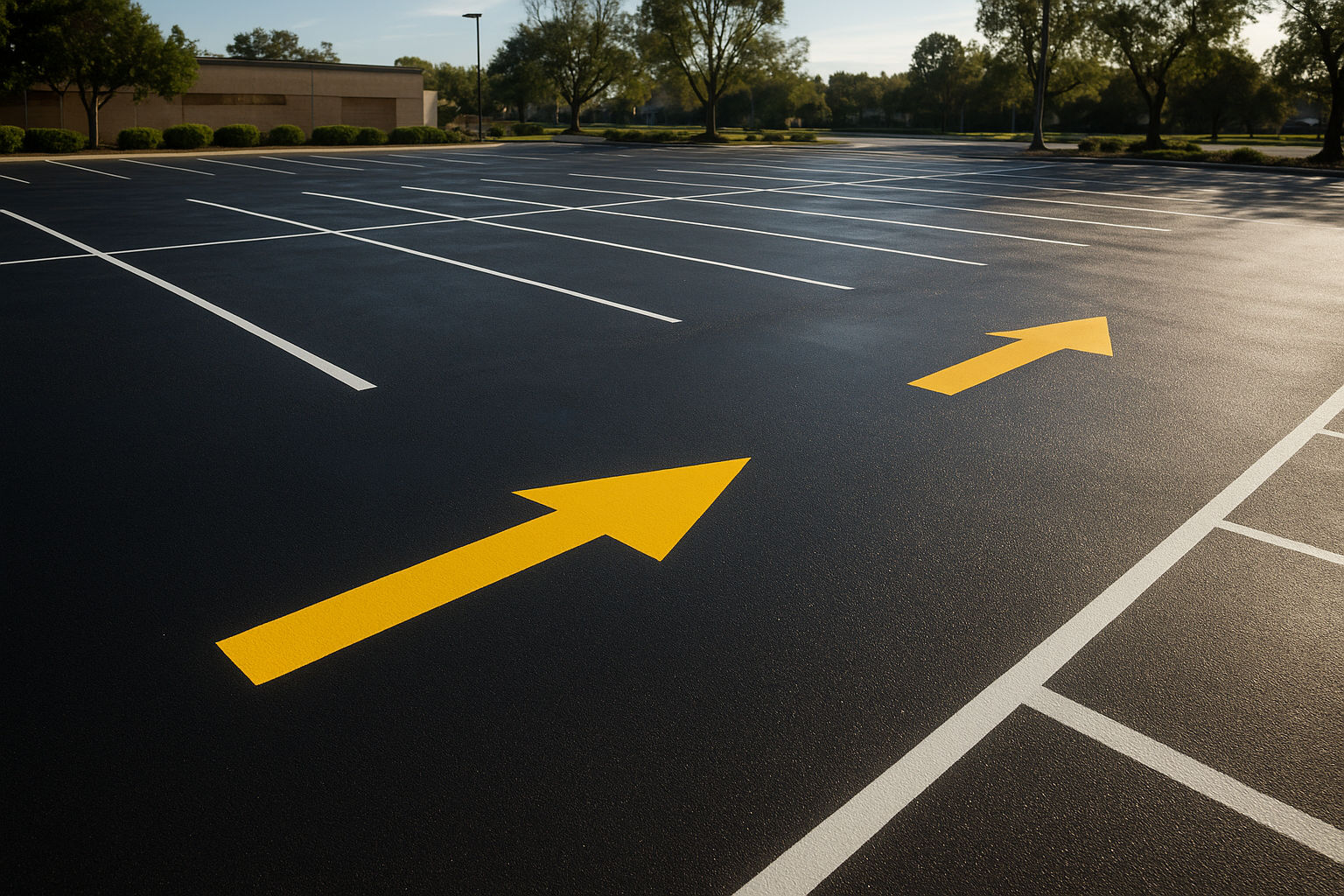
    Navigational arrows parking lots painted in yellow guiding vehicle traffic

    Clear navigational arrows parking lots use help drivers move safely between lanes and exits.

    Types of Directional Pavement Markings

    Not every lot needs the same set of markings. However, most commercial properties use a combination of the following to guide traffic effectively.

    • Straight arrows — indicate a lane continues forward without turning.
    • Turn arrows — direct drivers toward an exit, entrance, or adjacent lane.
    • Combination arrows — show that a lane may go straight or turn.
    • Stop bars — mark where vehicles must pause before merging.
    • Fire lane text and arrows — designate emergency access routes.

    In contrast to arrows alone, a full parking lot striping plan also includes stall lines, crosswalks, and accessible parking symbols. Together, these elements create a cohesive traffic system rather than a patchwork of disconnected markings.

    ADA Compliance and Fire Lane Arrow Requirements

    Directional arrows frequently work alongside accessibility markings to keep a property compliant. Specifically, accessible routes near ADA parking stalls often need clear directional cues so drivers and pedestrians understand how vehicles and foot traffic interact near those spaces. The Americans with Disabilities Act sets the baseline standards that many local codes build upon.

    Fire lanes present another common use case. Above all, fire lane arrows must clearly show the direction emergency vehicles can travel, paired with red curb paint and “FIRE LANE — NO PARKING” text. Property managers who want a deeper walkthrough of these standards can review this guide on ensuring your parking lot is ADA compliant, along with this more detailed complete ADA compliance guide.

    How to Install Navigational Arrows in a Parking Lot

    Installing arrow markings correctly takes more than a can of paint. Below is the typical process a professional striping crew follows.

    1. Assess traffic flow and layout. A crew walks the property to identify entrances, exits, and congestion points, then maps where drivers need visual guidance the most before any paint goes down.
    2. Choose arrow placement and style. The team selects straight, turn, or combination arrows based on lane direction, then confirms sizing meets local code and MUTCD recommendations for visibility.
    3. Clean and prep the pavement. Crews sweep, pressure wash, or scrape away debris, oil stains, and old faded paint so the new markings adhere properly and last longer.
    4. Apply layout stencils and guidelines. Stencils or chalk lines outline each arrow precisely, which keeps size, spacing, and alignment consistent across the entire lot.
    5. Paint and allow proper cure time. Traffic paint or epoxy goes on in even coats, and the area gets blocked off so vehicles don’t drive over the markings before they fully cure.

    Worker installing a directional arrow stencil on commercial parking lot pavement

    Careful stencil work keeps each arrow consistent and code compliant.

    Cost Factors for Parking Lot Arrow Striping

    Pricing depends on several variables, including lot size, the number of arrows needed, and paint type. Generally, epoxy coatings cost more upfront than standard traffic paint but last significantly longer under heavy traffic. Therefore, many property managers weigh long-term durability against initial budget when planning a project.

    Sizing also affects cost since larger arrows require more paint and labor time. Notably, the MUTCD recommends arrows be at least four feet long in standard travel lanes so they stay visible at typical parking lot speeds. For an accurate estimate, requesting a free quote through stripespls.com is the most reliable way to plan a budget for a specific property in the Denton or Plano area.

    Common Mistakes With Parking Lot Directional Signage

    Even well-intentioned property owners make avoidable errors with directional markings. For instance, letting arrows fade until they’re barely visible increases both accident risk and code violations. Similarly, inconsistent arrow placement across a lot confuses drivers rather than guiding them.

    Other common issues include ignoring ADA coordination near accessible stalls and skipping fire lane arrow requirements entirely. Meanwhile, using the wrong paint for the local climate can shorten a marking’s lifespan dramatically. Reviewing a full safety and compliance striping guide before a project helps property managers avoid these pitfalls from the start.

    Faded parking lot arrow compared to a freshly repainted directional arrow

    Faded markings versus a fresh restripe show why regular maintenance matters.

    Frequently Asked Questions About Navigational Arrows Parking Lots

    Navigational Arrows Parking Lots: What Purpose Do They Serve?

    Navigational arrows parking lots use these markings to direct vehicle flow, mark one-way lanes, and guide drivers toward exits and parking stalls. They reduce confusion and help prevent collisions in busy lots.

    How much does it cost to paint arrows in a parking lot?

    Costs vary by lot size, arrow count, and paint type, but most contractors price arrows alongside a full restriping job. Requesting a free quote is the most accurate way to get pricing for a specific property.

    Are directional arrows required by law in parking lots?

    Requirements vary by municipality, but many local codes reference the MUTCD for traffic control markings, and fire lanes almost always require directional arrows. Checking with local fire marshals and building codes is recommended.

    What type of paint is used for parking lot arrows?

    Most contractors use water-based traffic paint or durable epoxy for high-traffic areas. Epoxy costs more upfront but resists fading and wear longer than standard traffic paint.

    How long do painted parking lot arrows last before fading?

    Standard traffic paint typically lasts one to two years depending on climate and traffic volume, while epoxy coatings can last three to five years. Sun exposure and heavy vehicle traffic accelerate wear.

    Can a property owner paint their own parking lot arrows?

    While DIY kits exist, professional striping ensures correct sizing, placement, and code compliance, especially for ADA and fire lane markings. Improperly placed arrows can create liability issues rather than solving them.

    What is the difference between one-way and two-way arrow markings?

    One-way arrows point in a single direction and indicate that traffic may only travel that way through the lane. Two-way markings typically use double-headed arrows or separate lanes to show traffic can move in either direction.

    How often should parking lot arrows be repainted?

    Most commercial lots benefit from repainting every one to two years, though high-traffic areas may need touch-ups sooner. Scheduling an annual inspection helps catch fading before it becomes a safety issue.

    Do parking lot arrows need to meet ADA requirements?

    Arrows themselves are not ADA-specific, but they often work alongside ADA-compliant accessible route markings and signage. Coordinating arrow placement with accessible paths helps properties stay fully code compliant.

    What size should parking lot directional arrows be?

    The MUTCD generally recommends arrows be at least four feet long in standard travel lanes so they remain visible at typical parking lot speeds. Exact sizing can vary based on lane width and local code.

    How long does it take to stripe a parking lot with new arrows?

    A typical commercial lot can be striped in one to two days depending on size and the number of markings needed. Weather and paint cure time can extend the schedule slightly.

    What is the biggest mistake property owners make with directional markings?

    The most common mistake is letting arrows fade until they’re barely visible, which increases accident risk and code violations. Regular inspections and a proactive restriping schedule prevent this problem.

    Final Thoughts on Navigational Arrows in Parking Lots

    In summary, navigational arrows parking lots rely on do far more than decorate the pavement—they organize traffic, support ADA compliance, and reduce the risk of accidents. From choosing the right arrow style to scheduling regular repainting, every step plays a role in keeping a property safe and code compliant. Property managers throughout Denton and Plano, TX who want durable, professionally installed markings can visit stripespls.com for a free quote and a striping plan tailored to their property’s traffic patterns. For general background on pavement marking practices, the Wikipedia overview of pavement marking offers additional context.

  • Lane Markings Texas: Complete Striping & Compliance Guide

    Lane Markings Texas: Complete Striping & Compliance Guide

    Lane Markings Texas: Complete Striping & Compliance Guide

    Lane markings Texas property owners depend on serve a bigger purpose than simply dividing parking spaces. In fact, well-planned striping improves traffic flow, protects pedestrians, and helps commercial properties across Denton, Plano, and the greater North Texas region stay compliant with state and federal accessibility codes. Whether a lot needs a full restripe or just a few new fire lane markings, understanding how these markings work is the first step toward a safer, more organized property.

    Quick answer: Lane markings Texas properties need include ADA-compliant handicap stalls, red fire lane curbs, directional arrows, and standard parking lines that meet both federal and local municipal codes. Professional restriping every 18 to 24 months keeps these markings visible and legally compliant.

    Lane Markings Texas: What Every Property Owner Should Know

    Lane markings Texas is the umbrella term for the painted lines, symbols, and text that organize traffic and define parking areas across the state’s commercial and residential properties. These markings include everything from standard parking stall lines to ADA-compliant accessible spaces and red-curb fire lanes. Because Texas cities enforce their own combination of state, local, and fire code requirements, property owners in Denton and Plano often need a striping partner familiar with regional rules.

    For a deeper breakdown of the equipment, paint types, and layout standards used across the state, this road marking services guide for Texas properties covers the technical side in more detail.

    Why Parking Lot Striping Matters for North Texas Businesses

    Faded or missing lines create confusion, and confusion leads to accidents, wasted parking capacity, and unhappy visitors. Similarly, a poorly marked lot can expose property owners to liability if an accessible space or fire lane isn’t clearly identified. As a result, regular parking lot striping is less of a cosmetic upgrade and more of an operational necessity for retail centers, schools, and healthcare facilities alike.

    According to the U.S. Access Board, accessible parking design standards are enforced nationwide under the Americans with Disabilities Act, which means Texas properties must meet these baseline federal rules in addition to any local ordinance.

    Freshly painted lane markings Texas parking lot with organized white striping

    Fresh lane markings Texas property owners install help organize traffic flow and maximize usable parking capacity.

    What Is ADA-Compliant Striping and Why Does It Matter?

    ADA-compliant striping refers to accessible parking stalls, access aisles, and van-accessible spaces painted according to federal accessibility standards. Above all, these markings must include the correct stall width, a properly striped access aisle, and the international symbol of accessibility painted in blue and white. Missing or incorrectly sized accessible stalls can result in fines and, more importantly, prevent people with disabilities from safely using a property.

    For property managers in Denton or Plano, working with a striping company that understands both federal ADA rules and Texas-specific enforcement is essential. The guide on line marking services for parking lots explains how ADA layouts are typically measured and applied.

    Fire Lane Marking Rules You Need to Know

    Fire lane markings are typically painted red with white stenciled text reading “FIRE LANE – NO PARKING,” and local fire marshals across North Texas enforce specific placement and lettering requirements. In particular, fire lanes must remain unobstructed at all times to allow emergency vehicle access. Consequently, properties that fail inspection may face fines or be required to repaint immediately.

    A full breakdown of local fire lane codes is available in this resource on fire lane marking rules in Texas, which outlines the exact stenciling and color requirements most municipalities expect.

    ADA compliant handicap parking symbol painted as part of a lane markings Texas project

    ADA-compliant symbols are a critical part of any lane markings Texas compliance project.

    How to Get Durable Lane Striping for Your Property

    Getting long-lasting results starts well before the paint touches the pavement. Below is the general process most professional striping companies follow when restriping a commercial lot.

    1. Request a site assessment. A contractor measures the lot and reviews existing layout issues, including ADA and fire lane gaps.
    2. Review the layout plan and quote. Ask to see stall counts, accessible spaces, and pricing before approving any work.
    3. Prepare the surface. The crew cleans and sweeps the pavement so new paint adheres properly.
    4. Apply the striping. Traffic paint or thermoplastic material is applied according to the approved layout.
    5. Let the paint cure. Vehicles stay off freshly painted areas for several hours to prevent smudging.

    Property owners considering their options can review this complete parking lot marking guide for additional context on layout planning and material choices.

    Red fire lane curb marking along a commercial property driveway in Texas

    Red fire lane curbs are a required element of most commercial lane markings Texas projects.

    Pavement Marking Costs in North Texas

    Pricing for striping projects depends on lot size, the number of accessible stalls, and whether fire lane stenciling is included. Generally speaking, small lots cost less than sprawling retail centers with hundreds of parking spaces. In addition, thermoplastic material costs more upfront than standard traffic paint but tends to last significantly longer.

    Industry data from the Federal Highway Administration notes that pavement markings using retroreflective materials maintain visibility far longer than basic paint, which can influence long-term cost decisions for property owners weighing durability against upfront price.

    Choosing a Line Striping Company You Can Trust

    Not every striping contractor understands the specific mix of ADA, fire code, and municipal requirements that apply throughout Denton and Plano. Therefore, it helps to work with a locally operated team that has hands-on experience across property types, from retail centers to schools and healthcare facilities. Stripespls.com, for example, focuses specifically on the Denton and Plano service area and offers free quotes for new layouts, restriping, and fire lane designation.

    Before signing a contract, it’s worth reviewing this checklist on what to consider when hiring a line marking service, which covers licensing, material choices, and warranty questions worth asking any contractor. Visitors can also learn more directly at stripespls.com to request a free property assessment.

    Frequently Asked Questions About Lane Markings Texas

    What are lane markings Texas properties are required to have?

    Lane markings Texas properties need typically include parking stall lines, directional arrows, ADA-accessible stalls, and red-curb fire lanes. The exact requirements depend on local fire codes, municipal ordinances, and the property’s use.

    How often should parking lot striping be repainted?

    Most Texas parking lots need restriping every 18 to 24 months, though high-traffic lots may fade faster. Sun exposure, heavy vehicle traffic, and lower-quality paint all shorten the lifespan of markings.

    Why do fire lane markings need to be red?

    Red fire lane curbs and pavement markings create instant visual recognition for drivers and emergency responders. Local fire marshals in North Texas generally require red paint with white stenciled lettering reading FIRE LANE – NO PARKING.

    How much does professional line striping cost in Texas?

    Costs vary based on lot size, layout complexity, and paint type, but most commercial restriping projects in North Texas range from a few hundred to several thousand dollars. Getting a free quote is the most accurate way to estimate a specific property’s cost.

    What paint is used for parking lot line striping?

    Most contractors use water-based traffic paint or durable thermoplastic material designed for asphalt and concrete surfaces. Thermoplastic lasts longer but costs more upfront than standard traffic paint.

    How long does it take for new pavement striping to dry?

    Standard traffic paint typically dries to the touch within 30 minutes and can handle light traffic within a few hours. However, full curing for heavy vehicle traffic can take up to 24 to 48 hours depending on temperature and humidity.

    What is the difference between striping and pavement marking?

    Striping usually refers specifically to the painted lines defining lanes and parking stalls, while pavement marking is a broader term that also includes symbols, text, arrows, and ADA emblems. In practice, the two terms are often used interchangeably.

    Are ADA parking stall requirements the same in every Texas city?

    The Americans with Disabilities Act sets baseline federal requirements, but individual Texas municipalities can add stricter local codes. As a result, property owners should confirm requirements with both federal ADA guidelines and their city’s building department.

    Can I stripe my own parking lot instead of hiring a professional?

    While DIY striping kits exist, professional line striping companies use specialized equipment and layout templates that ensure code-compliant spacing and durable results. In particular, ADA stall dimensions and fire lane placement have strict legal requirements that are easy to get wrong without experience.

    What common mistakes happen with parking lot striping?

    Common mistakes include painting over cracked or unsealed asphalt, using incorrect ADA stall widths, and skipping proper layout measurements before painting. Consequently, these errors often lead to costly rework and compliance violations.

    Does weather affect lane marking projects in Texas?

    Yes, temperature and humidity significantly affect paint adhesion and drying time. Most contractors avoid striping during rain or extreme heat above 95 degrees Fahrenheit to ensure proper curing.

    What is the best time of year to restripe a parking lot in Texas?

    Spring and fall generally offer the most consistent temperatures for striping projects across North Texas. These milder seasons help paint cure evenly without the extreme heat of summer or unpredictable winter cold fronts.

    How do lane markings Texas businesses use improve safety?

    Clear lane markings Texas businesses install reduce confusion, prevent accidents, and guide pedestrians safely through parking areas. They also help emergency vehicles access fire lanes quickly when every second counts.

    Final Thoughts on Lane Markings Texas Properties Need

    Keeping a property safe, organized, and legally compliant starts with clear, durable lane markings Texas inspectors and visitors can rely on. From ADA-accessible stalls to red fire lane curbs, each element plays a specific role in protecting people and reducing liability. Ultimately, partnering with an experienced local striping team, such as the crew at stripespls.com, makes it far easier for Denton and Plano property owners to stay ahead of fading lines and shifting code requirements.

  • Retail Parking Lot Striping Guide for Texas Property Owners

    Retail Parking Lot Striping Guide for Texas Property Owners

    Retail Parking Lot Striping Guide for Texas Property Owners

    Retail parking lot striping plays a bigger role in customer experience than most business owners realize. When lines fade or disappear entirely, shoppers struggle to find open spaces, delivery trucks block fire lanes, and accessible parking becomes difficult to identify. As a result, a poorly marked lot can quietly cost a retail business both sales and safety compliance. This guide explains what retail parking lot striping involves, why it matters for Texas retailers, and how property owners in Denton and Plano can keep their lots organized, compliant, and welcoming.

    Freshly painted retail parking lot striping with yellow lines outside a shopping center

    Fresh retail parking lot striping keeps traffic organized and improves first impressions for shoppers.

    What Is Retail Parking Lot Striping?

    Retail parking lot striping is the professional painting of lines, arrows, symbols, and accessible parking markings across a commercial parking area. It defines individual parking stalls, directs traffic flow, and marks fire lanes and ADA-compliant spaces so a property meets safety and accessibility codes. For retail centers specifically, striping also maximizes the number of usable parking spots without sacrificing safe circulation.

    Unlike an office park or warehouse, a retail lot sees constant turnover of shoppers, delivery vehicles, and pedestrians throughout the day. Therefore, the layout has to account for higher foot traffic, shopping carts, and frequent stops near entrances. In particular, contractors typically use either water-based traffic paint or thermoplastic material, a durable pavement marking compound that’s heated and applied for a longer-lasting finish. You can learn more about the broader scope of these services on the parking lot striping services page.

    Why Parking Lot Line Striping Matters for Retail Properties

    First impressions matter, and a shopper’s very first interaction with a business often happens in the parking lot. Clean, visible lines signal that a property is well-maintained, which in turn builds trust before a customer ever walks through the door. In contrast, a lot with faded or missing markings can create confusion, near-miss collisions, and frustration during busy shopping periods.

    Above all, compliance carries real financial stakes. According to guidance published on ADA.gov, civil penalties for ADA violations can reach tens of thousands of dollars for a first offense and increase substantially for repeat violations. Consequently, retail parking lot striping isn’t just cosmetic maintenance; it’s a legal safeguard for property owners, tenants, and municipal organizations alike.

    Quick Answer: Retail parking lot striping is the process of painting stalls, ADA symbols, fire lanes, and directional markings on a commercial parking area to organize traffic, maximize capacity, and meet safety codes.

    Key Elements of a Professional Retail Striping Project

    Every retail striping project follows a similar sequence, regardless of lot size. Specifically, a professional crew moves through these five steps to ensure a compliant, long-lasting result:

    1. Inspect and Clean the Lot: A qualified crew first inspects the existing surface for cracks, oil stains, and drainage issues, then sweeps or power-washes the asphalt so new paint adheres properly and lasts longer.
    2. Plan the Layout and Measurements: Using the property’s dimensions and local code requirements, the team maps out stall widths, drive aisles, and traffic patterns to maximize usable parking without violating fire or accessibility codes.
    3. Apply Primary Stall Lines: Technicians use commercial-grade striping machines to lay down straight, evenly spaced lines that define individual parking stalls and separate driving lanes from pedestrian walkways.
    4. Mark ADA and Fire Lane Areas: Crews then paint blue accessible stalls with the wheelchair symbol, add van-accessible access aisles, and paint red fire lanes with required lettering to meet safety codes.
    5. Add Arrows, Signage, and Final Inspection: Finally, directional arrows, stop bars, and curb numbers are added before a final walkthrough confirms every line meets ADA, fire code, and municipal striping standards.

    ADA Compliance and Accessibility Markings

    ADA-compliant markings include van-accessible stalls, standard accessible stalls, access aisles, and the international wheelchair symbol painted in blue and white. In particular, the required number of accessible spaces scales with the total parking count on the property. Similarly, access aisles must meet minimum width requirements so wheelchairs and mobility devices can load and unload safely; more detail is available through the 2010 ADA Standards for Accessible Design.

    ADA compliant accessible parking space markings painted in a retail parking lot

    ADA-compliant markings are a required element of professional retail parking lot striping.

    Fire Lane Marking and Safety Signage

    Fire lanes are typically marked with red curb paint and lettering that reads “FIRE LANE — NO PARKING,” keeping emergency vehicle access clear at all times. Local fire marshals and codes referenced by organizations like the National Fire Protection Association often dictate exact lane widths and signage placement. For retail centers with heavy delivery traffic, keeping these lanes visible and unobstructed is especially important for both safety and code enforcement.

    How Often Should Retail Parking Lots Be Restriped?

    Most retail properties need restriping every 12 to 24 months, though the exact timeline depends on traffic volume, climate, and pavement condition. In North Texas, intense summer sun and seasonal storms accelerate fading, so lots in Denton and Plano often need attention on the shorter end of that range. For a closer look at how timing affects long-term costs, see this breakdown of whether professional parking lot striping is worth the investment.

    As a general rule, if lines are difficult to see from a moving vehicle at dusk, it’s time to schedule a restripe. Likewise, any recent seal coating or asphalt overlay should always be followed by fresh striping since the old lines will no longer be visible.

    Choosing the Right Retail Parking Lot Striping Company

    Not every contractor understands the specific demands of retail parking lot striping, so a bit of vetting goes a long way. In particular, look for a company with documented experience on retail centers, proper liability insurance, and up-to-date knowledge of Texas ADA and fire code requirements. Furthermore, ask to see examples of past work on similar properties, such as shopping centers or healthcare facilities.

    Property owners throughout the region can review the full range of services offered locally, including options tailored specifically for the Plano market on the Plano, TX striping services page. Requesting a free, itemized quote before work begins helps avoid surprises and ensures the scope matches the property’s actual needs.

    Aerial view of organized retail parking lot striping with directional arrows and fire lanes

    Well-planned retail parking lot striping keeps large shopping centers organized and safe from above and at ground level.

    Cost Factors for Retail Parking Lot Striping

    Pricing for retail parking lot striping depends on several variables, including total lot size, the number of stalls, and how many ADA or fire lane markings are required. In addition, choosing thermoplastic material over standard traffic paint raises upfront costs but extends the time between restripes. Larger retail centers with multiple entrances, loading zones, and directional arrows will naturally cost more than a small standalone storefront.

    Because every property is different, the most reliable way to budget for a project is to request a site visit and detailed quote. Property managers throughout Denton and Plano can start that process directly through stripespls.com.

    Frequently Asked Questions About Retail Parking Lot Striping

    What is retail parking lot striping?

    Retail parking lot striping is the professional painting of parking stalls, traffic lines, ADA symbols, and fire lanes across a commercial retail parking area. It keeps traffic organized and helps properties meet safety and accessibility codes.

    How often should a retail parking lot be restriped?

    Most retail lots need restriping every 12 to 24 months, though high-traffic centers in hot Texas climates may need touch-ups sooner. Faded lines, cracked pavement, or a recent seal coat are all signs it’s time.

    How much does retail parking lot striping cost?

    Costs vary based on lot size, number of stalls, and how many ADA or fire lane markings are needed. Most retail projects range from a few hundred to several thousand dollars, so a free site quote is the best way to get an accurate number.

    What paint is used for retail parking lot striping?

    Contractors typically use water-based traffic paint or durable thermoplastic material designed to withstand vehicle traffic, UV exposure, and weather. Thermoplastic lasts longer but costs more upfront than standard traffic paint.

    Is ADA-compliant striping required for retail properties?

    Yes, retail properties open to the public must provide a minimum number of accessible parking spaces per the Americans with Disabilities Act. The required ratio depends on the total number of parking spaces on the property.

    What happens if a retail parking lot isn’t ADA compliant?

    Noncompliant properties risk civil penalties, lawsuits, and complaints filed with the Department of Justice. Fines for ADA violations can reach tens of thousands of dollars for repeat offenses.

    Can I stripe a retail parking lot myself?

    While DIY striping kits exist, most retail properties need professional equipment and code knowledge to get straight lines, correct spacing, and compliant ADA or fire lane markings. Hiring a professional crew reduces the risk of costly redo work.

    How long does retail parking lot striping take to dry?

    Standard traffic paint typically dries within 30 minutes to a few hours, while thermoplastic sets almost immediately after application. Weather conditions like humidity and temperature can affect drying time.

    What is the best time of year for parking lot striping in Texas?

    Warm, dry conditions in spring and fall tend to work best for striping projects in North Texas. Extreme summer heat or winter rain can affect paint adhesion and drying time.

    What’s the difference between fire lane marking and regular striping?

    Fire lane marking uses red paint with lettering that reads “FIRE LANE — NO PARKING” to keep emergency access clear, while regular striping simply defines parking stalls and traffic flow. Both are required for most commercial retail properties.

    How do I choose a retail parking lot striping company?

    Look for a contractor with local experience, proper insurance, knowledge of Texas ADA and fire code requirements, and references from similar retail properties. Requesting a detailed, free quote helps compare pricing and scope before committing.

    What common mistakes should retailers avoid with parking lot striping?

    Common mistakes include skipping surface cleaning before painting, ignoring ADA space ratios, using low-quality paint, and waiting too long to restripe faded lines. These issues often lead to more costly repairs or compliance violations later.

    Final Thoughts on Retail Parking Lot Striping

    Ultimately, retail parking lot striping is one of the simplest, most cost-effective ways to protect customer safety, maintain ADA compliance, and present a polished storefront. From clearly marked fire lanes to properly sized accessible stalls, every line serves a practical purpose beyond appearance. For background on parking facility design in general, the Wikipedia overview of parking lots offers useful additional context.

    Whether a property needs a full layout redesign or a simple restripe of faded lines, working with an experienced local crew helps retail owners in Denton, Plano, and the greater North Texas region stay compliant and organized year-round. Property managers ready to move forward can request a free, no-obligation quote through stripespls.com today.

  • Parking Lot Line Painting Guide: Cost & Compliance

    Parking Lot Line Painting Guide: Cost & Compliance

    Parking Lot Line Painting Guide: Cost & Compliance

    Parking lot line painting is the process of applying durable painted markings—stall lines, ADA-compliant symbols, fire lanes, and directional arrows—onto asphalt or concrete surfaces to organize traffic flow and meet safety codes. For property owners in Denton and Plano, TX, this service protects drivers and pedestrians while keeping a facility legally compliant. In this guide, we’ll walk through the process, typical costs, and compliance requirements so you know exactly what to expect before hiring a striping crew.

    Quick Answer: Parking lot line painting involves cleaning the pavement, measuring stall layouts, and applying acrylic or thermoplastic traffic paint to create stalls, ADA markings, and fire lanes. Most commercial lots are restriped every 12 to 24 months to stay visible and code-compliant.

    What Is Parking Lot Line Painting?

    At its core, parking lot line painting is a maintenance and safety service. A crew cleans the surface, measures stall dimensions to code, and applies traffic-grade paint to define parking spaces, drive aisles, and pedestrian pathways.

    Beyond stalls, the scope often includes handicap-accessible markings, fire lane designation, curb painting, and directional arrows. As a result, a single restriping visit can address several compliance requirements at once, which is why many property managers schedule it as part of routine upkeep.

    Freshly completed parking lot line painting with white stall markings on dark asphalt

    Freshly applied parking lot line painting creates clear, organized stalls that improve traffic flow.

    Why Professional Parking Lot Striping Matters

    Faded or uneven lines do more than look unkempt; they create confusion, increase fender-bender risk, and can leave a property out of compliance. Consequently, many insurance and liability concerns trace back to poorly maintained lots.

    Professional parking lot striping services use calibrated equipment and code-accurate measurements, so stalls, aisles, and accessible spaces meet current standards. In contrast, DIY paint jobs often drift out of spec within a season, requiring rework sooner than expected.

    According to the U.S. Access Board, accessible parking requirements are tied directly to total lot capacity, meaning even small miscalculations can trigger compliance issues. That’s why precise layout work matters just as much as the paint itself.

    The Parking Lot Line Painting Process, Step by Step

    Every reputable crew follows a similar sequence to ensure lasting results. Here’s what typically happens on project day:

    1. Inspect and clean the surface. The crew sweeps and pressure washes the pavement so dirt and oil don’t interfere with paint adhesion.
    2. Measure and layout the design. Technicians chalk-line stall widths, drive aisles, and ADA spaces according to local code.
    3. Mask and prep special markings. Stencils go down for handicap symbols, arrows, and lettering.
    4. Apply the traffic paint. Striping machines lay even, consistent lines using acrylic or thermoplastic paint.
    5. Cure and final inspection. The paint sets before traffic returns, and the crew checks every line against spec.

    Because most paints are dry to the touch within 30 minutes, lots are often back in service the same day. However, full curing can take up to 24 hours depending on humidity and temperature.

    ADA Compliance and Fire Lane Marking Requirements

    Federal law requires commercial parking facilities to provide a minimum number of accessible spaces, with exact ratios detailed by the Americans with Disabilities Act. Specifically, the number of required van-accessible and standard accessible stalls scales with total lot size.

    In addition to ADA markings, most municipalities enforce fire lane rules based on guidance from the Manual on Uniform Traffic Control Devices. Fire lanes are typically painted red with white lettering and must remain clear for emergency vehicle access at all times.

    Property owners in North Texas can review a dedicated line marking service for parking lots in Texas to understand regional code nuances before scheduling work.

    ADA compliant handicap parking symbol as part of parking lot line painting project

    ADA-compliant stall markings are a critical part of any parking lot line painting project.

    How Much Does Parking Lot Line Painting Cost?

    Pricing depends on lot size, the number of stalls, and the complexity of required markings like fire lanes or ADA symbols. Small lots may cost only a few hundred dollars, while large retail or municipal properties can run into the thousands.

    For a full breakdown of pricing factors, see our detailed guide on how much parking lot line painting usually costs. Generally speaking, bundling restriping with other maintenance, such as sealcoating, can reduce the overall per-square-foot rate.

    As an industry benchmark, the American Society for Testing and Materials notes that pavement markings typically need refreshing every one to two years in high-traffic climates, which helps property managers budget proactively rather than reactively.

    Choosing a Parking Lot Striping Company in North Texas

    Not every contractor understands local fire codes or ADA nuances specific to Denton and Plano. Therefore, it’s worth confirming a company’s experience with municipal inspections before signing a contract.

    Stripespls.com, a full-service parking lot marking company based in Texas, specializes in professional striping, ADA compliance solutions, and fire lane marking for commercial and residential properties throughout the Denton and Plano areas. The team serves property managers, retail centers, schools, healthcare facilities, and municipal organizations across North Texas, offering everything from new lot layouts to complete restriping refreshes.

    Prospective clients can browse the company’s full range of striping services or visit stripespls.com to request a free quote for an upcoming project.

    Red fire lane markings painted along a curb during a commercial striping project

    Fire lane markings help keep emergency access routes clear at all times.

    Common Mistakes to Avoid

    Some property owners try to save money by delaying restriping until lines are nearly invisible. Unfortunately, this often backfires, since worn markings can lead to disputed parking, safety incidents, or failed inspections.

    Similarly, hiring based on price alone without checking insurance or code knowledge can result in inaccurate ADA layouts that require costly rework. In particular, always request a written, itemized quote and ask about recent local project experience.

    Frequently Asked Questions

    What is parking lot line painting?
    Parking lot line painting is the process of marking stalls, drive lanes, fire lanes, and ADA-compliant symbols on a paved surface using durable traffic paint. It organizes traffic flow and keeps properties in line with safety codes.

    How long does parking lot line painting take?
    Most standard commercial lots are completed in a single day, though larger properties may take two to three days. Weather, lot size, and prep work needed affect the timeline.

    How much does parking lot line painting cost?
    Costs typically range from a few hundred dollars for a small lot to several thousand for large commercial properties. Pricing depends on square footage and the markings required.

    How often should parking lot lines be repainted?
    Most lots need restriping every 12 to 24 months, depending on traffic volume and climate exposure. High-traffic retail centers often need touch-ups annually.

    What paint is used for parking lot striping?
    Water-based acrylic traffic paint and thermoplastic materials are the two most common choices. Acrylic dries quickly, while thermoplastic offers longer-lasting durability.

    Is ADA compliance required for all parking lots?
    Yes, commercial and public facilities must provide a minimum number of accessible spaces under the Americans with Disabilities Act. The exact count depends on total parking space count.

    What is a fire lane and why does it need marking?
    A fire lane is a designated access route reserved for emergency vehicles, typically marked with red paint and signage. Local fire codes require these lanes to remain clear at all times.

    Can parking lot line painting be done in cold weather?
    Most traffic paints require surface and air temperatures above 50°F to cure properly. Contractors often schedule work for spring through early fall in colder climates.

    What’s the difference between latex and thermoplastic striping paint?
    Latex paint is more affordable and easier to apply, while thermoplastic bonds more permanently for busy commercial lots. The right choice depends on traffic volume and budget.

    Do I need a permit for parking lot striping?
    In most municipalities, restriping an existing lot does not require a permit unless the layout is changing significantly. New construction or reconfiguration projects may need local approval.

    How long does striping paint take to dry?
    Traffic paint is typically dry to the touch within 30 minutes and safe for vehicles within one to two hours. Full curing can take up to 24 hours depending on conditions.

    What mistakes should I avoid when hiring a striping contractor?
    Common mistakes include skipping surface cleaning, choosing the lowest bid without checking experience, and ignoring ADA measurement standards. Always ask for insurance proof and recent references.

    Can faded parking lot lines affect liability?
    Yes, faded or missing lines can contribute to accidents, disputed parking, and non-compliance citations. Keeping markings fresh reduces risk and shows reasonable property maintenance.

    What is the standard width for parking space lines?
    Standard stall lines are usually painted four inches wide, though municipalities may specify slightly different widths. Stall dimensions generally range from 8.5 to 9 feet wide.

    How do I choose a reliable parking lot striping company?
    Look for a contractor with local experience, proper insurance, and up-to-date knowledge of ADA and fire code requirements. Reading reviews and requesting a written quote helps avoid surprises.

    Final Thoughts

    In summary, parking lot line painting is a straightforward but detail-heavy service that keeps properties safe, organized, and legally compliant. From ADA-accessible stalls to fire lane designation, precise markings protect both visitors and property owners from unnecessary risk.

    Ultimately, scheduling regular restriping every one to two years, paired with a contractor who understands local code, is the simplest way to avoid costly compliance issues down the road. For property managers throughout Denton and Plano, working with an experienced local team ensures the job is measured, painted, and inspected correctly the first time.

  • Texas Lot Painting Company: Denton & Plano Striping

    Texas Lot Painting Company: Denton & Plano Striping

    Texas Lot Painting Company: Denton & Plano Striping

    A Texas lot painting company like StripesPls specializes in professional parking lot striping, ADA compliance markings, and fire lane designation for commercial and residential properties. Property owners across Denton and Plano rely on these specialists to keep parking areas safe, organized, and legally compliant. Because faded or missing lines create real liability risks, hiring an experienced striping contractor protects drivers, pedestrians, and property owners alike. In this guide, we’ll break down what a professional pavement marking crew actually does, what it costs, and how to pick the right team for your next project.

    Quick Answer: A Texas lot painting company provides line striping, ADA-compliant stall markings, fire lane painting, and ongoing pavement marking maintenance for parking lots throughout North Texas. Most jobs, from a simple restripe to a full new layout, take one to two days and are priced per stall or per linear foot.

    Texas lot painting company crew finishing fresh parking lot striping

    Fresh, precise lines like these are the signature of an experienced Texas lot painting company.

    What Is a Texas Lot Painting Company?

    A Texas lot painting company is a licensed contractor that applies, repairs, and maintains the painted lines, symbols, and text found in parking lots. This includes standard stall lines, ADA-compliant accessible spaces, fire lanes, directional arrows, and curb markings. In short, these businesses keep parking facilities organized, legible, and code-compliant year after year.

    Most companies in this trade also handle related pavement work, such as sealcoating, crack filling, and wheel-stop installation. However, striping and marking remain the core specialty. Because Texas weather, from intense summer heat to occasional freezes, wears down paint faster than in milder climates, ongoing maintenance is a normal part of property upkeep rather than a one-time expense.

    Why Denton and Plano Properties Need Professional Striping

    Parking lots in Denton and Plano see heavy traffic from retail centers, schools, healthcare facilities, and municipal buildings. As a result, lines wear down faster than many owners expect, especially in high-turnover areas like grocery store lots or hospital drop-off zones. Faded striping isn’t just unattractive; it directly contributes to confused traffic flow and parking disputes.

    In particular, unclear ADA markings can expose property owners to complaints or fines, while missing fire lane paint can delay emergency response. Consequently, many property managers schedule restriping on a regular cycle rather than waiting until lines disappear completely. StripesPls offers professional parking lot striping services in Denton designed specifically around this kind of proactive maintenance schedule.

    Core Services From a Parking Lot Striping Company

    Most full-service line striping contractors offer a similar core menu, though quality and attention to detail vary widely between companies. Understanding these services helps property owners ask better questions during the quoting process.

    ADA Compliance Striping

    ADA-compliant striping includes properly sized accessible stalls, access aisles, and the international symbol of accessibility painted in the correct location and color. Specifically, the Americans with Disabilities Act sets minimum requirements for the number of accessible spaces based on total lot size. Above all, getting this wrong can result in complaints, fines, or costly rework, so experienced crews measure carefully before painting a single line.

    Fire Lane Marking and Directional Arrows

    Fire lane marking uses red paint and stenciled lettering to keep emergency access routes clear at all times. Meanwhile, directional arrows and stop bars help guide traffic flow safely through busy lots, particularly around building entrances and loading zones. Local fire codes typically dictate exact wording, color, and placement, so a knowledgeable contractor will already be familiar with North Texas requirements.

    Freshly painted fire lane marking on a commercial parking lot curb

    Fire lane marking is one of the most requested safety services from any parking lot marking business.

    Beyond ADA and fire lane work, most contractors also offer general restriping, new lot layout design, curb painting, and wheel-stop or bollard installation. StripesPls covers this full range through its line marking services for parking lots, tailored to whatever a property currently needs.

    How Much Does Parking Lot Striping Cost in Texas?

    Pricing for a line striping project depends primarily on lot size, layout complexity, and the type of paint used. As a general benchmark, most jobs fall somewhere between fifteen and seventy-five cents per linear foot, though small lots often carry a flat minimum fee. For a detailed breakdown, StripesPls has published a full guide on how much parking lot line painting usually costs.

    Notably, thermoplastic markings cost more upfront than standard traffic paint but last significantly longer, which can make them a better long-term value for high-traffic commercial lots. Therefore, it’s worth requesting pricing on both options before deciding.

    The Step-by-Step Striping Process

    While every property is different, most professional crews follow a consistent process from start to finish:

    1. Site assessment: The crew measures the lot and reviews ADA and fire lane requirements before providing a quote.
    2. Surface preparation: Debris, oil stains, and loose material are cleared so paint adheres properly.
    3. Layout and chalk lines: Exact stall widths and drive aisles are marked out before any paint is applied.
    4. Striping application: A striping machine applies paint or thermoplastic along the marked layout, including symbols and text.
    5. Cure time and inspection: The paint cures fully, and the crew inspects every line for coverage and code compliance.

    According to the Federal Highway Administration’s MUTCD guidelines, consistent marking standards help reduce driver confusion and improve overall lot safety. Following a proven process like this one helps ensure those standards are met on every project.

    Line striping machine applying fresh paint across an empty commercial parking lot

    A striping machine ensures even, consistent lines across even the largest commercial lots.

    How to Choose the Right Parking Lot Marking Company

    Not every contractor delivers the same level of quality, so it pays to compare a few options before committing. In particular, look for local experience, clear written pricing, and demonstrated knowledge of ADA and fire code requirements. Reading independent reviews is also worthwhile; for example, StripesPls has published an honest breakdown of what to know before hiring a traffic services company that can help property managers ask better questions during the bidding process.

    Similarly, a reputable pavement marking contractor should be willing to provide references from similar properties, such as retail centers, schools, or healthcare facilities. Above all, avoid choosing solely on the lowest bid, since rushed prep work often leads to premature fading and repeat costs.

    Serving Denton, Plano, and the Greater North Texas Region

    StripesPls operates as a locally based Texas lot painting company serving property managers, retail centers, schools, and municipal organizations throughout Denton, Plano, and the surrounding North Texas area. As a result, clients benefit from crews who already understand local code requirements and typical weather scheduling challenges. Property owners farther from the core service area sometimes look for coverage elsewhere too; for instance, this guide on whether there’s a parking lot striping service in Amarillo can help those outside the immediate Denton-Plano footprint find a suitable contractor.

    For more information or to request a free quote, visit stripespls.com directly. More broadly, the concept of standardized pavement marking is well documented on Wikipedia’s road surface marking overview, which offers useful background for property owners new to the topic.
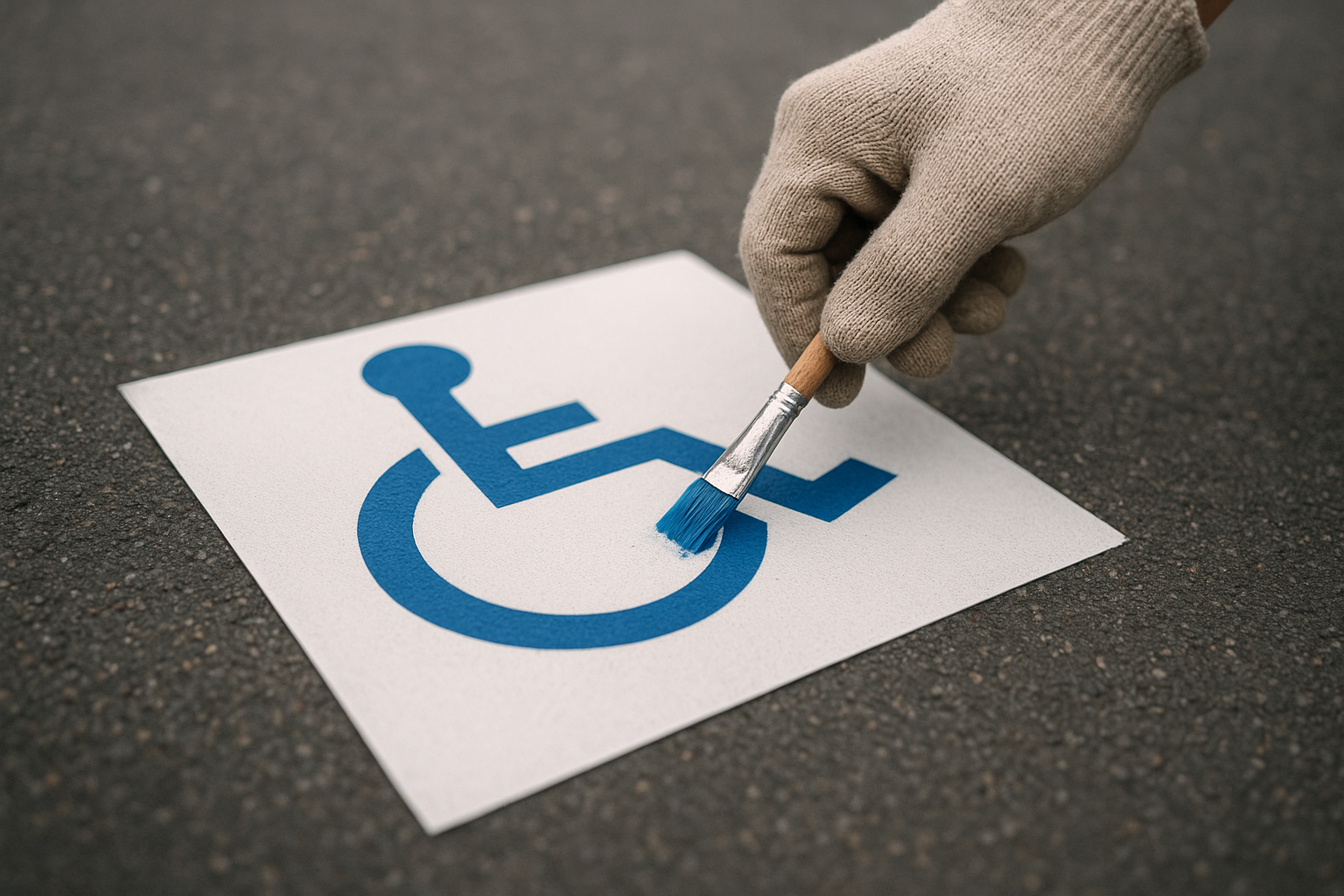
    Frequently Asked Questions

    What does a Texas lot painting company actually do?
    A Texas lot painting company applies and maintains parking lot lines, ADA-compliant stall markings, fire lane paint, and directional arrows. Many also handle new lot layouts, curb painting, and pavement stenciling.

    How much does parking lot striping cost in Texas?
    Most projects cost between $0.15 and $0.75 per linear foot, depending on lot size, paint type, and layout complexity. Small lots may carry a minimum service fee, while large properties are usually quoted per project.

    How long does parking lot paint take to dry?
    Standard traffic paint usually dries to the touch within 30 to 60 minutes in warm, dry weather. Full cure before heavy traffic resumes is often recommended at around 24 hours.

    How often should a parking lot be restriped?
    Most commercial lots need restriping every 18 to 24 months, though high-traffic properties may need it annually. Faded, hard-to-see lines are the clearest sign it’s time for a refresh.

    What type of paint do professional striping crews use?
    Most contractors use water-based traffic paint or thermoplastic material rated for asphalt and concrete. Traffic paint is more affordable, while thermoplastic lasts longer but costs more upfront.

    Is ADA-compliant striping legally required?
    Yes, the Americans with Disabilities Act requires a specific number of accessible spaces with proper markings based on total lot size. Non-compliant lots can face fines and legal complaints.

    What’s the difference between fire lane marking and regular striping?
    Fire lane marking uses red paint and stenciled text to keep emergency access clear, while regular striping simply organizes stalls and traffic flow. Fire lanes are often required by local fire codes.

    Can striping be done during cold or rainy weather?
    Paint needs a dry surface and temperatures generally above 50°F to cure properly, so most contractors schedule around the forecast. Rescheduling due to weather is common and prevents premature peeling.

    How do I choose the best Texas lot painting company for my property?
    Look for local experience, clear pricing, ADA knowledge, and references from similar properties. Comparing two or three quotes helps ensure fair pricing and quality work.

    What is the standard size of a parking stall in Texas?
    Most standard stalls measure 9 feet wide by 18 feet long, though many municipalities allow slightly narrower compact spaces. Accessible stalls require extra width plus an access aisle per ADA guidelines.

    Do I need a permit to restripe my parking lot?
    Simple restriping that follows the existing layout usually does not require a permit, but new layouts may need municipal approval. Checking with your local planning department first can prevent delays.

    Is thermoplastic striping worth the extra cost compared to paint?
    Thermoplastic can last three to five times longer than standard paint, making it a good value for high-traffic lots. Smaller or lower-budget properties still get great results from standard traffic paint.

    Final Thoughts on Hiring a Texas Lot Painting Company

    Ultimately, choosing the right Texas lot painting company comes down to experience, clear communication, and a genuine understanding of ADA and fire code requirements. Whether a property needs a simple restripe or a full new layout, professional striping keeps parking areas safe, organized, and compliant with current regulations. In addition, regular maintenance protects property owners from liability while making a strong first impression on every visitor.

    For property managers, business owners, and municipal organizations across Denton, Plano, and the wider North Texas region, working with an experienced local team like StripesPls simplifies the entire process. As a next step, request a free quote to see exactly how affordable a professional refresh can be.

  • Professional Parking Lot Striping in Denton & Plano

    Professional Parking Lot Striping in Denton & Plano

    Professional Parking Lot Striping in Denton & Plano

    Professional parking lot striping is the process of painting clean, code-compliant lines, symbols, and markings onto a paved lot to organize traffic, define parking stalls, and meet accessibility regulations. For property owners across Denton and Plano, TX, faded or missing lines are not just a cosmetic issue — they create real safety and liability risks. This guide breaks down what professional line marking involves, why it matters, and how to choose the right crew for the job.

    Quick answer: Professional parking lot striping uses commercial paint, precision layout tools, and ADA-trained technicians to mark stalls, fire lanes, and accessible parking accurately. It typically needs refreshing every 18 to 24 months to stay compliant and visible.

    What Is Professional Parking Lot Striping?

    Professional parking lot striping is more than painting straight lines. It is a planned service that combines pavement measurement, code research, and precise application to produce a lot layout that is safe, organized, and legally compliant.

    In particular, a qualified crew accounts for ADA (Americans with Disabilities Act) requirements, local fire codes, and traffic flow patterns before a single drop of paint is applied. As a result, the finished lot works better for drivers, pedestrians, and emergency responders alike.

    Aerial view of professional parking lot striping with ADA accessible parking symbol

    An aerial view showing the precision of professional parking lot striping, including ADA-marked stalls.

    Why Professional Line Striping Matters for Your Property

    Faded lines do more than look unkempt. Specifically, they confuse drivers, waste usable parking space, and can even increase the risk of accidents between vehicles and pedestrians.

    In contrast, a freshly striped lot communicates order at a glance. Consequently, tenants, customers, and visitors move through the property more efficiently, and property managers reduce the chance of complaints or liability claims.

    Furthermore, according to the U.S. Access Board, accessible parking design directly affects whether a property meets federal civil rights obligations under the Americans with Disabilities Act. That single factor alone makes striping quality a compliance issue, not just an aesthetic one.

    Key Benefits of Investing in Line Marking

    • Improved traffic flow and reduced congestion during peak hours
    • Maximized parking capacity through optimized stall layout
    • Lower liability risk from clearly marked fire lanes and ADA spaces
    • A cleaner, more professional first impression for visitors

    ADA Compliance and Fire Lane Marking Essentials

    ADA compliance is one of the most technical parts of any striping project. For instance, the Access Board specifies exact stall widths, van-accessible space dimensions, and signage placement that must be followed precisely.

    According to federal accessibility guidelines, lots with up to 100 total spaces generally need at least one accessible space for every 25 regular spaces, with additional van-accessible stalls required as lot size increases. Getting this wrong can trigger costly corrections or fines.

    Similarly, fire lane marking follows local fire code rules, typically requiring red paint with white lettering that reads “FIRE LANE — NO PARKING.” Above all, these lanes must stay clear so emergency vehicles can respond without delay.

    How the Professional Parking Lot Striping Process Works

    Understanding the workflow helps property owners know what to expect before, during, and after a project. Below is the typical sequence a professional crew follows.

    1. Site assessment and layout planning: A technician measures the lot and designs a layout that maximizes capacity while meeting ADA and fire code rules.
    2. Surface cleaning and preparation: The crew removes debris, dirt, and old paint flakes so new lines bond properly to the asphalt or concrete.
    3. Layout marking: Chalk lines, string, or laser-guided tools establish precise stall widths and aisle spacing before painting begins.
    4. Paint application: Commercial striping machines apply traffic paint or epoxy in consistent, straight lines for stalls, arrows, and symbols.
    5. Curing and final inspection: Fresh lines are barricaded while curing, and the team performs a final walkthrough to confirm accuracy and compliance.

    Technician operating professional line striping equipment on a parking lot

    Precision equipment ensures professional parking lot striping lines stay straight and durable.

    Choosing a Striping Company in Denton and Plano

    Not every crew handles ADA math or fire code stencils correctly, so experience matters. Therefore, it helps to ask about past commercial projects, paint types used, and turnaround time before hiring anyone.

    Locally, stripespls.com’s parking lot striping services cover property managers, retail centers, schools, healthcare facilities, and municipal clients throughout North Texas. In addition, the team offers a dedicated Plano line marking service for properties needing new layouts or full restriping.

    For readers weighing whether the expense is worthwhile, this breakdown of whether professional parking lot striping is worth the investment compares costs against long-term benefits in more detail.

    Cost Factors for Parking Lot Line Marking

    Pricing depends on several variables, including lot size, paint type, and how many symbols or fire lanes need stenciling. Generally speaking, epoxy coatings cost more upfront than standard traffic paint but last considerably longer.

    However, the most reliable way to know actual pricing is a site-specific quote. Property owners can request a free quote directly through stripespls.com to get an accurate estimate based on their lot’s exact dimensions and needs.

    For a deeper technical resource on layout standards, Otto’s guide on professional lot striping best practices covers additional layout considerations worth reviewing.

    Newly painted parking lot markings including directional arrows and crosswalk at a school property

    Directional arrows and crosswalks are common elements included in professional parking lot striping projects.

    Frequently Asked Questions About Professional Parking Lot Striping

    What is professional parking lot striping?

    Professional parking lot striping is the process of applying durable painted lines, symbols, and markings to a paved lot using commercial-grade equipment and trained technicians. It defines parking stalls, drive lanes, ADA spaces, and fire lanes to keep traffic organized and code-compliant.

    How often should a parking lot be restriped?

    Most commercial lots need restriping every 18 to 24 months. High-traffic Texas properties may need it annually because sun exposure and vehicle traffic fade paint faster.

    Why is ADA-compliant striping important for property owners?

    ADA-compliant striping ensures accessible parking spaces meet federal size, signage, and placement rules. Non-compliance can lead to fines, complaints, or legal action.

    How much does professional parking lot striping cost?

    Costs vary by lot size and paint type, generally ranging from a few hundred to several thousand dollars for commercial properties. Requesting a free quote is the most accurate way to get exact pricing.

    What type of paint is used for parking lot line marking?

    Most crews use water-based traffic paint or durable epoxy coatings built for outdoor pavement. Epoxy costs more but typically lasts longer under heavy traffic.

    How long does parking lot striping take to dry?

    Standard traffic paint usually dries to the touch within 30 minutes and handles light traffic within a few hours. Full curing can take up to 24 hours depending on weather.

    What is the difference between DIY and professional striping?

    DIY striping often results in uneven lines and incorrect ADA measurements because it skips proper surface prep and layout tools. Professional parking lot striping uses precision equipment and code knowledge for lasting, compliant results.

    What common mistakes do property owners make with lot striping?

    Common mistakes include skipping surface cleaning, ignoring ADA stall dimensions, and waiting too long to restripe faded lines. Each of these shortens paint life and raises compliance risk.

    Do fire lanes need to be repainted separately from parking stalls?

    Yes, fire lanes use red paint with white lettering and follow separate local fire code rules. They are typically stenciled as a distinct step from standard stall lines.

    What is the best time of year to restripe a parking lot in Texas?

    Late spring through early fall works best because warm, dry weather helps paint cure evenly. Avoiding rainy stretches prevents washout and patchy lines.

    How can striping improve parking lot safety?

    Clear lines and arrows reduce driver confusion and help prevent collisions with pedestrians. Visible ADA and fire lane markings also let emergency vehicles respond faster.

    Does professional parking lot striping increase property value?

    A well-marked, organized lot boosts curb appeal and signals strong property maintenance to tenants and buyers. Many managers see striping as a low-cost upgrade with a solid return.

    What areas does stripespls.com serve?

    Stripespls.com provides professional parking lot striping across Denton, Plano, and the greater North Texas region. Services cover commercial, residential, retail, school, healthcare, and municipal properties.

    How do I get a quote for parking lot striping services?

    Property owners can request a free quote directly through stripespls.com by sharing basic lot details. A representative typically follows up to schedule a site assessment.

    Final Thoughts on Professional Parking Lot Striping

    In summary, professional parking lot striping keeps properties safe, organized, and legally compliant while improving the overall impression a lot makes on visitors. From ADA-compliant stalls to fire lane markings, precise line work protects both drivers and property owners from unnecessary risk.

    Ultimately, faded or missing lines are worth addressing sooner rather than later. Property owners throughout Denton, Plano, and the surrounding North Texas region can request a free quote at stripespls.com to get a lot properly assessed and restriped by an experienced crew.